TL;DR

Turn quiet afternoons into listening time
- Thousands of audiobooks, podcasts and originals
- Listen on your phone, tablet or Echo — also offline
- Cancel anytime
Doorbell and phone alert flashers convert audible signals into bright lights or vibrations, helping people who are deaf or hard of hearing notice visitors and calls. These systems range from simple plug-in lights to smart-home integrations, but they must be tested in your actual living spaces to ensure reliability.
Imagine you are deep in a book, headphones on, or simply enjoying a quiet evening. A visitor presses your doorbell, or your phone rings in the other room. If you have hearing loss, that crucial signal might vanish into the silence, leaving you unaware of a delivery, a family emergency, or a friend waiting at the door. It is a frustrating gap in modern living that technology can bridge effectively.
Doorbell and phone alert flashers are designed to close that gap. They take the sounds you might miss—rings, chimes, alarms—and translate them into visual or tactile signals. This isn’t just about convenience; it is about independence and peace of mind. Knowing you won’t miss a call or a visitor changes how you move through your day.
This guide explains how these systems work, what features actually matter, and how to set them up so they fit your life. We will skip the jargon and focus on practical, real-world applications for people who are deaf or hard of hearing.
Visual alerts convert missed sounds into lights or vibrations, restoring independence for people who are deaf or hard of hearing.
Advertised wireless ranges are optimistic; walls and floors often reduce coverage, requiring multiple receivers or repeaters for whole-home reliability.
Never use general doorbell flashers as a substitute for certified smoke or carbon monoxide alarms; integrate only certified safety devices.
Test alerts in every room, especially the bedroom, and consider vibration-based alerts for sleeping to ensure you are woken during emergencies.
Choose systems with signal identification (different patterns for door vs. phone) to react appropriately without checking the source.
How Visual Alerts Turn Silence Into Signals
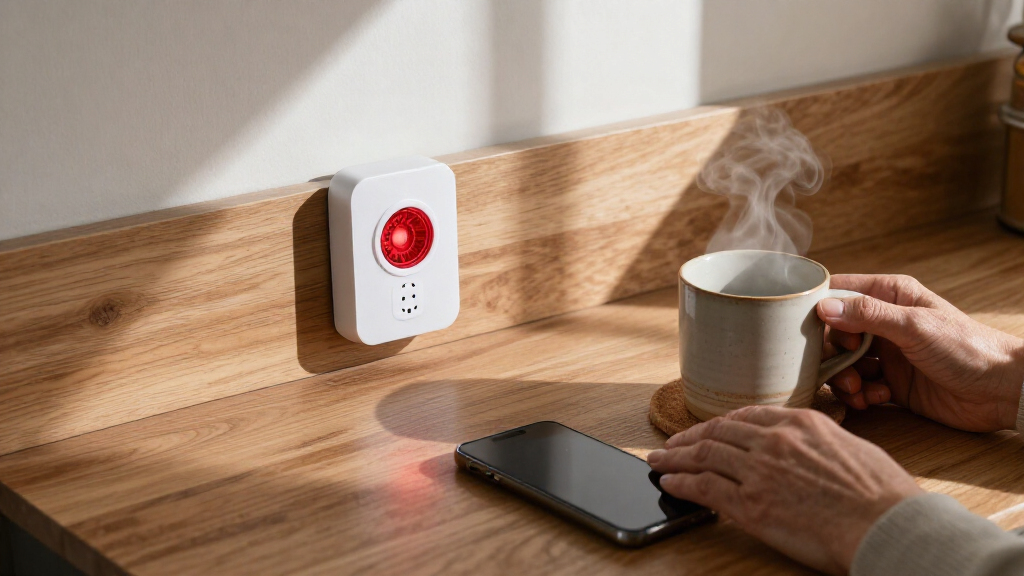
A doorbell and phone alert flasher works by intercepting a signal that is usually heard and converting it into something you can see or feel. The system consists of two main parts: a transmitter and a receiver. The transmitter detects the event—like a doorbell button press or a phone ring—and sends a wireless signal to the receiver. The receiver then triggers an alert, such as a bright flashing light or a vibration.
Think of it like a translator for your home. Your doorbell speaks in sound, but your receiver speaks in light. For example, when a guest presses the button outside, the transmitter picks up the electrical pulse or wireless signal. It sends this data to a receiver plugged into your living room wall. That receiver then flashes a lamp or a dedicated strobe light, letting you know someone is there. This process happens almost instantly, bridging the distance between the door and your eyes.
These systems are not just for doorbells. Phone alert systems work similarly. A transmitter connects to your landline or pairs with your mobile phone. When the phone rings, the transmitter sends a signal to a receiver in another room. This is particularly useful if you leave your phone in your pocket but are working in a different part of the house. The light flashes, reminding you to check your device.
Some advanced systems also use vibration. A wearable pager or a bed shaker can alert you when you are asleep or in a noisy environment where lights might not be seen. This multi-sensory approach ensures that no matter where you are or what you are doing, the alert reaches you.
Popular right now

Bose QuietComfort Ultra Wireless Noise-Cancelling Headphones with Spatial Audio, Black

TCL QM64L 85-Inch QD-Mini LED 4K Smart Fire TV

TCL T7 Series 85-Inch 4K 144Hz QLED Smart Google TV
As an affiliate, we earn on qualifying purchases.
Why These Systems Restore Independence
For many people with hearing loss, the fear of missing an important call or visitor can lead to anxiety or social isolation. Alert flashers help by removing that uncertainty. When you know your home is equipped to notify you of events, you can relax. You can read, work, or sleep without constantly worrying about whether the doorbell rang ten minutes ago.
Consider a common scenario: you are cooking with the kitchen fan on. The noise masks the doorbell. Without a visual alert, you might miss a delivery or a neighbor. With a visual alert for hearing loss, a light in the kitchen flashes, signaling the event. This simple change allows you to maintain your routine without interruption. It supports independence by letting you manage your home environment on your own terms.
These systems also improve safety. While they are not a replacement for smoke alarms, they can alert you to non-emergency hazards, like a dripping faucet or a running appliance, if configured with specific sensors. More importantly, they ensure you notice visitors during emergencies, such as a firefighter or paramedic arriving at your door. Being able to respond quickly to such events can be critical.
Furthermore, these tools help you stay connected socially. Missing calls from friends or family can feel isolating. A phone alert system ensures you see incoming calls, even if you are in another room. This keeps you engaged with your community and reduces the feeling of being cut off from the world.
Choosing Between Lights, Vibrations, and Smart Tech
Not all alert systems are created equal. The best choice depends on your specific needs, home layout, and sensory preferences. You generally have three main categories to consider: flashing lights, vibrating devices, and smart-home integrations. Each has its strengths and limitations.
Flashing lights are the most common. They are visible from a distance and effective in well-lit rooms. However, they might not be suitable for everyone. Some people find intense flashes uncomfortable or even medically problematic if they have photosensitivity. In these cases, adjustable brightness or a different color light might help, but vibration is often a better alternative.
Vibrating devices, such as bed shakers or wrist pagers, are ideal for sleeping or for people with limited vision. A bed shaker placed under your mattress can wake you from deep sleep when the doorbell rings. Wrist pagers are discreet and useful for outdoor use, ensuring you notice alerts even when you are away from home. However, they require you to be wearing the device or in bed, so they are best paired with room lights for comprehensive coverage.
Smart-home integrations represent the modern frontier. These systems connect to your smartphone, tablet, or smart lighting system. When the doorbell rings, your smart lights can flash, or your phone can vibrate and display a notification. This offers high customization but relies on internet connectivity. If your Wi-Fi goes down, the alert might fail. Always have a backup plan, such as a battery-powered flasher, for critical alerts.
5 Key Features That Make or Break Your Setup
When shopping for a system, ignore the marketing fluff and focus on these five critical features. These details determine whether the system will actually work in your daily life or become a frustrating gadget you stop using.
- Signal Identification: Can the system tell the difference between a doorbell, a phone call, and a smoke alarm? Some basic systems use the same light pattern for everything. Better systems use different colors or flash patterns (e.g., three flashes for the door, one long flash for the phone). This allows you to react appropriately without checking the source immediately. The implication here is cognitive load reduction: if every alert looks the same, you must physically investigate every flash, which is exhausting and inefficient. Distinct patterns allow you to prioritize responses, treating a delivery differently than a family emergency.
- Wireless Range and Penetration: Manufacturers often advertise a range of 300 feet or more. In reality, walls, floors, and building materials significantly reduce this distance. A signal that works in an open plan might fail through two concrete walls. Look for systems that allow you to add repeaters or multiple receivers to ensure coverage in every room. The tradeoff here is cost versus reliability; a single unit is cheaper but creates blind spots. A multi-receiver setup is more expensive but eliminates the anxiety of missing an alert because you were in the bathroom or the basement. Always prioritize coverage over initial savings.
- Power Backup: What happens if the power goes out? Mains-powered receivers will stop working. Battery-powered units are more resilient but require regular maintenance. Some systems offer a battery backup mode. For critical alerts, consider a system with a long-lasting battery or a manual override. The implication is vulnerability: a power outage often coincides with other emergencies. If your alert system dies when the grid fails, it has failed its primary purpose of ensuring safety during crises. A system with automatic battery switchover is not a luxury; it is a necessity for true reliability.
- Installation Complexity: Many systems are plug-and-play, requiring no tools. Others need wiring into your existing doorbell or phone line. If you are not comfortable with basic electrical work, choose a wireless system that pairs with your existing chime via a sensor rather than direct wiring. This avoids the need for an electrician. The tradeoff is simplicity versus integration. Direct wiring often provides a more stable signal but requires professional installation. Wireless sensors are easier to install but may require more frequent battery changes or suffer from interference. Choose based on your technical comfort level and willingness to maintain the device.
- Expandability: Your needs might change. Can you add more receivers? Can you add a bed shaker later? A modular system lets you start small and expand as needed. Check if the transmitter and receiver brands are compatible with other devices in their ecosystem. The implication is future-proofing. Hearing loss can progress, or your living situation may change. A closed system that cannot accept new accessories may become obsolete or insufficient within a few years. A modular system protects your investment by allowing you to adapt the setup as your life evolves.
By focusing on these features, you avoid buying a system that looks good on paper but fails in practice. Test the range in your actual home before committing to a permanent installation.
Safety First: Why Flashers Aren’t Smoke Alarms
It is vital to understand the distinction between convenience alerts and life-safety alarms. A doorbell or phone flasher is designed for everyday communication. It is not a substitute for a certified smoke or carbon monoxide alarm. While some systems offer smoke alarm integration, you must ensure these components are specifically designed and tested for life-safety purposes.
General-purpose flashers may not have the redundancy, battery life, or testing standards required for emergency detection. In a fire, every second counts. A standard doorbell flasher might not be bright enough to wake a deep sleeper or might fail if the main power is cut. Always use dedicated, certified alarms for smoke and carbon monoxide. These devices should have their own battery backups and be tested monthly.
You can, however, integrate certified alarms with your visual alert system. Some modern smoke detectors can send a wireless signal to a receiver that flashes a light. This combination provides the best of both worlds: a certified detector for safety and a visual alert for notification. Ensure the integration is approved by the manufacturer and meets local fire codes.
Additionally, consider photosensitivity. If you or a household member has epilepsy or other conditions triggered by flashing lights, consult a medical professional before installing strobe-style alerts. You might need a system with adjustable flash rates, steady lights, or vibration-only alerts to ensure safety and comfort.
Setting Up for Success: Testing and Placement Tips
Buying the system is only half the battle. Proper placement and testing ensure it works when you need it most. Start by mapping your home. Identify the rooms where you spend the most time: the living room, bedroom, kitchen, and home office. Place receivers in these areas where they are clearly visible from your usual vantage points.
Test the system from every room. Have someone press the doorbell or call your phone while you stand in different locations. Note any dead zones where the light is not visible or the vibration is too weak. If a room is too far from the transmitter, consider adding an additional receiver or a signal repeater. Walls, especially those with metal studs or thick concrete, can block signals.
For sleeping areas, test the bed shaker or wearable pager. Place it under your mattress or wear it for a night. Ensure the vibration is strong enough to wake you but not so intense that it causes discomfort. Adjust the sensitivity if your device allows it. Remember, a light in the hallway might not be visible from bed, so a tactile alert is often necessary for the bedroom.
Finally, establish a maintenance routine. Check batteries every six months. Test the system weekly to ensure the transmitter and receiver remain paired. If you use a smart-home system, update the firmware regularly to prevent glitches. A reliable system is a maintained system.
Frequently Asked Questions
How does a doorbell flasher work?
A transmitter detects the doorbell signal (either wired or wireless) and sends a radio frequency signal to a receiver. The receiver then activates a flashing light, vibration, or sound. The key is that the transmitter intercepts the signal before it relies solely on your hearing.Can one system alert me to both the doorbell and phone?
Yes, many combination systems support multiple transmitters. They can connect to your doorbell, landline, and sometimes even mobile phones via apps. Look for systems that offer distinct light patterns or colors to help you identify which event occurred.Will a flashing light wake me up from deep sleep?
Not necessarily. A room light might not be visible from bed, or you might sleep through it. For sleeping, a bed shaker or a wearable vibrating pager is much more effective. Always test the alert in your actual sleeping environment to ensure it works.Do these systems work if the power or Wi-Fi goes out?
It depends on the system. Battery-powered components will continue to work, but mains-powered receivers will not. Smart-home systems relying on Wi-Fi will fail if the internet is down. For critical alerts, choose systems with battery backups and avoid relying solely on internet-dependent notifications.Are flashing lights suitable for everyone?
No. Some people with photosensitivity or epilepsy may find flashing lights uncomfortable or dangerous. In these cases, look for systems with adjustable brightness, steady lights, or vibration-only alerts. Consult a medical professional if you have concerns about photosensitivity.Conclusion
A well-chosen alert system does more than just flash a light; it removes the anxiety of missing out. It lets you live fully in your home, knowing you are connected to the world outside your door. Start by identifying your specific needs—whether it’s a bright light for the living room or a gentle vibration for the bedroom. Test thoroughly, maintain regularly, and keep safety alarms separate from convenience alerts.
Take the first step today by mapping your home’s dead zones. Your peace of mind is worth the effort.