
TL;DR
Many smart home devices need Wi-Fi for full features, but some can run offline using local control protocols like Zigbee or Z-Wave. Choosing the right devices and hubs can keep your smart home running smoothly during internet outages.
Imagine waking up to a blackout, only to realize your smart lights, thermostat, and security system are still chugging along. It might seem impossible—most smart gadgets depend on Wi-Fi to do their job. But some are built to keep working, no matter the internet. Understanding which devices can stand alone and how to set them up makes all the difference in staying connected, even offline.
This guide will show you what’s possible, the technology behind it, and practical steps to keep your smart home functioning during Wi-Fi outages. So, if you’re tired of losing control when your internet goes down, keep reading.
Most smart home devices depend on Wi-Fi for full features, but some can operate locally using protocols like Zigbee or Z-Wave.
Choosing devices with local control options and a dedicated hub boosts resilience during internet outages.
Regularly testing your setup and maintaining good network security helps keep your smart home operational and safe offline.
A reliable mesh Wi-Fi system and backup power sources can prevent disruptions during blackouts.
Offline devices can be secure, but they need proper configuration and firmware updates to stay protected.
Do Smart Home Devices Work Without Wi-Fi?
Many devices need Wi-Fi for remote access and cloud features—but the right local protocols, hub, and backup power can keep essential automations running when the internet disappears.
Wi-Fi loss is not always device failure.
The result depends on where decisions are made. Cloud-based systems send commands through remote servers; locally controlled systems process commands through a hub, bridge, or direct connection inside the home.
Remote features stop
App access, voice assistants, cloud video, external alerts, and server-based routines may become unavailable when internet connectivity drops.
Internet requiredBasic functions remain
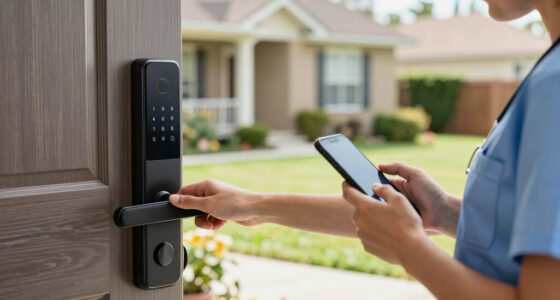
A camera may record to local storage, a thermostat may follow its onboard schedule, and a lock may still accept its keypad code.
Device dependentAutomations continue
Compatible sensors, switches, lights, and locks can keep communicating through a powered local hub without contacting the cloud.
Most resilient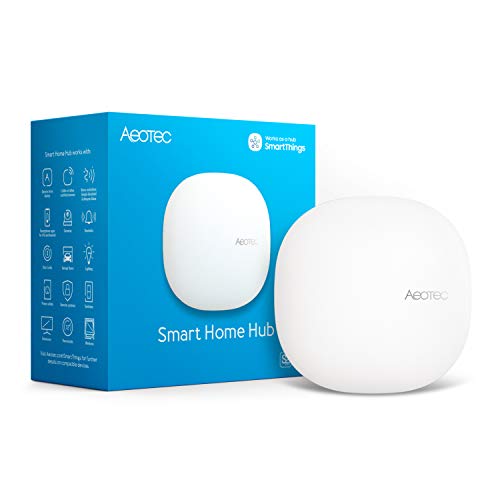
Aeotec Smart Home Hub, Works as a SmartThings Hub, Z-Wave, Zigbee, Matter Gateway, Compatible with Alexa, Google Assistant, WiFi
Connect & control your smart home — Easily link thousands of compatible devices from leading brands to create…
As an affiliate, we earn on qualifying purchases.
As an affiliate, we earn on qualifying purchases.
The networks behind offline control.
Zigbee and Z-Wave create low-power mesh networks, allowing compatible devices to relay signals through the home. Bluetooth supports direct nearby control but offers less range and usually weaker whole-home coverage.
| Protocol | Typical range | Power use | Offline control | Best fit |
|---|---|---|---|---|
| Zigbee | Up to 50 meters | Low | ✓ Strong | Bulbs, plugs, sensors, and broad mesh coverage |
| Z-Wave | Up to 30 meters | Low | ✓ Strong | Locks, security devices, and reliable hub automation |
| Bluetooth | Up to 10 meters | Very low | ~ Nearby | Direct control, quick pairing, and personal devices |
| Wi-Fi / cloud | Router coverage | Moderate | ✗ Often lost | Remote access, streaming, updates, and voice services |
Offline resilience spectrum
Conceptual comparison based on local communication ability, range, and dependence on external services.

Home Assistant Connect ZWA-2 | Connect Z-Wave devices to Home Assistant | Official Home Assistant Hardware
**Note: Home Assistant system is required to connect and control Z-Wave devices**
As an affiliate, we earn on qualifying purchases.
As an affiliate, we earn on qualifying purchases.
Build an outage-ready smart home.
A resilient setup combines compatible devices, local decision-making, dependable coverage, and backup electricity. Test the complete chain before an actual disruption exposes its weak points.
Choose local devices
Look for Zigbee, Z-Wave, Bluetooth, local API, or explicit offline-mode support.
Add a capable hub
Confirm that important routines execute locally rather than through a cloud server.
Strengthen coverage
Use mesh nodes, sensible hub placement, and powered repeaters to close signal gaps.
Back up the power
Place the router, modem, hub, and critical bridges on a suitable UPS.
Run an outage test
Disconnect the internet and verify lights, locks, sensors, alarms, and routines.
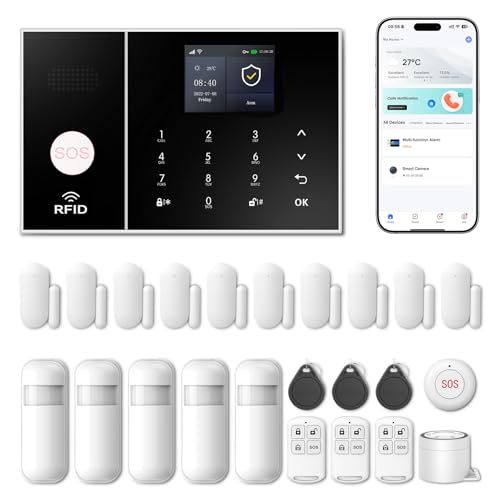
Wireless Alarm System for Home Security,24 Pcs Home Alarm System Wireless DIY Kit,WiFi+GSM/4G with Instant App Alerts NO MonthlyFees,SOS Button,App & Remote Control,Work with Alexa,for Apartment
APP Control & Highly DIY: Home Security Systems can be remotely controlled via Smart Life or Tuya APP….
As an affiliate, we earn on qualifying purchases.
As an affiliate, we earn on qualifying purchases.
Offline can be secure—but not maintenance-free.
Removing constant cloud exposure can reduce some remote attack paths. It does not eliminate risks inside the local network, and devices still need careful configuration, access controls, and timely updates.
Offline advantages
Local operation limits the amount of data that must leave the home and can reduce dependence on third-party servers.
- Fewer cloud-service interruptions
- Less exposure of routine device data
- Faster local commands and automations
- Core functions can survive internet outages
Local responsibilities
Devices can remain vulnerable if passwords are weak, network access is broad, or firmware goes unpatched.
- Use unique, complex administrator passwords
- Segment smart devices from sensitive computers
- Install firmware updates on a regular schedule
- Review hub users, integrations, and permissions
An internet outage and a power outage are different problems. Local protocols can bypass the internet, but the hub and connected devices still need electricity. Backup power is what keeps the local-control pathway alive during a blackout.

TP-Link Deco X55 AX3000 WiFi 6 Mesh System – Covers up to 6500 Sq.Ft, Replaces Wireless Router and Extender, 3 Gigabit Ports per Unit, Supports Ethernet Backhaul, Deco X55(3-Pack)
Wi-Fi 6 Mesh Wi-Fi – Next-gen Wi-Fi 6 AX3000 whole home mesh system to eliminate weak Wi-Fi for…
As an affiliate, we earn on qualifying purchases.
As an affiliate, we earn on qualifying purchases.
The practical verdict
Most smart devices need Wi-Fi for their full feature set, but a smart home does not have to become useless without it. Choose local-control products, run automations on a dedicated hub, protect critical equipment with backup power, and test regularly. The goal is graceful degradation: essential lights, locks, sensors, and safety routines keep working even when remote access does not.
How Much Do Smart Devices Really Need Wi-Fi?
Most smart home gadgets—like your smart lights, locks, and cameras—depend heavily on Wi-Fi. They use the internet to connect to apps, receive updates, and sync with cloud servers. Without Wi-Fi, many lose their remote control, automation routines, or cloud features. Imagine trying to turn on your smart thermostat from your phone during a blackout—if it relies on Wi-Fi, you’re out of luck.
However, not all devices are created equal. Some can still function locally, using alternative protocols. Think of it like a car’s engine—some need a GPS signal, others run on a built-in engine. Knowing this difference helps you choose gadgets that keep working when Wi-Fi drops.
Understanding this distinction is crucial because it impacts your home’s resilience. Devices that are entirely dependent on cloud services may become useless during outages, leaving you with no control. Conversely, devices capable of local operation provide a safety net, ensuring basic functionality even when internet connectivity is lost. This tradeoff often involves a balance between ease of use (cloud features) and reliability (local control).
Which Protocols Let Your Devices Work Without Wi-Fi?
Protocols like Zigbee, Z-Wave, and Bluetooth are the secret sauce for offline smart devices. They enable gadgets to communicate directly with hubs or each other, bypassing the internet entirely. This means your smart home can maintain core functionalities even if your Wi-Fi fails. For instance, a Zigbee smart bulb connected to a dedicated hub can turn on or change color without any internet connection, ensuring your lighting remains functional during outages.
Here’s a quick comparison with deeper implications:
| Protocol | Range | Power Use | Internet Dependency | Best For |
|---|---|---|---|---|
| Zigbee | Up to 50 meters | Low | Optional for local control | Small, low-power devices; mesh networks enhance coverage |
| Z-Wave | Up to 30 meters | Low | Optional for local control | Reliable home automation hubs; good for security devices |
| Bluetooth | Up to 10 meters | Very Low | Yes, for remote control | Personal devices; quick pairing |
Choosing the right protocol impacts your system’s resilience. Zigbee and Z-Wave are designed for mesh networks, which means devices can pass signals through each other, extending coverage and robustness. Bluetooth, while limited in range, is ideal for personal, close-proximity control. Understanding these nuances helps you decide whether your devices can operate independently of the internet and how to structure your network for maximum offline reliability.
For example, a Z-Wave door lock might still be unlocked by your smart hub even if the internet crashes. But without the hub, control is lost unless the device supports direct connection, which often means Bluetooth or wired options. The tradeoff: more complex setups versus greater independence from the cloud.
Can My Smart Devices Still Do Their Job Without Wi-Fi?
It depends on how your devices are built. Devices that rely solely on cloud servers typically become useless when Wi-Fi is down because they lack local control mechanisms. They might still record data locally, but you can’t access them remotely or receive real-time alerts, which are often critical for security or automation. This can lead to a false sense of security, where your devices appear active but are effectively offline in terms of control and response.
On the other hand, gadgets with local control features—like some smart locks, sensors, or switches—continue to operate independently of the internet. For instance, a smart motion sensor connected to a hub can still detect movement and trigger lights or alarms without Wi-Fi. This is significant because it means your home remains responsive and secure even during outages, reducing vulnerability and maintaining peace of mind.
A real-world example: a homeowner’s Zigbee-connected security system kept functioning during a citywide Wi-Fi outage because it operated through a local hub. The owner still received alerts on a local device, not through the cloud, demonstrating the importance of local control for resilience and security. This distinction matters because it influences your preparedness and the actual security level your system provides during disruptions.
How To Keep Your Smart Home Working When Wi-Fi Drops
- Choose devices with local control options. Look for gadgets that mention Zigbee, Z-Wave, or Bluetooth compatibility, and plan to use a dedicated hub or bridge. This ensures core functions remain available even if the internet goes down, providing a layer of resilience that can be crucial during emergencies or outages.
- Set up a smart hub. Investing in a hub like Hubitat or SmartThings creates a local network that keeps your devices connected even offline. This reduces reliance on cloud services and allows for more immediate control, which can be vital if your internet connection becomes unstable or unavailable.
- Maintain a reliable Wi-Fi system. Use mesh Wi-Fi, keep firmware updated, and position your router smartly to prevent outages. A robust network minimizes the risk of disconnection, ensuring local control pathways are always available.
- Implement backup power solutions. Use uninterruptible power supplies (UPS) for your router and hub to stay online during blackouts. Power redundancy ensures that local control continues even when the main power grid fails, maintaining security and automation routines.
- Test your setup regularly. Simulate outages and see which devices keep working, adjusting your setup as needed. Regular testing helps identify weak points, ensuring your system’s resilience and your preparedness for real emergencies.
Are Offline Smart Devices as Secure as Cloud-Based Ones?
Offline devices can be just as secure if properly configured. They don’t rely on external servers, which reduces exposure to remote hacking attempts over the internet. This can be an advantage because attackers usually target cloud-connected devices for easier access. However, they still need strong local network security—like complex passwords, network segmentation, and regular firmware updates—to prevent breaches from local threats.
One caveat: offline devices might not receive timely updates, leaving vulnerabilities unpatched. This can be a significant tradeoff because outdated firmware or insecure protocols can be exploited if not regularly maintained. Regularly check for firmware updates and keep your local network protected with strong encryption and a separate guest network. This layered security approach helps mitigate risks associated with offline operation.
For example, a Zigbee smart lock on a secured hub might be less vulnerable to remote hacking, but if an attacker gains access to your local network, they could disable it. Good security practices matter both online and offline, and understanding how to balance convenience with security is key.
Frequently Asked Questions
Can I still control my smart home devices if my Wi-Fi goes down?
Yes, if your devices support local control through protocols like Zigbee or Z-Wave and are connected via a hub. Without the internet, remote access and cloud features may be lost, but local control often remains intact.Which smart home devices work without Wi-Fi?
Devices that use Zigbee, Z-Wave, or Bluetooth and are paired with a dedicated hub can operate offline. Examples include some smart locks, sensors, and switches designed for local control.Do offline smart home devices store data locally?
Some do, especially those with local control features. However, many rely on cloud storage for data backup and updates, so check your device’s specifications if offline operation is a priority.How can I make my smart home more resilient during Wi-Fi outages?
Use devices with local control, set up a reliable hub, invest in mesh Wi-Fi, and keep firmware up to date. A backup power source like a UPS for your router and hub also helps.Are offline smart devices less secure than cloud-based ones?
Not necessarily. Offline devices can be secure if properly configured, but they may miss out on timely security updates. Good local network security is essential for protection.Conclusion
Smart homes don’t have to come to a halt just because Wi-Fi drops. By selecting the right devices, setting up a local control hub, and maintaining your network’s health, you’ll keep your smart home running smoothly—offline or not.
Imagine a house where your lights, locks, and sensors stay perfectly responsive, even during a blackout. That’s the future of resilient smart living. The key is understanding which gadgets can work without the cloud—and setting them up thoughtfully.