
TL;DR
Listen free for 30 days with Audible
Thousands of audiobooks and originals — cancel anytime.
Start your free trialAs an affiliate, we earn on qualifying purchases.
Smart smoke detectors connect to Wi-Fi, send alerts to your phone, and often include extra sensors, making them more versatile and responsive than traditional standalone alarms. They can improve safety but come with higher costs and setup considerations.
Picture this: you’re out running errands when your phone buzzes with an alert from your smart smoke detector. It’s not just making noise—it’s telling you there’s smoke, even if you’re miles away. That’s the power of smart smoke detectors. They do more than just beep—they connect, notify, and sometimes even learn from your home environment.
If you’re considering upgrading your safety devices, understanding how they differ from regular smoke detectors can save you money and peace of mind. Today, we’ll unpack the core differences, recent trends, and what to think about before making a switch.
Smart smoke detectors connect to Wi-Fi, enabling remote alerts and automation, unlike traditional standalone alarms.
They often include extra sensors like carbon monoxide detection, providing broader safety coverage.
Regular maintenance alerts from smart detectors help prevent silent failures—something traditional alarms lack.
Smart detectors are easy to install but require a stable Wi-Fi connection and app setup.
Choosing between the two depends on your budget, home automation needs, and safety preferences.
Smart Smoke Detectors vs Regular Ones: What Is Different?
Both can sound the alarm. Smart detectors add Wi-Fi, remote notifications, health monitoring and—in many models—extra sensors. That broader safety net can improve awareness when nobody is home, but it costs more and depends on correct setup.
Regular alarms alert the people nearby. Smart alarms can also reach phones and connected devices.
Detector replacement guidance varies by model; batteries and sensors still require routine checks.
Test alarms regularly and preserve local audible protection even when connected features are available.
Audible alarm within hearing range
App, email or voice-assistant notice
Smoke plus optional CO and environment sensing
Physical installation, Wi-Fi and app configuration
What changes when an alarm gets connected?
Smart detectors extend the warning beyond the room and can reveal maintenance problems before a device begins chirping. The tradeoff is a larger technical footprint: network access, app permissions, compatibility and privacy all become part of the safety plan.
Warnings travel farther
Wi-Fi enables alerts when you are at work, travelling or elsewhere on the property.
Coverage can expand
Some devices combine smoke, carbon monoxide, heat, humidity or occupancy signals.
Problems surface earlier
Battery, sensor and connectivity status can be reported before silent failure develops.
Setup gains a digital layer
Pairing, notification settings and reliable Wi-Fi matter alongside correct mounting.
Fit matters more than novelty
Budget, ecosystem compatibility and the need for away-from-home alerts guide the choice.
From first signal to useful action
A smart detector adds communication and automation after sensing danger. Its built-in siren remains essential because the internet, phone or cloud service may not always be available.
Smoke is sensed
Photoelectric or other sensing technology identifies a potential hazard.
Local alarm sounds
The nearby warning protects occupants without waiting for a remote connection.
Network relays status
The device or hub sends event data through the configured connection.
Phones receive alerts
Multiple household members may be notified wherever they have connectivity.
People take action
Occupants evacuate, verify conditions or contact local emergency services.
What you actually get
The fundamental smoke-warning function exists in both categories. Smart models layer remote communication, diagnostics and integration on top of it.
| Feature | Regular detector | Smart detector | Practical impact |
|---|---|---|---|
| Local siren | ✓ Standard | ✓ Standard | Immediate warning for people inside the home |
| Remote notification | ✗ None | ✓ App or message | Awareness when nobody is within hearing range |
| Device health reporting | ~ Manual checks | ✓ Status alerts | Earlier notice of battery or sensor problems |
| Extra hazard sensors | ~ Model dependent | ✓ Often available | Potentially broader coverage from one device |
| Smart-home automation | ✗ Generally absent | ✓ Platform dependent | Can trigger lights, announcements or HVAC routines |
| Installation effort | ✓ Simple | ~ Extra pairing | Smart features require accounts, apps and configuration |
| Works without Wi-Fi | ✓ Yes | ~ Local alarm only | Remote features may pause during an outage |
| Upfront cost | ✓ Lower | ~ Higher | Added sensors and connectivity carry a premium |
Why the extra features matter
Connected functions are most valuable when they reduce an information gap: nobody is nearby, a maintenance task was forgotten or another household system can respond automatically.
Real-time alerts
Push, email or voice notifications can reach household members away from home. Check that critical notifications remain enabled.
Multiple hazards
Combination models may detect smoke and carbon monoxide, while some add temperature or humidity monitoring.
Proactive maintenance
Low-battery, dirty-sensor or connection warnings make it harder for a neglected device to fail silently.
Smarter interpretation
Some newer models use multiple signals or algorithms to better distinguish cooking events from serious hazards.
Coordinated response
Compatible routines may switch on lights, issue voice announcements or stop HVAC circulation during an event.
More dependencies
Remote functions rely on Wi-Fi, power, software services and correct settings. The local siren remains the safety baseline.
Convenience rises with complexity
These relative scores visualize the typical product-category tradeoff. Exact performance, price and compatibility vary by manufacturer and model.
Smart adds layers
Illustrative category comparison on a 10-point scale.
Match the alarm to the household
More connected homes tend to gain more from smart integrations.
A hybrid plan can preserve straightforward local coverage while adding connected monitoring in high-priority locations. Whatever the mix, follow local placement rules and the manufacturer’s instructions.
Years is a common detector lifespan
Replace devices according to the date and guidance printed on the model; smart features do not extend sensor life indefinitely.
Which type fits your home?
Choose based on the protection you will reliably maintain—not only the longest feature list. Verify certification, placement requirements and ecosystem compatibility before purchase.
Simplicity is the priority
- Your budget needs broad basic coverage at lower upfront cost.
- You prefer no app, account or network configuration.
- Someone is usually present to hear the alarm.
- You have a dependable manual testing and battery routine.
Awareness beyond the home matters
- You want alerts while travelling, working or managing another property.
- You value battery, sensor-health and maintenance notifications.
- Your household already uses compatible smart-home automation.
- You have reliable Wi-Fi and are comfortable maintaining app settings.
How Connectivity Turns Smoke Alarms into Smart Guardians
Smart smoke detectors connect to your Wi-Fi, transforming a basic alarm into a central hub for your home safety system. This connectivity allows your alarm to communicate with your smartphone or other devices, enabling remote monitoring and control. The significance of this feature lies in the increased speed and flexibility it offers—imagine being able to verify a fire hazard from anywhere, or receive an early warning that can prompt quicker action.
Why does this matter? Traditional alarms rely solely on audible signals that depend on someone being nearby to hear them. In contrast, smart detectors give you a direct line of communication, which can be the difference between a quick response and a delayed one. This can be crucial in preventing small incidents from escalating into full-blown disasters, especially when you’re away or asleep. However, this reliance on Wi-Fi also introduces a potential point of failure—if your internet goes down, the connectivity features may be limited, highlighting a tradeoff between advanced functionality and dependency on technology infrastructure.
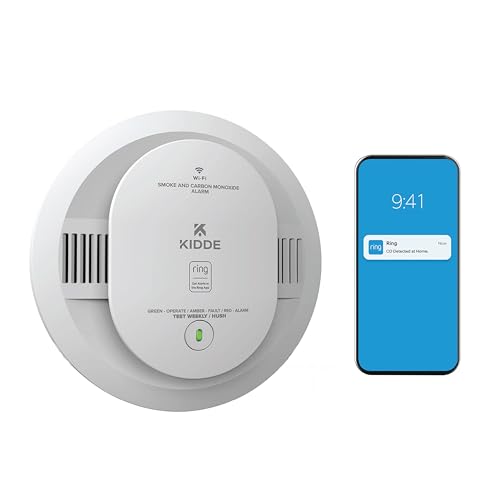
Kidde Smart Smoke & CO Detector with Ring, AA Battery, RGCUDR-RW
- Detection Types: Smoke and CO alerts
- App Notifications: Real-time Ring app alerts
- Detection Speed: Over 25% faster detection
As an affiliate, we earn on qualifying purchases.
As an affiliate, we earn on qualifying purchases.
Real-Time Alerts vs Local Sound Only: What You Get
| Feature | Regular Smoke Detectors |
|---|---|
| Alert Type | Local loud alarm only |
| Notification | No remote notifications |
| Response Time | Depends on someone hearing the alarm |
Smart detectors send push notifications, emails, or voice alerts straight to your device. This immediate communication can drastically reduce response times, especially when you’re not physically present. The implication is significant: faster alerts can lead to quicker evacuations and interventions, potentially saving lives and property.
But it’s also important to recognize the limitations. If your Wi-Fi is unreliable or your device’s notifications are turned off, the advantage diminishes. This highlights a tradeoff: while smart alerts can be life-saving, they depend on the reliability of your network and device settings. Understanding this helps you evaluate whether the convenience of instant notifications outweighs the potential technical vulnerabilities.

First Alert Battery Combination Smoke & Carbon Monoxide Alarm
- Advanced sensing technology: Reduces false alarms and detects early fire
- Dual protection: Detects both smoke and carbon monoxide
- Battery-operated design: Easy to install and maintain
As an affiliate, we earn on qualifying purchases.
As an affiliate, we earn on qualifying purchases.
Additional Sensors Make Smart Detectors Smarter
Smart smoke detectors often include extra sensors like carbon monoxide detection, temperature, and humidity monitors. This multi-sensor capability broadens the scope of home safety by enabling early detection of various hazards. For example, a rise in temperature or high humidity might indicate a fire risk or water leak, respectively. Detecting these issues early can prevent property damage and health hazards.
Why is this important? The integration of multiple sensors in a single device reduces the need for multiple standalone alarms, streamlining your safety system. It also allows for more nuanced alerts—such as differentiating between smoke from cooking and an actual fire—reducing false alarms. However, this complexity might come at a higher cost and increased maintenance, as more sensors mean more potential points of failure. The implication is that while multi-sensor detectors offer comprehensive coverage, they require careful consideration of cost, maintenance, and your specific safety priorities.

Kidde Smart Smoke Detector with Ring, AA Battery, RGSDR-RW
- Real-Time Notifications: Alerts via Ring app for smoke and battery issues
- Fast Smoke Detection: Detects smoke over 25% faster than competitors
- Subscription Monitoring: Optional 24/7 monitoring with Ring subscription
As an affiliate, we earn on qualifying purchases.
As an affiliate, we earn on qualifying purchases.
Maintenance and Monitoring: How Smart Keeps You Informed
Regular smoke detectors typically require manual testing and battery replacement—tasks that can be overlooked until the alarm chirps or fails. Smart detectors, however, continuously monitor their own health, providing real-time diagnostics and alerts for issues like low batteries or dirty sensors. This proactive maintenance can prevent silent failures, which are dangerous because they give a false sense of security.
Why does this matter? The ability for smart detectors to self-diagnose and communicate issues means you can address problems before they compromise your safety. For instance, a low-battery alert via app ensures you’re aware of impending failure, reducing the risk of being unprotected during an emergency. This feature shifts maintenance from reactive to proactive, emphasizing the importance of regular updates and checks to ensure optimal performance. The tradeoff is that these systems depend on app notifications and internet access, which, if compromised, could delay alerts—highlighting the need for a balanced approach to safety management.
Kidde Smart Smoke Detector with Ring, AA Battery, RGSDR-RW
- Real-Time Notifications: Alerts via Ring app for smoke and battery issues
- Fast Smoke Detection: Detects smoke over 25% faster than competitors
- Subscription Monitoring: Optional 24/7 monitoring with Ring subscription
As an affiliate, we earn on qualifying purchases.
As an affiliate, we earn on qualifying purchases.
Installation and Setup: Easy or Extra Step?
Most regular alarms are straightforward—pop in a battery, mount, and test. Smart detectors require Wi-Fi setup and app installation, which adds a step but remains manageable for DIY enthusiasts. This process involves connecting the device to your home network and customizing settings through an app, which can be a minor hurdle for some users.
Why does this matter? The additional setup process offers customization and integration benefits but may cause frustration for those less comfortable with technology. Proper installation ensures optimal performance and connectivity, which is crucial for the smart features to work effectively. The tradeoff is the extra time and effort needed for setup versus the enhanced safety and convenience it provides. Recognizing this helps you decide if the benefits outweigh the initial inconvenience, especially in terms of long-term safety and ease of use.
Trends Shaping the Future of Smoke Safety
Smart detectors now incorporate AI that can distinguish between real fires and false alarms—like burnt toast—reducing unnecessary disturbances. They are increasingly integrated with home automation platforms such as Alexa, Google Home, and Apple HomeKit. This integration allows for automated responses, such as turning on lights, shutting down HVAC systems, or alerting emergency services automatically, creating a more comprehensive safety ecosystem.
Why is this significant? These advancements not only improve safety but also enhance convenience and energy efficiency. For example, during a fire, turning on smart lights can guide occupants safely out of the house, while shutting off the HVAC can prevent fire spread. These developments imply a shift toward smarter, more connected homes where safety measures are seamlessly integrated into daily routines. However, reliance on AI and automation also introduces new points of failure and privacy considerations, which are important tradeoffs to evaluate.
Cost and Reliability: Are Smart Detectors Worth It?
Smart smoke detectors typically range from $50 to $150 each, depending on features such as sensor types and brand. While this is higher than traditional detectors, which usually cost around $10 to $30, the additional investment can be justified by their enhanced safety features and convenience. They rely on Wi-Fi, so a stable internet connection is critical; interruptions can affect their ability to send alerts or update firmware. Regular detectors generally last 8-10 years and are less susceptible to network issues but lack remote alert capabilities.
Why does this matter? The higher upfront cost of smart detectors is balanced by potential savings in emergency response time, maintenance alerts, and added peace of mind. However, their dependence on technology means that in environments with unreliable Wi-Fi, their effectiveness diminishes. This tradeoff underscores the importance of evaluating your home’s connectivity and safety priorities before investing in smart systems. Ultimately, the decision hinges on whether the benefits of connectivity and additional sensors outweigh the costs and potential technical vulnerabilities.
Choosing the Right Detector: What Matters Most to You?
When selecting between smart and regular detectors, consider your home’s layout, your budget, and your safety priorities. If remote alerts, integration with other smart devices, and early hazard detection are vital, then smart detectors are a compelling choice. Conversely, if you prioritize simplicity, reliability without dependence on Wi-Fi, and lower initial costs, traditional alarms may suffice. Compatibility with existing smart home systems can streamline setup and expand functionality, but it’s essential to verify that the detector works seamlessly with your setup.
Why is this important? Making an informed choice ensures your safety system aligns with your lifestyle and budget. For example, frequent travelers benefit from remote notifications, while those in areas with poor internet might find traditional detectors more reliable. Recognizing these tradeoffs helps you balance convenience, cost, and safety, leading to a more tailored and effective home safety strategy.
Should You Replace All Your Old Detectors?
Not necessarily. Experts recommend maintaining a mix—using traditional alarms in areas where Wi-Fi is unreliable or where minimal connectivity is desired, and deploying smart detectors in key locations for enhanced monitoring. This hybrid approach provides comprehensive coverage and redundancy, ensuring that if one system fails, the other remains operational. Additionally, smart detectors can serve as supplementary devices, offering real-time alerts and diagnostics that traditional alarms lack.
Why does this matter? Combining both types leverages their respective strengths—reliable, long-lasting traditional alarms and technologically advanced smart detectors—maximizing safety and minimizing vulnerabilities. For instance, a basement with a basic detector can serve as a backup while smart detectors in bedrooms and main living areas provide immediate alerts and additional hazard detection. This layered approach ensures a more resilient and adaptable home safety system, balancing innovation with proven reliability.
Frequently Asked Questions
Are smart smoke detectors worth the extra cost?
Many homeowners find that the added safety features, instant alerts, and integration options justify the higher price—especially if you travel often or have a busy household.
Can smart smoke detectors replace traditional ones entirely?
They can work alongside traditional alarms, but experts recommend having both for comprehensive safety, especially in areas where Wi-Fi might be unreliable.
Do smart smoke detectors require Wi-Fi to function?
Yes, most rely on Wi-Fi for remote notifications and integration, so a stable internet connection is key to their full functionality.
How difficult is it to install a smart smoke detector?
Most are designed for DIY setup—connecting to Wi-Fi, installing the app, and mounting the device—typically taking around 10 minutes.
What should I check before buying a smart smoke detector?
Ensure compatibility with your existing smart home system, verify Wi-Fi strength in your home, and consider if extra sensors like CO detection are important for your safety needs.
Conclusion
Smart smoke detectors turn your home into a connected safety network. They offer peace of mind with instant alerts and extra sensors, but they do rely on Wi-Fi and a bit of setup. Think about what matters most—remote peace of mind or simplicity—and choose what keeps your home safest.
After all, a fire can happen anywhere. Being prepared with the right detector is a smart step toward peace of mind, no matter where you are.
College move-in / dorm season Picks
dorm essentials
As an affiliate, we earn on qualifying purchases.