
TL;DR
Open a free Amazon Business account
Business pricing, bulk buying and tax-exempt orders.
Create a free accountAs an affiliate, we earn on qualifying purchases.
Automatic pill dispensers are smart devices that release medication automatically at scheduled times. They improve safety, adherence, and independence, especially for seniors, chronic patients, and caregivers.
Imagine a device that takes the chaos out of medication routines. No more frantic searches for pills or missed doses because of forgetfulness. Automatic pill dispensers are transforming how people manage their medicines, especially for those with complex schedules or memory challenges. They’re a small tech leap that offers big peace of mind.
In this guide, you’ll see exactly how these devices work, what features matter most, and who really benefits. Whether you’re caring for an elderly parent or managing your own health, understanding these tools helps you make smarter choices — and stay healthier.
Automatic pill dispensers dramatically improve medication adherence, reducing missed doses by up to 80%.
Choosing the right device depends on your lifestyle, medication complexity, and comfort with technology.
Smart features like connectivity, alarms, and security make modern dispensers more effective and user-friendly.
Regular cleaning and battery checks are essential for sustained, safe operation.
Consult healthcare providers to select a device that fits your specific health needs and medication routines.
Automatic Pill Dispensers: How They Work and Who They Help
Smart dispensing turns a complicated medication routine into a reliable sequence: the correct dose is released on schedule, reminders prompt action, and optional alerts keep caregivers informed.
Potential improvement in medication adherence when automatic dispensing supports a routine.
At the right time—with fewer missed doses, double doses, and daily uncertainties.
Especially useful for seniors, chronic patients, memory challenges, and remote caregivers.
From loaded pills to a ready dose
A dispenser combines storage, a programmable clock, a release mechanism, and a collection tray. Smart versions add app-based setup, adherence records, and caregiver notifications.
Load
Pills or capsules are organized into compartments according to the prescribed schedule.
Program
Dose times are entered through the device interface or a connected mobile application.
Release
At the scheduled moment, the correct compartment opens or moves medication into a tray.
Confirm
Alarms prompt the user; advanced models log access and alert a caregiver if a dose is missed.
Lockable compartments, PINs, or biometric controls can reduce accidental access, double dosing, and medication misuse.
Which dispenser fits the routine?
The strongest choice is not always the most advanced. Match capacity, portability, monitoring, and setup complexity to the person who will use the device every day.
| Device type | Scheduled release | Remote alerts | Security | Portability | Best for |
|---|---|---|---|---|---|
| Simple timer | ✓ Yes | ✗ No | ~ Basic | ~ Varies | Consistent, straightforward schedules |
| Smart dispenser | ✓ Yes | ✓ Yes | ✓ Strong | ~ Varies | Remote oversight and complex regimens |
| Portable unit | ✓ Yes | ~ Optional | ~ Moderate | ✓ High | Travel, work, and active lifestyles |
| Stationary unit | ✓ Yes | ~ Optional | ✓ Strong | ✗ Low | High-capacity home medication management |
More independence. Less uncertainty.
Automatic dispensing is most valuable when missed, repeated, or mistimed doses are a realistic risk—and when a clearer routine can ease pressure on both users and caregivers.
Seniors
Clear prompts and controlled doses can support safer self-management and longer independent living.
Chronic patients
People managing diabetes, hypertension, or mental health conditions gain a more dependable schedule.
Caregivers
Remote missed-dose alerts can reduce uncertainty, check-in calls, and unnecessary trips.
Cognitive challenges
Automation lowers reliance on memory while locked access helps prevent repeated dosing.
Multiple medications
Organized compartments help separate several daily doses into a manageable sequence.
Care facilities
Assisted living and clinical teams can streamline medication workflows across many patients.
The dispenser is becoming a connected care point
New models do more than release medication. They can reveal adherence patterns, simplify hands-free interaction, and provide stronger safeguards around access.
Mobile apps
Remote programming, reminders, medication logs, and caregiver alerts.
Pattern analysis
AI-supported tools identify repeated missed doses and changing habits.
Voice control
Hands-free prompts and simpler interaction for users with limited dexterity.
Secure access
PIN codes and biometric locks help limit unauthorized medication access.
Accessible design
Larger displays, clearer controls, and ergonomic trays improve usability.
Choose for the person, not the feature list
A device only improves adherence if it fits the medication, routine, physical abilities, technical comfort, and support network around the user.
Map the regimen
Count daily doses, pill sizes, refill frequency, and the total storage capacity required.
Test usability
Check display size, alarm volume, button clarity, dexterity needs, and loading complexity.
Set the safety level
Consider locks, PIN access, tamper resistance, missed-dose handling, and backup power.
Decide who needs alerts
Remote notifications suit caregivers; a simple alarm may be enough for an independent user.
Confirm compatibility
Most devices handle pills and capsules, but sizes, shapes, and special storage needs vary.
Ask a health professional
Review the device and medication plan with a pharmacist or healthcare provider before use.
Common questions, clearly answered
Safety and simplicity should drive the decision. Advanced connectivity is useful only when it solves a real monitoring or coordination need.
Are they safe?
Models with controlled access, clear alerts, and reliable dose separation can reduce common medication errors.
Can they hold every medication?
No. Check specifications for pill size, shape, packaging, moisture sensitivity, and refrigeration requirements.
Is a smartphone required?
Not for basic timer models. Connected features may require an app, Wi-Fi, and initial setup assistance.
What upkeep is needed?
Clean the tray and compartments regularly, check batteries, test alarms, and watch for mechanical jams.
Will insurance pay?
Coverage varies. Ask the insurer, healthcare program, pharmacy, or local aging-support organization.
Can schedules be changed freely?
Programming can be changed, but medication timing should only be adjusted with professional guidance.
A small device can create a much safer routine.
The best automatic pill dispenser is the one a person can use confidently every day. Match it to the regimen, confirm medication compatibility, establish a refill and cleaning routine, and involve a healthcare professional when selecting or changing the setup.
How Do Automatic Pill Dispensers Actually Work?
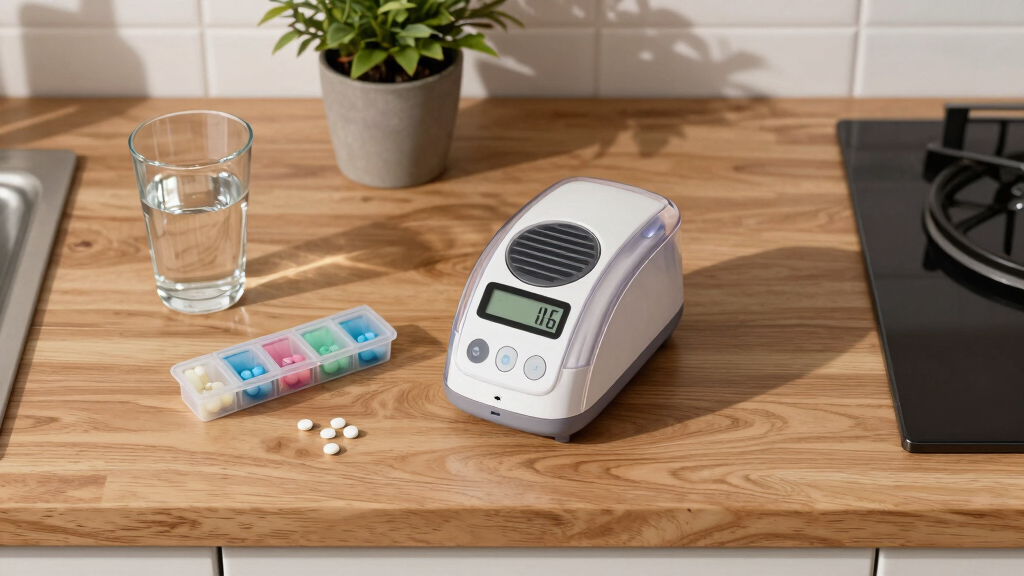
Automatic pill dispensers are clever little machines with a simple goal: dispense the right pills at the right time. They feature compartments holding medications, a digital interface, and a mechanism that releases pills when scheduled. Think of it like a personal pharmacy assistant, quietly managing your doses.
Most models let you program specific times — some with alarms or lights to remind you. When the clock hits, the device automatically pushes the correct dose into a small tray or container. Security features, like lockable compartments, prevent accidental overdoses. Advanced versions connect to your smartphone or caregiver’s app, offering remote oversight and alerts.
For example, a senior with five daily pills can set the device to dispense each dose at the right time, reducing the risk of missed or doubled doses. It’s like having a trusted helper in your home, 24/7.
automatic pill dispenser with alarm
As an affiliate, we earn on qualifying purchases.
As an affiliate, we earn on qualifying purchases.
The Different Types of Automatic Pill Dispensers — Which One Fits You?
| Type | Features | Best For |
|---|---|---|
| Simple Timer Dispensers | Set times, basic alarms, manual loading | People with straightforward schedules |
| Smart Dispensers | Connectivity, app control, reminders, security | Tech-savvy users needing remote monitoring |
| Portable Units | Compact, travel-friendly, battery operated | People on the go or traveling |
| Stationary Units | Larger capacity, multiple compartments, security features | Home use for multiple medications |
Choosing hinges on your lifestyle. A simple timer might suffice if your routine is consistent. But if you want real-time alerts or remote control, a smart dispenser is worth the investment. For seniors or those with complicated regimens, security and ease of use matter most.
medication reminder smart dispenser
As an affiliate, we earn on qualifying purchases.
As an affiliate, we earn on qualifying purchases.
What’s New in Automatic Pill Dispensers? Tech Trends You Should Know
Technology is making pill dispensers smarter every year. Today’s models connect to smartphones, letting you program doses or get alerts remotely. Some use artificial intelligence to track adherence patterns and suggest adjustments.
Voice activation is becoming common — just ask your device to dispense your morning pills. Enhanced security features like biometric locks keep your medication safe from curious hands. Ergonomic designs and larger screens make these devices more user-friendly, especially for older adults.
For example, a new dispenser might analyze your medication-taking habits and send a reminder if you’re missing doses regularly. It’s like having a digital nurse watching over your health routine.
automatic pill organizer for seniors
As an affiliate, we earn on qualifying purchases.
As an affiliate, we earn on qualifying purchases.
Who Really Benefits from Automatic Pill Dispensers?
Automatic pill dispensers aren’t just for the tech-savvy or the elderly — they serve many people. Seniors value the independence these devices give them, helping them stay in their homes longer. Patients with chronic illnesses like diabetes or hypertension rely on them to keep doses precise and consistent.
Caregivers find peace of mind knowing they can monitor adherence remotely, reducing worry and trips to check on loved ones. People with memory issues, or those juggling multiple medications, find these devices life-changing. Even hospitals and assisted living facilities use them to streamline medication management across multiple patients.
For instance, a caregiver might get a daily alert if a patient missed a dose, enabling quick intervention. It’s about making medication routines safer, easier, and more reliable.
digital medication management device
As an affiliate, we earn on qualifying purchases.
As an affiliate, we earn on qualifying purchases.
Your Top Questions About Automatic Pill Dispensers — Answered
- Are automatic pill dispensers safe? Yes, especially models with security locks and alerts that prevent overdosing or accidental misuse. These safety features are crucial because they address common concerns about medication errors, providing peace of mind for users and caregivers alike. They actively reduce the risk of accidental overdose, which can have serious health consequences.
- How do I pick the right one? Think about how many doses you need daily, ease of use, connectivity, and security features. Match the device to your lifestyle. Considering these factors helps ensure the device integrates smoothly into your routine, minimizing frustration and maximizing adherence. For example, a device with simple controls is better for someone with limited tech experience, while remote monitoring features suit caregivers managing multiple patients.
- Can they handle all meds? Most are suitable for pills, capsules, or tablets, but always check the device specs for compatibility. This is important because some medications may require specific dispensing mechanisms or sizes. Using incompatible devices can lead to dosing errors or medication damage, so understanding your medication types and matching them to the device ensures safety and efficacy.
- Are they expensive? Prices range from under $50 for basic models to over $200 for high-tech smart dispensers. Insurance or healthcare programs may cover some devices. Cost considerations are significant because they influence accessibility. While more advanced models offer additional features, they may not be necessary for everyone. Evaluating your needs against your budget helps find the most practical solution without overspending.
- Do I need tech skills? Many are simple, but advanced features might need some setup or smartphone use. This tradeoff affects usability; if you’re not comfortable with technology, opting for a straightforward model ensures consistent use without frustration. Conversely, tech-savvy users can leverage smart features for better oversight, but they should be prepared for initial setup and occasional troubleshooting.
- What’s maintenance like? Regular cleaning and battery changes keep the device working smoothly. Proper maintenance prevents malfunctions, extends device lifespan, and ensures medication safety. Neglecting these tasks can lead to jams or inaccurate dispensing, compromising health. Incorporating routine upkeep into your schedule guarantees the device remains reliable and effective over time.
Conclusion
Automatic pill dispensers are more than gadgets — they’re safety nets for your health. They help you stay on track, reduce errors, and foster independence. As these devices evolve, they become smarter and more intuitive, fitting seamlessly into daily life.
If medication management feels overwhelming, a well-chosen dispenser can turn stress into confidence. Remember, the best device is one that works for your unique routine — making health simpler, not harder.
College move-in / dorm season Picks
dorm essentials
As an affiliate, we earn on qualifying purchases.