
TL;DR
Open a free Amazon Business account
Business pricing, bulk buying and tax-exempt orders.
Create a free accountAs an affiliate, we earn on qualifying purchases.
Using a home blood pressure monitor correctly involves choosing a validated device, preparing properly, positioning yourself accurately, and following a consistent measurement routine. Recent tech advances make this easier, but technique remains key for reliable data.
Imagine catching a glimpse of your blood pressure reading that’s off by 20 points. Frustrating, right? Yet, with just a few simple steps, you can make sure that your readings truly reflect your health, not your technique. Whether you’re monitoring for hypertension or just keeping an eye on your heart, the way you use your device matters more than you might think.
In this guide, you’ll learn exactly how to get accurate results every time you check your blood pressure at home. From choosing the right monitor to positioning your arm perfectly, these tips turn a routine task into a reliable health habit. Let’s make sure your readings are as trustworthy as your morning coffee is reliable.
Choose a validated monitor with the right cuff size for your arm to avoid false readings.
Prepare your body by resting and avoiding stimulants before measuring.
Position your arm at heart level, supported and bare, for the most accurate results.
Follow a consistent routine, record your readings, and compare over time.
Regularly maintain and calibrate your device to keep it reliable.
How to Use a Home Blood Pressure Monitor Correctly
Reliable data starts before you press the button. Choose a validated upper-arm monitor, prepare your body, position the cuff at heart level, then repeat the same routine each day.
Accuracy begins with the device—and the cuff.
An impressive app cannot compensate for an unvalidated monitor or a cuff that does not fit. Start with the essentials.
Upper arm, automatic
Choose a monitor designed for the upper arm. Automatic inflation makes consistent home use simpler than manual measurement.
Look for proof
Select a model tested under a recognized validation protocol. Check reputable device listings or ask your healthcare professional.
Measure your arm
Use a soft tape around the midpoint of your upper arm, then match that circumference to the manufacturer’s cuff range.
Settle the variables before measuring.
Activity, stimulants, stress and posture can shift a reading. Follow this sequence to create a clean baseline.
Avoid triggers
No caffeine, alcohol, smoking or vigorous exercise for 30 minutes.
Empty bladder
Use the restroom first; a full bladder may elevate the result.
Rest quietly
Sit calmly for at least five minutes before starting.
Set posture
Back supported, feet flat and legs uncrossed.
Align the arm
Bare, relaxed, supported and level with your heart.
A measurement routine you can trust.
Small differences between individual readings are normal. Repetition and averaging help reveal the more meaningful signal.
Correct setup versus common errors.
When a result looks surprising, audit the technique before assuming your blood pressure changed dramatically.
| Checkpoint | ✓ Reliable setup | ~ May distort | ✗ Avoid |
|---|---|---|---|
| Cuff | Correct size, snug fit | Poor alignment | Wrong size or loose |
| Arm | Supported at heart level | Unsupported | Far above or below heart |
| Skin | Bare upper arm | Sleeve rolled tightly | Cuff over clothing |
| Posture | Back supported, feet flat | Perched or slouched | Legs crossed, feet dangling |
| Behavior | Still, silent, calm | Distracted | Talking or moving |
Direction and size of error can vary. If readings remain unexpected after repeating with correct technique, contact a healthcare professional.
Control the noise. See the trend.
A standardized routine reduces avoidable variation and makes your log more useful to you and your healthcare team.
Technique consistency
Illustrative comparison based on the reported reduction in measurement error.
A repeatable daily rhythm
Follow your clinician’s schedule; morning and evening are commonly used comparison points.
Smart features help—but technique still leads.
Connected monitors can simplify tracking and sharing. They do not replace validation, correct cuff placement or professional interpretation.
App-connected logs
Bluetooth syncing can reduce transcription errors and reveal trends. Check that the monitor itself is validated.
Device maintenance
Replace weak batteries, inspect the cuff and tubing, keep the unit clean, and store it dry and protected.
Cuffless monitoring
Optical and sensor-based devices are advancing, but many are still being validated for reliable clinical use.
One number is a moment. A consistent log is a story.
Use home readings as part of care—not as a solo diagnosis.
Targets vary by person. Less than 120/80 mm Hg is often described as normal, but your healthcare professional should interpret your pattern. Seek urgent medical help for severe readings accompanied by concerning symptoms such as chest pain, severe shortness of breath, weakness, confusion or vision changes.
Choose a Validated Blood Pressure Monitor That Fits Your Arm
The first step is picking a device that’s been tested and approved for accuracy. Look for a monitor with a validation mark from reputable organizations like the British Hypertension Society or the American Medical Association. A device that’s not validated can give you readings as unreliable as a weather forecast in a thunderstorm.
Size matters—if the cuff is too tight or loose, your readings will be off. Measure your arm with a soft tape. For example, if your arm measures 14 inches around, choose a cuff labeled for medium or large arms. A proper fit is like a well-tailored suit—comfortable and precise.
Recent advances include Bluetooth-enabled monitors that sync with your phone, making tracking and sharing easier. Just remember—tech is helpful, but accuracy comes from proper selection and use.
Choosing the right device and cuff size is crucial because an ill-fitting cuff can cause either overestimation or underestimation of your blood pressure. An overly tight cuff might temporarily raise your reading because of constriction, while a loose cuff can lead to inconsistent or falsely low readings. Validated devices ensure that the measurements are based on rigorous testing, reducing the risk of misdiagnosis or unnecessary treatment adjustments. In essence, investing in a validated, well-fitting monitor is the foundation for trustworthy data that guides your health decisions.

OMRON Bronze Blood Pressure Monitor & Upper Arm Blood Pressure Cuff
- Advanced Accuracy Technology: Ensures precise blood pressure readings
- Stores 14 Readings: Track your blood pressure history
- Irregular Heartbeat Detection: Identifies heartbeat irregularities
As an affiliate, we earn on qualifying purchases.
As an affiliate, we earn on qualifying purchases.
Prep Your Body and Mind Before Checking Your Blood Pressure
Preparation is everything. Before you sit down to measure, rest quietly for at least 5 minutes. Think of it like warming up before a workout—your body needs a moment to settle.
Avoid caffeine, alcohol, smoking, or vigorous activity for at least 30 minutes beforehand. These can cause temporary spikes or drops in your blood pressure that don’t reflect your usual levels.
Also, use the restroom if needed. A full bladder can raise your readings by a few points, like adding extra weight to a scale.
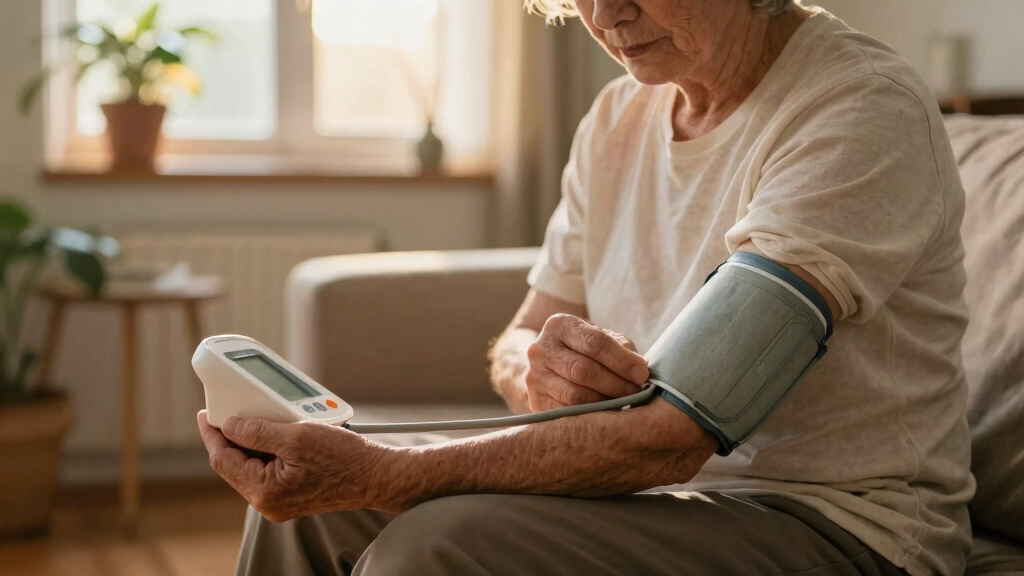
Picture yourself relaxed on your sofa, with your arm supported, ready to get a true snapshot of your health.
Why does this matter? Because your blood pressure can fluctuate based on recent activity or stress. If you measure right after climbing stairs or during a stressful moment, your readings may not accurately reflect your baseline. Proper pre-measurement habits help eliminate these variables, giving you a more stable and meaningful data point. Over time, consistent preparation reduces the noise in your readings, making it easier to detect real changes in your blood pressure that warrant medical attention.
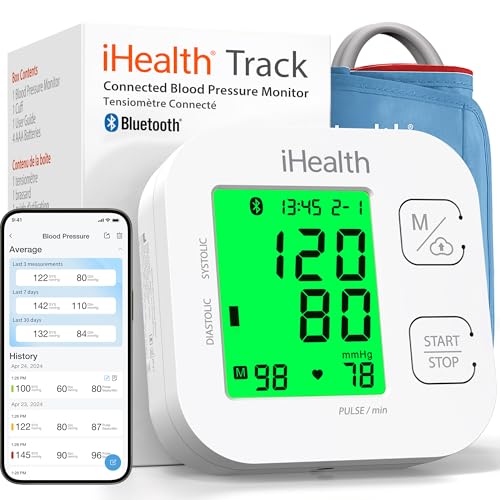
iHealth Track Smart Upper Arm Blood Pressure Monitor with Wide-Range Cuff
- Clinically Accurate: Easy operation, no calibration needed
- Large Multi-Color Display: Oversized numbers with color-coded readings
- Easy Data Management: Store up to 99 readings on device
As an affiliate, we earn on qualifying purchases.
As an affiliate, we earn on qualifying purchases.
Position Yourself Correctly for the Most Accurate Readings
Correct positioning is the secret sauce. Sit comfortably with your back supported, feet flat on the floor, legs uncrossed. Rest your arm on a flat surface, like a table, so that the cuff is level with your heart. This is where many go wrong—placing the cuff too high or low skews the results.
Place the cuff directly on bare skin. Wearing clothing or placing it over a sleeve can add extra layers that interfere with the cuff’s reading, like trying to see through fog.
Imagine your arm as a straight highway—aligned with your heart, free of twists or bends, for smooth, accurate data.
This positioning is critical because gravity and body position significantly influence blood pressure readings. If your arm is below heart level, readings tend to be higher due to hydrostatic pressure. Conversely, if your arm is above heart level, readings may be falsely low. Proper support and alignment ensure that the cuff measures the true pressure without these distortions. Taking the time to position yourself correctly, with your arm supported and at heart level, minimizes errors caused by body position—making your readings more reliable and consistent over time.
iHealth Track Smart Upper Arm Blood Pressure Monitor with Wide-Range Cuff
- Clinically Accurate: Easy operation, no calibration needed
- Large Multi-Color Display: Oversized numbers with color-coded readings
- Easy Data Management: Store up to 99 readings on device
As an affiliate, we earn on qualifying purchases.
As an affiliate, we earn on qualifying purchases.
Follow a Simple Step-by-Step Measurement Routine
Measuring your blood pressure accurately is straightforward if you follow these steps:
- Wrap the cuff snugly around your bare upper arm, just above the elbow.
- Turn on your monitor and follow the instructions—most automatically start after button press.
- Remain silent, still, and breathe normally during the inflation and measurement process.
- Take two or three readings, one minute apart, and record the average for the most reliable result.
For example, if your first reading shows 135/85, and the second is 137/86, take the average—around 136/85. That’s your true snapshot.
Why is this important? Because individual readings can fluctuate due to small variables like cuff placement, breathing, or momentary stress. By following a consistent routine and averaging multiple readings, you minimize the impact of these fluctuations. This approach provides a more accurate assessment of your typical blood pressure, which is essential for tracking trends and making informed health decisions.
iHealth Track Smart Upper Arm Blood Pressure Monitor with Wide-Range Cuff
- Clinically Accurate: Easy operation, no calibration needed
- Large Multi-Color Display: Oversized numbers with color-coded readings
- Easy Data Management: Store up to 99 readings on device
As an affiliate, we earn on qualifying purchases.
As an affiliate, we earn on qualifying purchases.
Stick to a Consistent Schedule and Keep Track of Your Results
The key to meaningful data is consistency. Measure your blood pressure at the same times each day—say, every morning after waking and every evening before bed. This routine helps spot trends over time, like a weather forecast for your health.
Use a notebook or digital app to log readings, noting date and time. For instance, writing down ‘Monday 8 am: 128/82’ makes it easy to spot changes and discuss them with your doctor.
Remember, your blood pressure can fluctuate due to stress, activity, or even sleep quality. Consistent monitoring paints a clearer picture of your true levels. By establishing a routine, you reduce variability caused by different times of day or situational factors, allowing your healthcare provider to better interpret the data and adjust treatment if necessary. Over time, this consistency can reveal patterns—such as morning surges or evening dips—that are critical for managing hypertension effectively.
Maintain and Calibrate Your Device for Long-Term Accuracy
Think of your blood pressure monitor as a trusted tool that needs regular check-ups. Replace batteries at least once a year or when the monitor indicates low power. A sudden dropout during measurement can throw off your results.
Calibrate your device periodically—many manufacturers recommend checking accuracy against a professional device every 1-2 years. This is like tuning a guitar; it keeps everything sounding right.
Keep the cuff and device clean, wiping with a damp cloth. Store it in a dry, cool place away from direct sunlight—think of it as giving your monitor a little spa day.
Why does this matter? Because over time, electronic components can drift, and the cuff can wear out or become less elastic, leading to inaccurate readings. Regular maintenance and calibration ensure that your device continues to provide trustworthy data. Neglecting these steps might result in subtle inaccuracies that, over months or years, could lead to misinterpretation of your health status or unnecessary medical interventions. Proper care extends the lifespan of your device and maintains the integrity of your health monitoring routine.
Discover How Recent Tech Makes Home Monitoring Easier and Smarter
Modern blood pressure monitors connect to smartphones via Bluetooth, automatically logging readings and even sharing data with your doctor. Imagine waking up, measuring your BP, and watching a graph of your weekly trend on your phone—no manual notes needed.
Some devices use cuffless sensors, promising quick checks without wrapping a cuff. While exciting, many of these are still under validation, so stick with cuff-based monitors for now.
Updated guidelines now stress that proper technique and validated devices are more important than bells and whistles. Technology is here to help, but your technique is still king.
Recent technological advances are transforming home monitoring from a tedious chore into a seamless part of daily health management. Bluetooth-enabled devices sync data directly to your smartphone or cloud-based apps, making it easier to identify patterns and share information with healthcare providers. Cuffless sensors promise even greater convenience, but their accuracy and reliability are still under study, so it’s wise to approach them with caution. Ultimately, technology enhances your ability to monitor regularly, but it cannot replace the importance of proper technique and validated devices. Combining good habits with smart tech creates a powerful tool for managing your blood pressure effectively.
Frequently Asked Questions
How often should I measure my blood pressure at home?
Most experts recommend measuring once or twice daily—such as in the morning and evening. Consistency in timing helps track true trends, especially if you’re managing hypertension or trying to keep an eye on your heart health.
What is considered a normal blood pressure reading at home?
Generally, less than 120/80 mm Hg is seen as normal. However, individual targets can vary based on your health history. Always discuss your readings with your healthcare provider to set personalized goals.
Can I rely solely on home blood pressure readings?
Home readings are valuable but should complement regular doctor visits. If your readings are consistently high or low, consult your healthcare provider for proper assessment and potential treatment adjustments.
What if my readings are consistently high or low?
If you notice persistent deviations from your target range, schedule a check-in with your healthcare provider. They can help determine if there’s an underlying issue or if your technique needs adjustment.
Are there risks or errors with home blood pressure monitoring?
Yes, improper technique—like cuff placement or body positioning—can lead to inaccurate readings. Following the proper steps outlined here minimizes these errors and ensures your data is trustworthy.
Conclusion
Your blood pressure reading is only as good as the technique behind it. By selecting the right monitor, preparing carefully, and positioning yourself correctly, you turn a simple task into a powerful health tool.
Imagine having a clear, honest snapshot of your health—every day. That’s what consistent, correct home monitoring can give you. It’s not just a number; it’s your health’s daily report card.
Grilling season Picks
grills
As an affiliate, we earn on qualifying purchases.