
TL;DR

Turn quiet afternoons into listening time
- Thousands of audiobooks, podcasts and originals
- Listen on your phone, tablet or Echo — also offline
- Cancel anytime
A 2025 update of a Cochrane review found that music-based therapy probably improves depressive symptoms in people with dementia and may improve overall behavior. Evidence for lasting effects on cognition or agitation is limited; music is best viewed as a way to support mood and connection, not as a treatment that reverses dementia.
A 2025 update of a Cochrane review found that music-based therapy probably improves depressive symptoms in people with dementia and may improve overall behavior, according to a report by Being Patient. The findings support using music as a possible way to improve mood and engagement, but the review found little evidence that it changes cognition or agitation over the longer term.
The review brought together 30 studies involving 1,720 people, most of them in care homes. Its conclusions were measured: music-based therapy probably helps with depressive symptoms and may help with overall behavior. Effects may not last after sessions end, and the review found little evidence of longer-term changes in cognition or agitation. Music does not reverse or stop dementia.
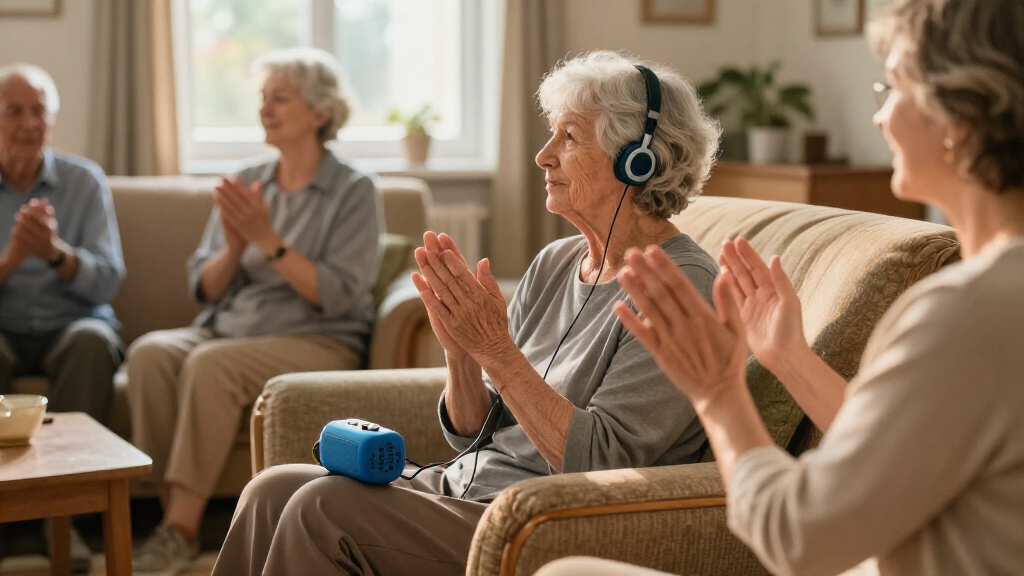
A separate study of 51 people attending adult day health centers tested personalized music players delivering playlists through headphones for 20 minutes. Researchers observed increases afterward in joy, eye contact, eye movement, engagement and talkativeness, as well as a decrease in sleeping. The study suggests a short listening session may affect how participants engage in the moment; its size and design do not establish that the effects persist or apply to everyone.
Dr. Emily Ihara of George Mason University, the study’s lead author, said its results had prompted the team to develop online training for direct-care workers in long-term care communities. The report also describes caregivers using familiar music to ease unsettled moments, including journeys to appointments or changes in routine, alongside practical ways to connect with people with dementia. Those examples reflect practical experience, rather than proof that music will have the same effect for every person.
Music’s Role in Daily Dementia Care
The findings matter because dementia can make communication and familiar routines harder, while music may offer another route to shared attention and expression. A familiar song can prompt singing, movement or emotional response even when a person has difficulty naming people or places. For families and care staff, listening together may create a manageable opportunity for connection without requiring conversation.
The review also puts limits around that promise. Improvements in mood or behavior are not the same as slowing the disease, and evidence for sustained effects is limited. Framing music as a supportive activity, not a cure or substitute for care, helps families set realistic expectations and judge whether it is useful for a particular person.
Popular right now

Bose QuietComfort Wireless Bluetooth Headphones with Active Noise Cancellation, Mic, USB‑C Charging, Deep Bass, 24‑Hour Battery – White Smok

Samsung 85-Inch QN70H Neo QLED 4K Smart TV (2026)

Shark HydroVac MessMaster Corded Wet/Dry Vacuum, Mop & Self-Clean (WD161)
As an affiliate, we earn on qualifying purchases.
Why Familiar Songs Can Persist
Concetta Tomaino, a music therapist and executive director and co-founder of the Institute for Music and Neurologic Function, told Being Patient that familiar songs can draw responses from people with advanced dementia. She recalled residents who appeared unresponsive singing the words when she performed a song they knew. Tomaino has spent decades studying music and neurologic function, including 35 years working alongside neurologist Oliver Sacks.
Music engages several brain systems involved in hearing, movement, memory and emotion. Tomaino said musical attachments are embedded in deeper brain networks that may remain more robust as dementia progresses. That account offers a possible explanation for why a familiar song can prompt a response when other cues do not, but scientists do not have a complete explanation of music’s resilience in dementia.
The source report describes personalized music as a practical option in everyday care. Caregivers have used familiar playlists during changes in environment, travel and unsettled periods after family video calls. It also notes that quiet music before bed may be tried as part of a calming routine, but does not establish from the supplied evidence that it reliably improves sleep.
““They not only came to life in the moment, but were able to sing the words.””
— Concetta Tomaino, music therapist and co-founder of the Institute for Music and Neurologic Function
Limits of the Current Evidence
The review’s conclusions do not show that music changes the course of dementia. It found little evidence of longer-term effects on cognition or agitation, and reported that benefits may fade in the weeks after sessions stop. The source report does not provide enough detail to assess how outcomes varied across different dementia types, stages or music programs.
The day-center study involved just 51 participants and measured responses after a 20-minute session. The report does not say whether the observed changes lasted, whether participants were compared with a control group, or how individual responses differed. It also does not establish that playlists improve sleep, despite describing that as a possible use. The best music, session length and frequency for an individual remain uncertain.
Training and Continued Research
George Mason University’s team is developing online training for direct-care workers, according to Ihara. The source report does not specify when the training will be available or whether it has been tested in care settings. Further research would help clarify how long observed benefits last, which approaches work best for different people and whether regular sessions produce effects beyond those seen immediately after listening.
For now, the evidence supports a cautious approach: caregivers can observe whether a person responds positively to familiar music and adapt the activity to that person’s preferences. Music can be included alongside other care and support, but should not be presented as a treatment for dementia itself.
Key Questions
Can music therapy treat or reverse dementia?
No. The review summarized in the report does not show that music reverses or stops dementia. It suggests possible benefits for depressive symptoms and overall behavior, with limited evidence for lasting effects on cognition or agitation.
What did the 2025 Cochrane review find?
The review update pooled 30 studies and 1,720 participants, most living in care homes. It found that music-based therapy probably improves depressive symptoms and may improve overall behavior, while evidence for longer-term changes in cognition or agitation was limited.
What did the personalized-playlist study observe?
In a study of 51 people at adult day health centers, researchers played personalized music through headphones for 20 minutes. Afterward, they observed more joy, eye contact, eye movement, engagement and talkativeness, and less sleeping. The report does not establish how long these changes lasted.
Why might familiar songs prompt a response?
Music engages brain systems involved in hearing, movement, memory and emotion. Music therapist Concetta Tomaino has suggested that musical memories may be held in deeper brain networks that can remain more robust as dementia progresses, but the explanation is not complete.
Does music help every person with dementia?
The report does not establish that everyone responds in the same way. The studies described point to possible benefits, not a guaranteed effect. Caregivers can pay attention to an individual’s response and preferences while treating music as a supportive activity rather than a replacement for care.
Source: rss