TL;DR
Listen free for 30 days with Audible
Thousands of audiobooks and originals — cancel anytime.
Start your free trialAs an affiliate, we earn on qualifying purchases.
Amplified phones increase volume for better hearing, with ratings from 20 to over 100 dB. The right loudness depends on your hearing loss, but safety limits are set around 100 dB to prevent damage. Knowing these ratings helps you pick a device that’s loud enough without harm.
Ever wonder just how loud is loud enough when it comes to amplified phones? It’s not just about cranking the volume up; it’s about matching the right decibel level to your hearing needs without risking your ear health. With technology advancing, these phones now offer impressive boosts — but how do you know what’s safe and effective?
In this guide, you’ll learn exactly what decibel ratings mean, how loud is too loud, and what features can help you find a perfect match. If you rely on amplified phones, understanding these details can make a real difference in your daily conversations — clearer, safer, and more comfortable communication.
Decibel ratings indicate how much louder an amplified phone can be compared to a standard model, often reaching over 100 dB.
Safe volume levels are below 85 dB; prolonged exposure above this can cause hearing damage.
Choose devices with adjustable volume and tone controls to match your hearing loss without risking harm.
Modern features like DSP and Bluetooth improve clarity and usability, making communication safer and easier.
Always test your phone’s volume in a quiet setting and consult a professional to find the right, safe loudness for your needs.
What do decibel ratings tell you about volume?
Decibel (dB) ratings are the way to measure how loud a phone can get. Think of decibels as the volume’s speed limit. Standard phones usually top out around 60-70 dB, similar to a loud conversation. In contrast, amplified phones can reach 100 dB or more — about as loud as a motorcycle roaring nearby.
This number indicates how much louder the device can be compared to regular phones. For instance, a 40 dB boost means the phone can make speech sound up to 40 times louder than usual.
Understanding this is crucial because it helps you gauge whether the device can meet your hearing needs. For example, if you have moderate hearing loss, a boost of 20-30 dB may suffice, but for severe loss, you might require a device capable of a 50 dB or higher boost. The key is matching the decibel rating to your specific hearing profile—too low, and you might struggle to hear; too high, and you risk damaging your hearing over time. This tradeoff underscores the importance of choosing a device with appropriate volume settings that can be fine-tuned to your comfort level, avoiding unnecessary exposure to overly loud sounds that could lead to further hearing deterioration.
amplified phone with adjustable volume
As an affiliate, we earn on qualifying purchases.
As an affiliate, we earn on qualifying purchases.
How loud is too loud? Finding the safe volume for your hearing
So, how loud should your amplified phone be? The ideal volume level balances clarity with safety. For someone with mild hearing loss, a 20-30 dB boost might be enough to understand speech without strain. For severe loss, a higher boost—say 50-70 dB—may be necessary to compensate for significant hearing gaps. But there’s a fundamental tradeoff: increasing volume improves audibility, yet it also raises the risk of hearing damage if it exceeds safe levels.
Health authorities like the CDC warn that prolonged exposure to sounds above 85 dB can cause irreversible hearing damage. This threshold matters because many amplified phones can push volume beyond this point if not properly regulated. The FCC’s limit of 100 dB acts as a safeguard, but even at these levels, sustained exposure can be harmful. Therefore, the goal is to find a volume that makes speech comfortably loud—clear enough to understand without distortion—while keeping your ear health protected.
Think of it like adjusting a faucet: you want enough flow to wash away dirt, but not so much that it causes splashing or damage. Similarly, setting your phone at the right volume ensures effective communication without risking long-term harm, highlighting the importance of personalized volume control and awareness of the implications of loud sounds over time.
hearing aid compatible amplified phones
As an affiliate, we earn on qualifying purchases.
As an affiliate, we earn on qualifying purchases.
Features that help you find the perfect volume
When shopping for an amplified phone, look for features that make adjusting volume easier and safer. These include:
- Adjustable volume controls: Multiple levels let you set a comfortable loudness, enabling you to tailor the sound to your hearing needs and environment, reducing the risk of accidental overexposure.
- Tone control: Helps clarify speech by emphasizing certain frequencies, which is especially important for those with specific hearing loss patterns. Proper tone adjustments can make speech more intelligible without needing to crank volume to unsafe levels.
- Visual alerts: Flashing lights for incoming calls, especially helpful if you have hearing aids or are in noisy environments, ensuring you don’t miss important calls without increasing volume unnecessarily.
- Large buttons and clear displays: For easy operation, reducing user errors that might lead to setting unsafe volumes out of frustration or confusion.
For example, a user with moderate hearing loss might start at 60 dB, then gradually increase or decrease the volume to find a setting that’s loud enough for clarity but not so high as to risk damage. Many modern phones also connect via Bluetooth to hearing aids or smartphones, adding more control and customization. These features empower you to fine-tune your device, balancing comfort and safety, and ensuring your hearing health is protected while maintaining effective communication.
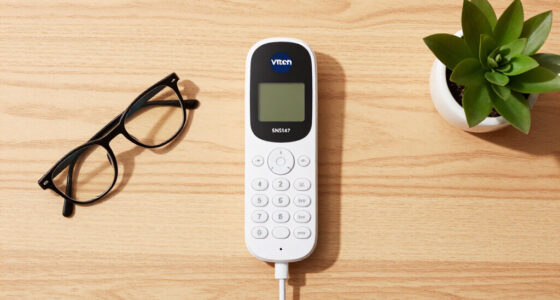
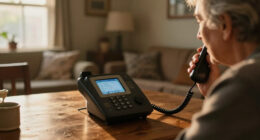
amplified landline phone with decibel control
As an affiliate, we earn on qualifying purchases.
As an affiliate, we earn on qualifying purchases.
Latest tech trends making amplified phones better
Technology keeps evolving, making amplified phones smarter and safer. Modern features include:
- Digital Signal Processing (DSP): Improves speech clarity by filtering out background noise and static, which is especially beneficial in noisy environments. This reduces the need to increase volume excessively, lowering the risk of hearing damage.
- Bluetooth connectivity: Enables seamless pairing with hearing aids or external speakers, allowing for better sound quality and personalized volume control, reducing the temptation to crank up the volume to unsafe levels.
- Smartphone integration: Some models connect to apps that allow you to customize sound profiles and adjust volume precisely, giving you full control over your listening experience and safety parameters.
- Regulatory standards: The FCC limits maximum volume to 100 dB, acting as a crucial safeguard against unintentional exposure to damaging levels. These standards reflect a commitment to user safety, ensuring devices are designed with harm reduction in mind.
For example, a new model might use DSP to reduce static and enhance speech in noisy settings like cafes or busy streets, making conversations clearer without needing to increase volume. These technological advancements balance the need for loudness with the importance of sound clarity and safety, ensuring your device not only amplifies sound but does so in a way that preserves your hearing health over time.
Bluetooth amplified phone for hearing loss
As an affiliate, we earn on qualifying purchases.
As an affiliate, we earn on qualifying purchases.
What every user should know about safety and volume limits
Understanding safety is key. Devices regulated by the FCC are designed not to exceed 100 dB, which is roughly the volume of a lawnmower or a motorcycle—levels that can cause hearing damage if listened to continuously. This regulation serves as a critical safeguard, but it’s also a reminder that louder isn’t always better. Excessively high volume settings, even if within legal limits, can still pose a risk if used for extended periods.
For example, setting your phone at maximum volume might seem effective, but over time, this can lead to further hearing loss, especially if used frequently. The tradeoff is clear: you want enough volume to hear speech comfortably, but not so much that it causes harm. A good practice is to start at a lower volume, then gradually increase until speech is clear but not overpowering. Using sound level meters or smartphone apps to measure decibel levels at your typical listening volume can help you stay within safe limits. Regularly monitoring your volume settings ensures you’re not exposing your ears to unnecessary risk, helping preserve your hearing health for the future.
Questions people really ask about amplified phone volume
- How do I know what decibel level I need? Consult an audiologist to assess your hearing loss and receive personalized advice. Generally, the more severe your hearing loss, the higher the boost you’ll need, but always aim for the lowest effective volume to minimize risk.
- Are there risks to using very loud phones? Yes, sustained exposure above 85 dB can cause further hearing damage. Even if the device allows higher volumes, it’s crucial to stay within safe limits and use the lowest volume that provides clarity.
- What features should I prioritize? Look for adjustable volume, tone control, visual alerts, and compatibility with hearing aids. These features enable safer and more effective communication tailored to your needs.
- Can amplified phones damage my ears? Only if used at unsafe levels for prolonged periods. To prevent this, always set volumes within recommended safety limits and take regular hearing checkups to monitor your health.
- How do I test if the phone is loud enough? Test in a quiet environment, adjusting the volume until speech is clear but not uncomfortable. If unsure, consult an audiologist for guidance on safe listening levels.
Conclusion
Getting the right amplified phone isn’t just about maxing out the volume. It’s about understanding decibel ratings, your personal hearing needs, and safety limits. When you choose wisely, you enjoy clearer conversations without risking your hearing health.
Remember: technology is here to help, but your ears deserve respect. Use volume controls thoughtfully, and don’t be afraid to ask professionals for guidance. Your voice, and your hearing, are worth it.
Summer Picks
summer essentials
As an affiliate, we earn on qualifying purchases.