
TL;DR

Turn quiet afternoons into listening time
- Thousands of audiobooks, podcasts and originals
- Listen on your phone, tablet or Echo — also offline
- Cancel anytime
Many free programs, like the Library of Congress’s NLS and local libraries, make audiobooks accessible for seniors with vision or physical disabilities. These services often include specialized equipment, downloadable books, and expert support, helping seniors keep reading without extra costs.
Imagine losing your ability to read a printed book — but still longing to enjoy stories, news, or your favorite authors. Now, picture a world where you can listen to those stories for free, tailored for your needs. That’s exactly what many government and library programs offer.
In this guide, you’ll learn about the most trusted free audiobook services for seniors, how they work, and who qualifies. Whether you struggle with vision, arthritis, or simply prefer listening, these programs open up a world of stories without costing a dime.
Most free audiobook services for seniors are designed to remove barriers, not just provide entertainment.
Eligibility often hinges on functional reading ability or physical limitations, not just blindness.
The National Library Service (NLS) offers a comprehensive, free, accessible collection for qualifying users.
Public libraries provide digital lending options that are free with a library card, including the latest bestsellers.
Modern technology, like streaming apps and AI narrators, is expanding options but offline and mailed services remain vital.
Audiobooks and Talking Book Services for Seniors
Vision loss, arthritis, tremors, fatigue, and reading disabilities do not have to end a reading life. Government programs, public libraries, and public-domain collections can deliver stories, news, and favorite authors at no cost.
Difficulty holding a book, turning pages, seeing standard print, or processing text may qualify a reader for accessible service.
Staff can explain library apps, connect readers with a regional NLS library, and assist with setup.
NLS materials, equipment, downloads, and postage-free delivery are available without subscription fees.
Accessible programs, library lending, and public-domain collections.
For eligible readers with print disabilities in the United States.
May unlock several audiobook platforms at once.
Dedicated players, cartridges, apps, and downloads support different needs.
Choose by access need, not by brand
The right service depends on functional ability, technology comfort, internet access, and preferred books. Specialized talking-book programs offer the strongest accessibility; public libraries emphasize current commercial titles; public-domain collections provide open access to classics.
National Library Service
The Library of Congress program serves eligible people who cannot comfortably use standard print.
- Specially formatted audiobooks, magazines, and braille
- Accessible player available at no cost
- Postage-free delivery and BARD downloads
- Reader advisory and regional library support
Public Library Apps
A participating library card may provide access to popular and recently published audiobooks.
- Platforms may include Libby, Hoopla, and cloudLibrary
- No disability certification is normally required
- Popular titles may have waiting lists
- Loan periods and limits vary by library
LibriVox
Volunteer readers record books whose copyrights have expired and make them available to everyone.
- No application, certification, or library card
- Stream online or download recordings
- Strong selection of literary classics
- Narration quality and style can vary
Which free service fits best?
Start with the column that matches the reader’s biggest barrier. A senior can use more than one option—for example, NLS for accessible equipment and a public library app for new releases.
| Service | Who qualifies | Best for | Delivery | Important limitation |
|---|---|---|---|---|
| National Library Service | Eligible readers with blindness, low vision, physical limitations, or qualifying reading disabilities | Maximum accessibility and personal support | Mail, dedicated player, BARD, or BARD Mobile | Application and certification are required |
| Public Library Apps | Anyone accepted for a participating library card | Bestsellers, recent releases, and broad commercial catalogs | Smartphone, tablet, computer, or compatible reader | Waitlists, loan periods, and borrowing limits vary |
| LibriVox | Everyone; no qualification is needed | Public-domain classics without registration barriers | Streaming and downloadable audio files | Mostly older works and variable volunteer narration |
Availability and platform participation differ by state, region, and local library system.
It is about using print—not a single diagnosis
A senior does not need to be completely blind. Programs assess whether a visual, physical, or reading condition prevents comfortable use of standard printed material. Certification is often completed by an authorized professional without a full medical examination.
Conditions that may create eligibility
Accessibility value by feature
These relative bars illustrate practical usefulness for readers who need simpler handling, adjustable listening, and reliable ways to resume a book.
From print barrier to first book
Do not begin with an app download. First identify the reader’s preferred listening method and practical limitations, then let library staff match the service and equipment to those needs.
Choose the easiest format
Compare a dedicated player, mailed cartridge, smartphone app, tablet, or downloaded file. Note any need for tactile buttons, amplified sound, or voice commands.
Contact the right library
Ask a local public library about digital lending and request contact details for the state or regional NLS network library when disability access is needed.
Apply, install, or receive
Complete any certification, install the chosen app, or arrange delivery of a player and books. Library staff can guide the reader or caregiver through playback controls.
A five-point signup checklist
A short preparation list helps staff recommend the right catalog, device, and delivery method—and prevents a technically available service from becoming frustrating in daily use.
Bring these details
Gather the senior’s details and the contact information for a qualified certifying professional.
Reader-advisory staff can use preferences to suggest books or arrange automatic selection.
Choose among an app, downloadable file, mailed cartridge, braille, or dedicated player.
Confirm smartphone or tablet compatibility and whether dependable internet service is available.
Ask about headphones, amplified sound, large controls, tactile guidance, and telephone support.
Accessibility preserves independence
The best audiobook service is not necessarily the newest. It is the one a senior can use comfortably, confidently, and consistently.
Match the service to the readerHow the Best Free Programs Make Reading Easy for Seniors
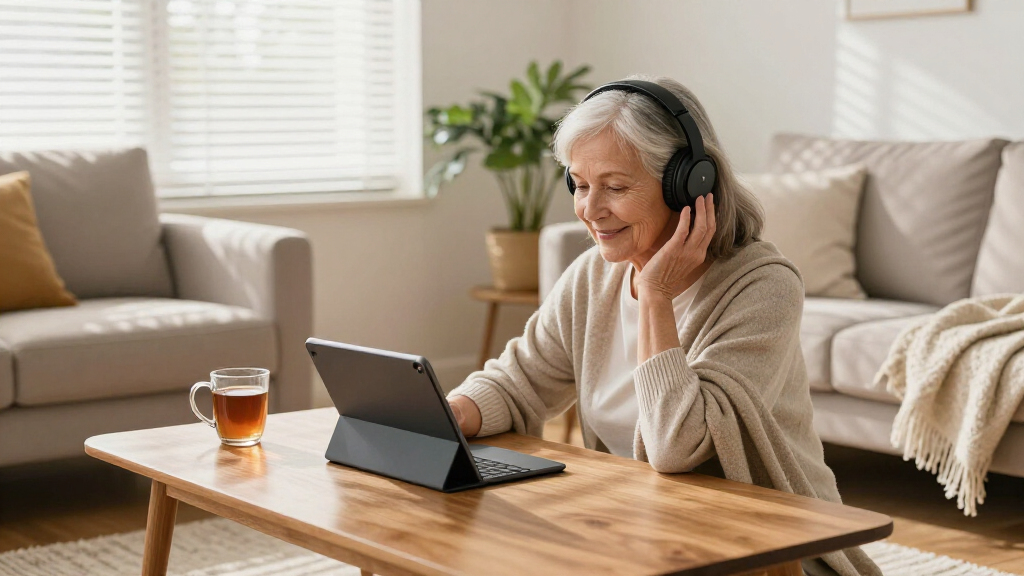
Free audiobook and talking book programs are designed to fit your life, not complicate it. The National Library Service (NLS) is a shining example — offering specially formatted books, simple devices, and delivery right to your door or device.
They include features like chapter navigation, adjustable speed, and tactile controls, all aimed at making listening effortless. Many seniors find that these services eliminate frustration and open up new worlds of entertainment and learning.
For example, an elderly woman with arthritis found that a simple, large-button device and a collection of her favorite mystery novels kept her engaged and independent, even when her eyesight worsened.
Understanding how these features matter is crucial: they are not mere conveniences but essential adaptations that address common age-related challenges. For instance, tactile controls and large buttons reduce the difficulty of physical manipulation, while adjustable speech speed accommodates different hearing and comprehension levels. These design choices reflect a deep understanding of seniors’ needs, making the technology accessible rather than just functional.
Popular right now

Breville Bambino Espresso Machine, Brushed Stainless Steel (BES450BSS)

Vitamix 5200 Professional-Grade Blender, 64 oz. Container, Black

Dyson V8 Cyclone Cordless Vacuum
As an affiliate, we earn on qualifying purchases.
Top 3 Free Talking Book Services You Should Know
| Service | Who Qualifies | What It Offers |
|---|---|---|
| National Library Service (NLS) | People with blindness, low vision, physical disabilities, or reading disabilities | Specialized audiobooks, braille, mail delivery, simple players, downloadable books via BARD |
| Public Library Apps | Anyone with a library card | Digital audiobooks from Libby, Hoopla, cloudLibrary; latest titles, some waiting lists |
| LibriVox | Everyone, no qualification needed | Free recordings of classics, volunteer-read, streaming or download |
Understanding the distinctions among these services matters because each caters to different needs and circumstances. NLS is tailored for those with significant visual or physical challenges, emphasizing accessibility and specialized equipment. Public library apps offer convenience and variety for tech-savvy users or those with internet access, but may require some familiarity with digital platforms. LibriVox provides free, volunteer-read classics accessible to all, but lacks the specialized features of formal programs. Recognizing these differences helps seniors and caregivers choose the best fit, balancing accessibility, content, and ease of use.
Who Qualifies for Free Talking Book Programs? It’s Not Just Blindness
Qualification is based on how well you can read standard print, not just vision. If a physical condition makes holding or turning pages difficult, you may be eligible. Conditions like arthritis, tremors, or neurological issues often qualify.
Understanding why this matters is essential: it broadens access beyond those with complete blindness, recognizing that many seniors face physical limitations that impede reading. For example, a man with Parkinson’s found that listening to audiobooks was much easier than handling physical books because it eliminated the need for fine motor skills. This inclusive approach ensures that a wider range of seniors can benefit from these services, emphasizing the importance of functional ability over medical diagnosis alone. Most programs require a simple certification from a healthcare provider or professional, but a full medical exam isn’t always necessary, which lowers barriers to access.
Latest Trends in Senior Audiobooks: Streaming, AI, and More
Audio services are shifting toward streaming and downloads, making listening more flexible. Many seniors now access books via apps on smartphones or tablets, often supported by their families or caregivers.
Understanding these trends is significant because they reflect a move toward greater convenience and personalization. Streaming and downloadable content reduce the need for physical media, storage space, and mailing delays. AI-generated narrations are also emerging, offering quick, cost-effective ways to produce new audiobooks. While these innovations expand options, they also introduce tradeoffs—such as the potential loss of warmth and emotional nuance found in human narration. Recognizing these developments helps seniors and caregivers make informed choices based on preferences for quality, convenience, and technological comfort. For example, a retiree in a rural area now streams her favorite novels through her tablet, avoiding the need for mailed cartridges or discs. Meanwhile, AI narrators help bring more titles into her reach, but some listeners might find the synthetic voice less engaging, highlighting the importance of personal preference in choosing technology.
How to Get Started with Free Audiobook Services in 3 Simple Steps
- Identify your needs: Do you prefer physical devices, apps, or downloaded files? Do you need large buttons or voice commands?
- Check your eligibility: Contact your local library, state library, or national program like NLS. You’ll likely need a certification from a professional.
- Get set up: Libraries can help you apply, install apps, or send you a dedicated device or cartridge. Staff are usually happy to guide you through the process.
What You Need to Know Before Signing Up
Most free programs are genuinely free, but there are a few things to keep in mind. For instance, some services require proof of disability or certification, and waiting lists are common for popular titles.
Streaming and downloads depend on internet access. Mailed cartridges and dedicated players are available for those with limited tech skills or internet options.
Remember, a library card often opens the door to several platforms, so ask your local library about their digital lending options.
Your Practical Checklist to Accessing Free Audiobooks
- Gather the senior’s contact info and medical certifier’s details
- List preferred genres, authors, and formats (app, cartridge, braille)
- Check device compatibility: smartphone, tablet, dedicated player
- Confirm internet access or mailing preferences
- Ask about additional needs: headphones, amplified sound, large controls
Frequently Asked Questions
Are talking books really free?
Yes, most government and public-library programs are entirely free to qualifying users. You might need internet access or a device, but the books themselves cost nothing.
Does Medicare pay for audiobooks?
No, Medicare typically does not cover audiobook subscriptions. However, many libraries and nonprofit programs offer free access to seniors.
Who qualifies for a talking-book service?
Qualifying conditions include blindness, low vision, physical disabilities preventing holding or turning pages, or reading disabilities like dyslexia. Eligibility depends on functional ability, not age alone.
Can arthritis qualify someone for free audiobooks?
Yes, if arthritis makes it difficult or painful to hold or turn pages, it can qualify as a disability for many programs. Certification from a healthcare provider may be required.
What if the senior doesn’t own a smartphone?
Many programs lend dedicated devices or cartridges by mail. Some libraries also lend tablets or simple players designed for ease of use, making listening accessible even without personal tech.
Conclusion
Accessible, free audiobooks open a door for seniors to enjoy stories, news, and learning without physical or visual barriers. The key is to find the right program that fits your needs and circumstances. With a little effort, you can keep reading — or listening — for many years to come.
Imagine the joy of hearing your favorite novel read aloud, anytime you want, without cost or hassle. That’s the gift these programs offer — a simple way to stay connected, entertained, and engaged.