
TL;DR

Turn quiet afternoons into listening time
- Thousands of audiobooks, podcasts and originals
- Listen on your phone, tablet or Echo — also offline
- Cancel anytime
WSA reported results from studies at 42 clinics in Spain, the United States and Canada, where consultations that systematically explored patients’ sound preferences were associated with hearing aid conversion rates 5 percentage points higher on average. The results do not establish that the approach alone caused the increase; details on study methods and comparison groups are limited in the available report.
WSA says hearing aid conversion rates were 5 percentage points higher on average at clinics where hearing care professionals systematically discussed patients’ sound preferences during consultations. The results draw on studies at 42 clinics in Spain, the United States and Canada, and suggest that giving patients a structured way to compare sound experiences may be associated with greater likelihood of purchasing hearing aids.
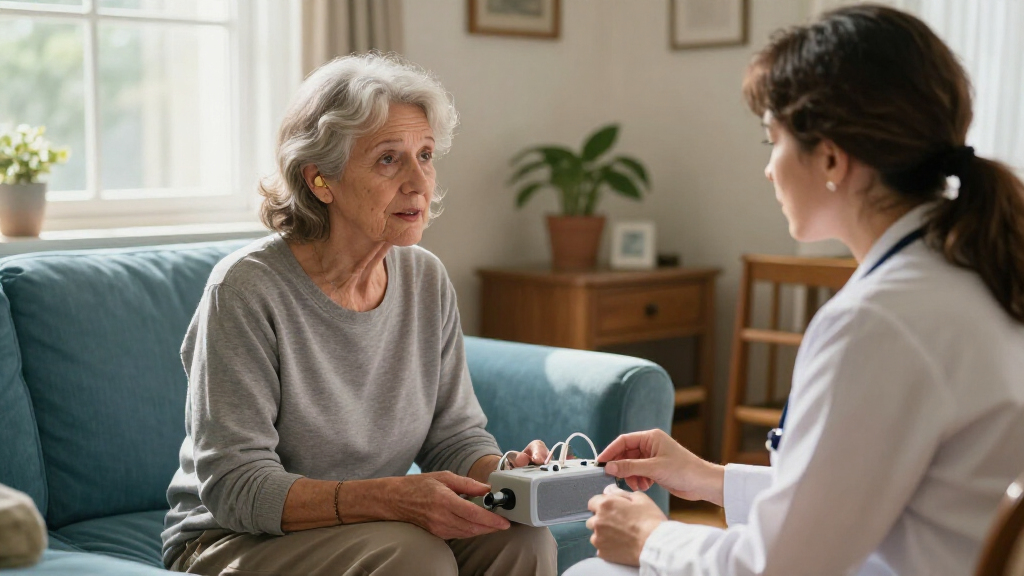
Over more than three months, 63 hearing care professionals used WSA’s Sound Preference tool and a follow-up discussion with new and experienced hearing aid users. Of those professionals, 43 worked in Spain and 20 worked across the United States and Canada. The tool lets patients compare natural and enhanced sound designs in five listening scenarios, giving them a way to describe preferences for clinicians to weigh alongside hearing needs and fitting requirements.
The reported average difference combines results from two studies: 4.3 percentage points in Spain and 5.8 percentage points in North America. WSA described the approach as associated with a greater likelihood of clients purchasing hearing aids. The report does not provide enough detail to conclude that the discussions themselves caused the difference.
In the Spanish study, around 40% of clients expressed a moderate or strong preference for one sound design. Their preferences were divided approximately evenly between natural and enhanced sound. Among Spanish clinicians surveyed, 84% agreed the approach improved the clinical experience they could offer, while 77% agreed it improved the likelihood of selecting the right hearing aid.
How Sound Preferences May Shape Purchases
The findings address a practical issue in hearing care: choosing a device is not only about technical hearing needs, but also about how a person experiences sound. A structured discussion may help patients explain what they value and take a more active part in decisions. The reported conversion difference could matter to clinics and people considering hearing aids, although the available results do not show whether the approach would produce the same outcome in other settings.
For clinicians, the reported survey results also point to a possible consultation benefit beyond sales. Most Spanish clinicians who responded said the approach improved the experience they could offer, and more than three-quarters said it helped the likelihood of selecting the right device. Those are clinician assessments, not independent measures of patient satisfaction or long-term hearing outcomes.
The work also supports WSA’s stated strategy of offering distinct sound designs through its Widex and Signia brands. That makes the method relevant to how hearing professionals discuss and match products, but the study figures do not show that one design is better overall. Preferences varied, and the source says patients without a clear preference can be assessed using other clinical needs and professional judgment.
Popular right now

Bose QuietComfort Wireless Bluetooth Headphones with Active Noise Cancellation, Mic, USB‑C Charging, Deep Bass, 24‑Hour Battery – White Smok

Vitamix Propel Series 510 Professional-Grade Blender, 3 Programs, Black

Vitamix 5200 Professional-Grade Blender, 64 oz. Container, Black
As an affiliate, we earn on qualifying purchases.
WSA’s Sound Preference Program
The studies build on WSA Sound Preference, a global program launched in April, according to the source report. The program includes research and clinical tools intended to help hearing care professionals understand how individual sound preferences relate to hearing aid experiences. The reported studies tested the tool in consultations rather than assessing only device performance in a laboratory.
WSA describes its Widex Allure AI platform as aimed at listeners who prefer a natural sound experience, with a Clarity Boost program for greater clarity in noise. Its Signia Multi-adaptive Xperience platform emphasizes speech clarity and listening comfort in complex environments. These are company descriptions of product features; the reported conversion results do not compare the two products’ effectiveness or establish which is preferable for a particular patient.
The Spanish study’s details are also described in a white paper by Laura Winther Balling, Ingrid Rubio Roldán and José Antonio Navarrete Salmerón. The source report presents the results as evidence supporting conversations about sound preference, while broader conclusions depend on study design and further evidence.
Limits of the Reported Results
The source material does not specify how clinics or participants were selected, what comparison group was used, or how conversion rates were calculated. It also does not provide participant counts, confidence intervals, or details showing whether the differences were statistically significant. Those omissions make it difficult to assess how much the approach, rather than other factors, contributed to the results.
The findings concern hearing aid conversion rates and clinician feedback. The material does not report long-term device use, patient satisfaction after fitting, or hearing outcomes. It is also unclear whether the North American results were analyzed separately for the United States and Canada, or whether the same effects would be seen across a broader range of clinics and patients.
WSA funded and promoted the program, and the product descriptions and statements about the findings come from the company and the report. Independent replication and fuller publication of study methods would help readers judge the strength and wider relevance of the evidence.
Further Study and Clinical Use
WSA says it intends to continue developing its sound-design platforms and the Sound Preference program. The company has not, in the source material, announced a date for additional results or a larger follow-up study. The Spanish findings are available in a white paper by Balling, Rubio Roldán and Navarrete Salmerón.
For now, the reported approach gives hearing care professionals a tool for discussing sound preferences as one part of a consultation. The next evidence to watch for includes fuller methods, independent evaluations, and follow-up on whether preference-led conversations affect patient experience or outcomes after purchase, not just the decision to buy.
Key Questions
What did the WSA studies find?
WSA reported that hearing aid conversion rates were 5 percentage points higher on average when clinicians systematically explored sound preferences. The reported differences were 4.3 percentage points in Spain and 5.8 percentage points in North America.
Where and when were the studies conducted?
The studies involved 42 clinics in Spain, the United States and Canada and ran for more than three months. The source does not give exact start and end dates or the date the results were released.
Does the research prove that discussing sound preferences causes more purchases?
No. The results show an association between systematic preference discussions and higher conversion rates. The available report does not provide enough detail about study design or comparison groups to establish that the discussions caused the difference.
What does the Sound Preference tool do?
The tool lets patients compare natural and enhanced sound designs across five listening scenarios. Clinicians can use patients’ responses alongside hearing needs and other fitting considerations.
Do the results show that one sound design is better?
No. The Spanish findings say preferences were divided approximately evenly between natural and enhanced sound among clients with a moderate or strong preference. The reported results do not establish that either design is better for everyone.
Source: hearingreview.com