
TL;DR

Turn quiet afternoons into listening time
- Thousands of audiobooks, podcasts and originals
- Listen on your phone, tablet or Echo — also offline
- Cancel anytime
At an American Academy of Ophthalmology meeting, researchers reported that patients with advanced geographic atrophy who received the PRIMA retinal implant had continued improvement in device-assisted visual acuity through 36 months. The study was small and single-arm: 27 of 38 participants completed follow-up, and researchers reported 29 serious adverse events, most within six months of surgery.
People with advanced geographic atrophy who received the wireless PRIMA retinal implant continued to gain device-assisted central vision through three years, according to results presented at the American Academy of Ophthalmology annual meeting. In the PRIMAvera study, average visual acuity improved from 12 to 36 months, but the findings come from a 38-person, single-arm trial, and most participants needed surgery and training to use the system.
At 36 months, average visual acuity with the system was reported as -0.59 logMAR, equivalent to a gain of about 30 letters from the study’s starting measure and roughly five letters better than the 12-month result, according to presenter Ehsan Rahimy of Stanford Medicine. The report also described the average acuity measure as improving from 0.49 logMAR at 12 months to 0.58 at 36 months; lower logMAR scores correspond to better acuity, and the presentation characterized the change as continued improvement. The supplied report does not explain this apparent difference in signs between the figures.
Of the 38 participants enrolled at 17 European sites, 27 completed the 36-month follow-up. Seven participants died during the study, with deaths judged unrelated to the implant or procedure, Rahimy said. Four more participants left follow-up after relocating or for other reasons. The trial was described as a phase III-equivalent pivotal study with no comparison group; its primary goals were efficacy and safety.
Researchers reported 29 serious adverse events over three years, 24 of them in the first six months. Reported events included hypotony, subretinal hemorrhage, retinal tears and macular holes. Rahimy said the events did not compromise participants’ natural vision or prevent potential gains from the device; 68% of participants who had a serious adverse event still gained more than 15 letters with the implant. These results are study findings, not proof that the same outcomes will occur in broader use.
Central Vision Gains in Daily Tasks
Geographic atrophy is an advanced form of age-related macular degeneration that damages the central retina. The reported gains matter because central vision supports tasks such as reading and recognizing detail, while the study suggests the implant can provide a visual signal in areas affected by retinal atrophy. The device is intended to restore some central vision, not reverse the underlying disease or restore normal sight.
Patient reports offer a practical measure of function alongside letter-chart results. More than 80% said they could read letters, numbers and words at 12 months. Between 24 and 36 months, half reported being able to do more advanced tasks, including using a smartphone, reading a menu or playing cards. The study report does not provide enough detail here to determine how responses were collected or how they compared with a control group.
Rahimy said vision in the implanted eye without device assistance remained stable, while the untreated eye lost about 1.4 lines. The implant is designed to work with augmented-reality glasses and preserve natural peripheral vision, but its use involves surgery and a demanding postoperative learning process. The balance of functional benefit, risks and practical burden will matter to patients and clinicians considering future access.
Popular right now

TCL QM64L 85-Inch QD-Mini LED 4K Smart Fire TV

Sony BRAVIA 5 85-Inch Mini LED 4K HDR Smart TV (K-85XR50)

Vitamix Propel Series 750 Professional-Grade Blender, 4 Programs, Black
As an affiliate, we earn on qualifying purchases.
How the PRIMA System Works
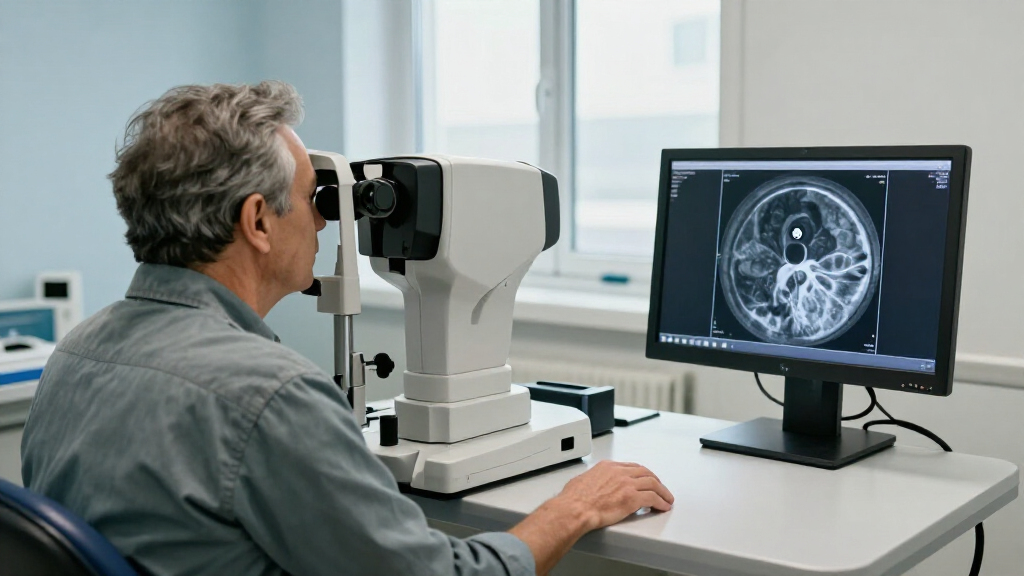
PRIMA is a wireless photovoltaic implant placed beneath the retina. It is designed to replace some lost photoreceptor function in areas of atrophy. A miniature camera on the patient’s augmented-reality glasses captures a live image; a processor converts visual information into pulsed near-infrared light, which passes through the pupil and is absorbed by the implant. The implant converts that light into electrical signals that stimulate retinal cells involved in sending visual information to the brain.
Patients can adjust settings including brightness, mode and zoom. Rahimy cautioned that the device does not provide vision simply by switching it on: patients must complete postoperative training to learn to use it. The new presentation extended findings previously reported at the meeting at 12 months. The source report says the device received approval in Europe in July, but does not specify the year. Rahimy said the manufacturer, Science Corporation, was on track to seek approval from the U.S. Food and Drug Administration.
“The PRIMA system produced durable, clinically meaningful restoration in central vision in patients with geographic atrophy, extending through 36 months.”
— Ehsan Rahimy, Stanford Medicine
Trial Size and Safety Questions
The results do not establish how PRIMA performs compared with no implant or other care because PRIMAvera was a single-arm study. Only 27 of the original 38 participants completed three years of follow-up, limiting how confidently the results can be generalized. Seven deaths were judged unrelated to the implant or surgery by the study team. Miller said a comparator could help put the number of deaths in context; Rahimy noted that participants had bilateral, end-stage disease and a mean age of about 79. The available report does not provide a comparison population.
Longer-term safety and durability also remain under study. Rahimy said serious adverse events were concentrated in the first six months, but the trial still recorded 29 over three years. He reported that photographs showed no implant migration beyond the atrophy lesion borders and that postmortem examinations of two implanted eyes found no significant fibrosis or chronic inflammation. Those observations involve a limited number of eyes and do not settle how risks may vary across a larger patient population.
At the meeting, Rahimy said he did not have data on European sales or possible safety issues arising from commercial use. The report also does not give detailed results for every participant who discontinued follow-up or explain the difference in notation between the reported -0.59 logMAR average and the 0.58 figure at 36 months.
Regulatory Review and Longer Follow-Up
The next major development would be a regulatory submission to the U.S. Food and Drug Administration. Rahimy said Science Corporation was on track to seek FDA approval, but the report gave no submission date, review timetable or decision. European approval was reported as having occurred in July, without a year specified in the source.
Further follow-up and data from use beyond the trial would help clarify how long visual gains last, how often serious complications occur and how patients manage the training requirements. Information on European use, including the number of devices sold and any safety issues, was not available to Rahimy at the meeting. For now, the evidence supports continued study of the system rather than a conclusion that its benefits and risks are established for all eligible patients.
Key Questions
What did the PRIMA study report?
Researchers reported that device-assisted visual acuity continued to improve through 36 months among participants with advanced geographic atrophy. The results came from a 38-person study, with 27 participants completing three-year follow-up.
Does the implant restore normal sight?
No. The system is designed to provide some central vision in areas of retinal atrophy. The report describes functional gains, not normal vision or a cure for geographic atrophy.
What risks were reported?
The study recorded 29 serious adverse events over three years, including hypotony, subretinal hemorrhage, retinal tears and macular holes. Most occurred in the first six months. Rahimy said the events did not compromise natural vision, but larger studies and broader use may provide more safety information.
Is PRIMA approved in the United States?
The source report says PRIMA was approved in Europe in July, but does not specify the year. Rahimy said the manufacturer was preparing to seek FDA approval; the report gives no U.S. submission or decision date.
Do patients need training to use the system?
Yes. Rahimy said patients follow a rigorous postoperative course to learn to use the device. The glasses capture and process visual information, and patients can adjust settings such as brightness and zoom.
Source: rss