
TL;DR
Voice alerts in carbon monoxide detectors deliver clear, spoken warnings, making it easier for older adults to understand and respond quickly. They improve safety by reducing confusion, especially during emergencies or for those with hearing or cognitive challenges.
Imagine hearing a loud beep during the night — it’s startling, but you might not grasp the urgency, especially if your hearing isn’t perfect or your mind is foggy. Now picture a voice calmly saying, “Carbon monoxide detected. Evacuate immediately.” That’s the difference voice alerts can make. They turn a confusing noise into a clear message, giving you confidence to act fast. For older adults, this direct communication can be a life-saver, transforming a silent threat into a loud, understandable warning.
In this guide, you’ll learn why spoken warnings matter, what features to look for, and how modern technology makes home safety more accessible. If you or a loved one want smarter, clearer alerts, understanding these innovations could be your best move yet.
Voice alerts turn vague beeps into clear instructions, helping older adults understand danger instantly.
Smart features like remote alerts and multilingual options make CO detectors more accessible and reliable.
Proper placement and regular testing are essential to ensure voice alerts work when needed.
Investing in a voice-enabled, smart CO detector can mean the difference between life and tragedy.
Smarter technology makes responding to carbon monoxide leaks faster and easier for vulnerable populations.
Carbon Monoxide Detectors With Voice Alerts Why spoken warnings help older adults
A beep signals that something is wrong. A voice explains what is wrong and what to do next. For older adults living with hearing changes, nighttime disorientation, or cognitive decline, that clarity can turn uncertainty into immediate action.
From startling sound to understandable instruction
Carbon monoxide is colorless, odorless, and tasteless. Because people cannot detect it unaided, the alarm must do more than attract attention—it must help the listener correctly interpret danger and respond.
Names the threat
A spoken message distinguishes a carbon monoxide event from a smoke alarm, appliance tone, low-battery chirp, or household notification.
Says what to do
Explicit instructions such as “evacuate immediately” remove guesswork and help transform alarm recognition into decisive movement.
Reduces confusion
Natural speech may be easier to interpret than a high-pitched pattern, especially when someone is sleeping, wearing hearing aids, or feeling disoriented.
Clarity creates more time to act
The research brief describes meaningful gains in evacuation response and sensor speed. The bars below express those directional figures on a common 0–50% scale.
Traditional beep versus voice-enabled warning
Traditional alarms remain valuable, but spoken warnings add meaning, accessibility, and connected support. The strongest devices combine a loud alarm tone with clear speech.
| Feature | Traditional alarm | Voice-enabled alarm |
|---|---|---|
| Sound type | ~Loud beep pattern | ✓Spoken warning plus beep |
| Hazard clarity | –Listener must interpret the tone | ✓Names carbon monoxide directly |
| Action guidance | –No spoken instruction | ✓Can tell occupants to evacuate |
| Accessibility | ~Limited for some hearing or cognitive needs | ✓Clearer natural-speech cue |
| Connected features | –Rare or unavailable | ✓Remote alerts, app status, interconnection |
| Typical cost | $Generally lower | $$Usually higher, with added capability |
Best fit: prioritize comprehensibility, certified detection, backup power, and reliable coverage—not connectivity alone.
Six features worth prioritizing
Smart functions can extend protection to caregivers and family members, but the fundamentals still come first: a clear warning, dependable power, certified detection, and simple operation.
Clear voice alerts
Choose intelligible speech paired with a loud alarm tone. Confirm that the message identifies carbon monoxide and gives an action.
EssentialBattery backup
Protection should continue during a power outage. Check the battery type, replacement process, and end-of-life warning.
EssentialInterconnected alarms
When one detector senses danger, linked units can sound throughout the home so distant bedrooms receive the warning.
High valueRemote notifications
App alerts can notify a caregiver or family member when the resident is away from the phone or needs assistance.
Caregiver supportMultilingual speech
A familiar language makes emergency guidance easier to understand and supports households with different language needs.
AccessibilitySimple controls
Large test and silence controls, clear status indicators, and straightforward setup reduce day-to-day cognitive load.
Ease of useA warning is only useful when the full chain holds
Effective protection connects detection, communication, comprehension, and action. A failure at any point can delay evacuation.
Sensor detects CO
The device recognizes a dangerous concentration pattern before people can sense the gas themselves.
Alarm gains attention
A loud tone wakes occupants and signals that immediate attention is required.
Voice adds meaning
Speech identifies carbon monoxide and distinguishes the event from smoke or a low battery.
Occupants evacuate
Clear direction reduces hesitation: leave for fresh air, contact emergency services, and do not re-enter.
Sleeping areas
Install near bedrooms so warnings can wake occupants before exposure escalates.
Every home level
Create layered protection across basements, main living spaces, and upper floors.
Fuel-burning appliances
Follow manufacturer guidance for placement near furnaces, water heaters, and fireplaces.
Attached garage
Place protection inside the home near the garage connection, following local guidance.
If the alarm says carbon monoxide
Treat the warning as real. Do not spend time searching for the source or attempting to silence the system before reaching fresh air.
Move outside
Help every person and pet reach fresh air immediately.
Call for help
Contact emergency services from a safe location.
Account for everyone
Check that all occupants have left the building.
Wait for clearance
Do not re-enter until emergency professionals say it is safe.
Build a system that is easy to hear, understand, and maintain
Choose certified voice-enabled detectors, cover every level and sleeping zone, test the spoken message with the older adult who will rely on it, and involve a caregiver in remote alerts when appropriate.
NOTE: Percentage figures visualize claims supplied in the article research brief and should be treated as directional unless supported by a cited study. Installation, maintenance, replacement intervals, and emergency procedures must follow the detector manufacturer, local code, and emergency-authority guidance.
Why Voice Alerts Make a Real Difference for Older Adults
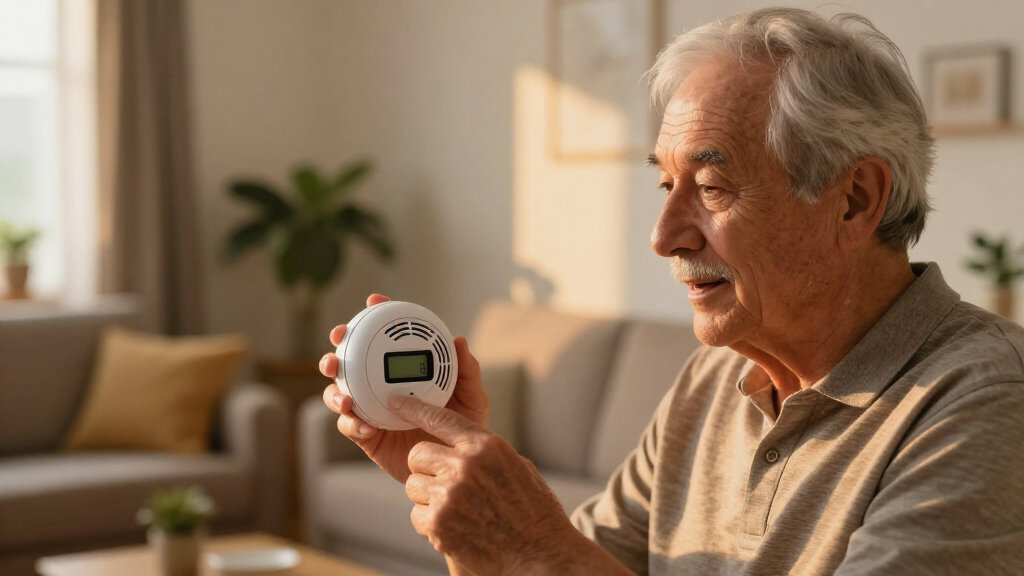
Voice alerts turn a simple alarm into a personal messenger. Instead of just a loud beep, they tell you what’s wrong — like “Carbon monoxide detected” — and what to do next, such as “Evacuate immediately.” For seniors with hearing loss or cognitive challenges, this clarity is crucial. A loud, clear voice can cut through confusion, helping them recognize danger instantly.
Imagine a homeowner with hearing aids who can’t always hear high-pitched beeps. A voice alert, with its natural speech, makes the warning unmistakable. According to an anonymous researcher, voice alerts increase evacuation response times among seniors by up to 40%. That’s a significant improvement, especially considering that in emergencies, every second counts. When alerts are clear and direct, they reduce the risk of delayed reactions that can be fatal. Furthermore, the ability to understand the warning reduces anxiety and panic, which might otherwise impair decision-making during critical moments.

Kidde Smoke & CO Detector, AA Battery-Powered, 30CUDR-V, 1 Pack
- 2-in-1 Smoke and CO Detection: Detects smoke and carbon monoxide
- Fast Smoke Detection: Over 25% quicker detection
- Audible and Visual Alerts: 85dB alarm with red LED light
As an affiliate, we earn on qualifying purchases.
As an affiliate, we earn on qualifying purchases.
Smart Features That Boost Safety and Ease Use
Modern CO detectors with voice alerts come loaded with features that make safety effortless. These features are not just luxuries but essential tools that address common barriers faced by older adults, such as hearing impairments or difficulty managing multiple devices. For instance, a loud, clear voice warning ensures that even those with diminished hearing can recognize danger. Battery backup is vital because power outages are common during emergencies, and a detector that loses power becomes useless. Interconnectivity allows multiple alarms to work together, ensuring that if one detects danger, all alarms sound simultaneously, creating a widespread alert that’s hard to ignore.
Smartphone integration extends safety beyond the immediate vicinity. It allows caregivers or family members to receive instant alerts, check the status of detectors, and even silence alarms remotely—reducing unnecessary panic and enabling quicker response times. Multilingual options are particularly important in diverse households, ensuring everyone understands the warning regardless of language barriers. These features collectively reduce the cognitive load on users, making safety more accessible and less intimidating. The tradeoff, of course, can be the higher cost and the need for some tech literacy, but the safety benefits often outweigh these concerns, especially for vulnerable populations.
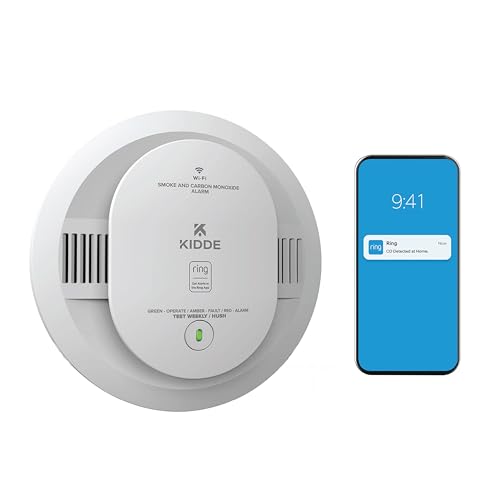
Kidde Smart Smoke & CO Detector with Ring, AA Battery, RGCUDR-RW
- Detection Types: Smoke and CO alerts
- App Notifications: Real-time Ring app alerts
- Detection Speed: Over 25% faster detection
As an affiliate, we earn on qualifying purchases.
As an affiliate, we earn on qualifying purchases.
How Voice Alerts Have Improved with Technology
Newer models of CO detectors incorporate advanced technology that significantly enhances their effectiveness. These innovations include customizable voice warnings, allowing users to select preferred voice tones or languages, which can reduce alarm fatigue or confusion. For example, a friendly tone might be less startling and more reassuring for some users, encouraging quicker responses. Enhanced sensors now detect dangerous CO levels more than 50% faster than older models, which is critical in preventing poisoning. Faster detection means less exposure to harmful gases and more time for evacuation.
Seamless integration with smart home systems further amplifies these benefits. For instance, a smart detector can send alerts directly to your phone, dim the lights to alert you visually, or even activate fans to ventilate the area. These features create a proactive safety environment, where the system not only warns but also assists in mitigating risk. The tradeoffs involve increased complexity and cost, but for many, the peace of mind and increased safety justify the investment. These technological advancements are making voice alerts smarter, faster, and more adaptable to individual needs, which is especially important for older adults who may rely heavily on clear, immediate communication during emergencies.

YoLink Photoelectric Smoke Alarm, Smart Smoke Detector with App, Self-Test, UL217 10th Edition & CAN/ULC S531 Certified, Hub Required, YS7A12-UC
- Early Smoke Detection: Detects smoke early and sounds alarm
- Remote Alerts: Get instant app, SMS, or email alerts
- Certified Safety Standards: UL217 10th Edition and CAN/ULC S531 certified
As an affiliate, we earn on qualifying purchases.
As an affiliate, we earn on qualifying purchases.
Where and How to Install Voice-Enabled CO Detectors
Proper placement guarantees your voice alerts do their job effectively. Installing detectors near sleeping areas, on every level, and close to potential sources of CO—like furnaces and water heaters—is essential. This strategic placement ensures that the warning is heard and understood before danger escalates. For example, placing detectors about 5 feet above the floor where CO tends to accumulate ensures maximum sensitivity. Regular testing and battery replacement are crucial; a detector is only effective if it’s functioning properly when needed. Monthly tests and annual battery replacements are recommended to maintain optimal performance.
Think of it as deploying a network of safety nets throughout your home. Proper placement minimizes blind spots, ensuring that no matter where danger originates, the alert system can detect and communicate it promptly. This proactive approach reduces the risk of unnoticed leaks and ensures that every household member receives the warning in time to respond.
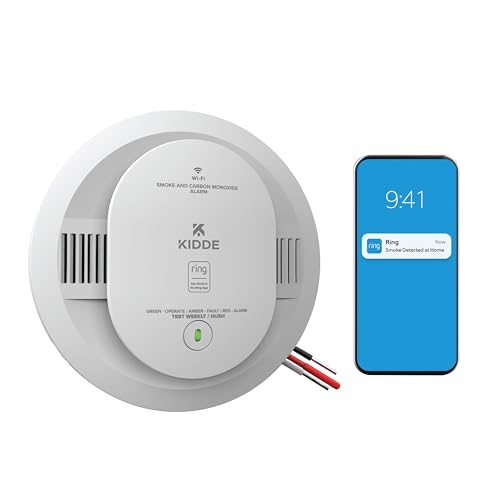
Kidde Smart Smoke & CO Detector with Ring, Hardwire & AA Battery, RGCUAR-RW
- Dual Detection: Detects smoke and CO
- App Notifications: Real-time alerts via Ring app
- Faster Detection: Over 25% quicker smoke detection
As an affiliate, we earn on qualifying purchases.
As an affiliate, we earn on qualifying purchases.
Comparing Traditional vs Voice-Enabled CO Detectors
| Feature | Traditional Alarm | Voice-Enabled Alarm |
|---|---|---|
| Sound Type | Loud beep | Spoken warning + beep |
| Response Clarity | Can be confusing or ignored | Clear, explicit instructions |
| Accessibility | Limited for hearing-impaired | Assists hearing loss & cognitive issues |
| Smart Features | Rare or none | Remote alerts, app control, multilingual options |
| Cost | Generally lower | Usually higher but more effective |
While traditional alarms are cheaper, voice alerts provide clarity that can literally save lives. The investment in a smart detector pays off in peace of mind and quicker responses, especially for those who might struggle with interpreting standard alarms. Understanding the practical differences helps you weigh the tradeoffs between cost and safety, making an informed choice that prioritizes your household’s well-being.
What You Should Do Today to Protect Your Home and Loved Ones
If you want safer, smarter alerts, start by choosing a CO detector that features voice warnings. Look for models with loud, clear voice alerts, backup power, and smart capabilities. Place them correctly — near bedrooms, in hallways, and on every floor— to maximize their effectiveness. Proper placement ensures the voice warnings are loud enough and positioned where they’re most likely to be heard during sleep or in noisy environments. Regularly testing your alarms and replacing batteries ensures they are operational when needed, preventing false sense of security. Upgrading to smart models with remote monitoring capabilities can provide additional peace of mind, especially if you’re away from home or caring for others. These steps create a safer environment, giving you confidence that your household is protected from the silent threat of carbon monoxide.
Frequently Asked Questions
Are voice alerts truly more effective than traditional alarms?
Yes. Voice alerts provide explicit instructions that are easier to understand, especially for older adults or those with hearing difficulties. They significantly reduce reaction time and improve safety outcomes by eliminating ambiguity. When people clearly hear exactly what they need to do—whether evacuate or ventilate—their response is faster and more confident. This clarity is especially vital during high-stress situations where quick decision-making is crucial. The increased comprehension and faster responses afforded by voice alerts have been shown in multiple studies to reduce the risk of injury or death during CO emergencies.
How loud should a voice alert be for it to be effective?
Most experts recommend at least 85 decibels, which is loud enough to wake someone from sleep and alert them effectively. However, volume alone isn’t enough; clarity and speech intelligibility are equally important. Voice alerts should be designed with clear diction and a tone that is neither too startling nor too soft. For households with hearing impairments, pairing auditory alerts with visual indicators, like flashing lights, can enhance safety. The goal is to ensure that the warning cuts through ambient noise and reaches every household member, providing enough time for safe evacuation or response.
Can voice alerts be customized or used in multiple languages?
Yes. Many modern models offer customizable voice warnings, allowing users to select preferred voices, tones, or languages. This flexibility is particularly beneficial in multicultural households or for individuals who feel more comfortable receiving alerts in their native language. Customization not only improves comprehension but also reduces alarm fatigue—where frequent, similar alerts become less effective. By tailoring the voice warnings, manufacturers help ensure that everyone in the household can quickly understand and respond to alerts, thereby improving overall safety and inclusivity.
Are smart CO detectors worth the extra cost?
For many households, especially those with older adults or individuals with health concerns, smart detectors offer significant value. They provide remote monitoring, instant alerts via smartphone, and integration with other smart home devices, creating a comprehensive safety network. This proactive approach allows caregivers to respond promptly even when they’re not at home, potentially preventing tragedies. While the initial investment is higher, the ability to receive real-time updates and manage alerts remotely can be invaluable during emergencies. The added convenience and peace of mind often justify the cost, making smart detectors a worthwhile upgrade for those prioritizing safety and ease of use.
What maintenance do voice-enabled CO detectors require?
Regular maintenance is essential to ensure your voice-enabled CO detectors function correctly. This includes testing the alarms monthly, replacing batteries at least once a year—or more frequently if indicated—and inspecting sensors for dust or obstructions. Many models also include self-diagnostic features that alert you when maintenance is needed. Following the manufacturer’s guidelines ensures the detectors remain reliable and responsive during emergencies. Proper upkeep not only prolongs the lifespan of the device but also guarantees that the voice alerts and other smart features operate seamlessly when they’re most needed, providing continuous protection for your household.
Conclusion
Choosing a carbon monoxide detector with voice alerts isn’t just about keeping up with technology — it’s about giving older loved ones the confidence to stay safe. Clear, spoken warnings cut through confusion, turning a silent threat into an immediate call to action.
Think of these detectors as a caring voice in your home, guiding you and your family away from danger. Making the switch is a simple step that could save a life — so consider upgrading today.