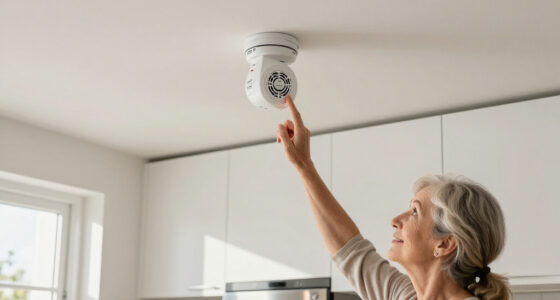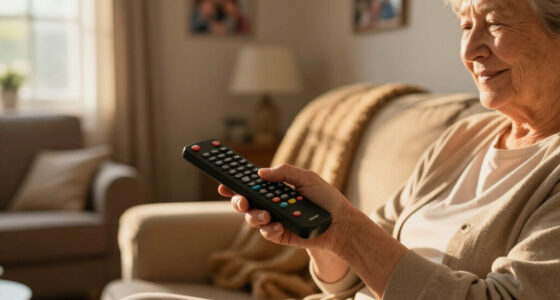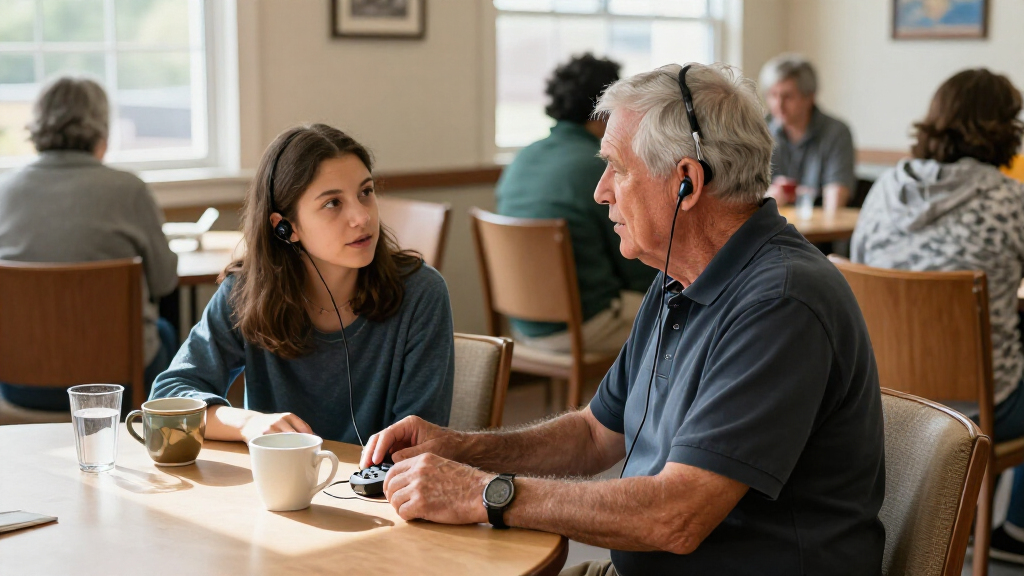

The best assistive listening system for most small venues is the Enersound 4-Person Assistive Listening System with Carrying Case and ADA Plaque, which pairs a manageable receiver count with clear storage and access-signage details. For larger groups, the Retekess T130 bundles ten receivers with a charging case, while the Avantree AuraPlex MX offers an Auracast-based option for churches planning around newer broadcast audio. The main tradeoffs are audience capacity, receiver and hearing-aid compatibility, and how much setup or charging a venue can manage. Personal amplifiers serve one listener differently from transmitter-and-receiver systems designed for shared spaces. Read on for the full comparison and guidance on matching a system to your listeners and venue.

Turn quiet afternoons into listening time
- Thousands of audiobooks, podcasts and originals
- Listen on your phone, tablet or Echo — also offline
- Cancel anytime
Complete the kit


Key Takeaways
- The Enersound four-person system is the most balanced small-venue pick: its case and ADA plaque make storage and visible access information part of the package, while the headphone version is a simpler alternative if that setup better suits your listeners.
- Receiver count changes the buying decision: the Enersound 10-person neckloop model and 20-person model target larger groups, while smaller Retekess kits keep the initial setup more manageable.
- Charging logistics separate several Retekess options: the T130 includes a charging case, while the TT106S, TT119, and TR503 have different receiver counts and package configurations to compare.
- Auracast is a different kind of choice, not just another receiver bundle: Avantree AuraPlex MX and Venucast AuraPlex M3 suit venues exploring broadcast-based listening, while conventional kits may be easier to match to existing receiver routines.
- Personal amplification is not interchangeable with a venue system: the PockeTalker Ultra Duo and ConvoAssist focus on individual or close-range listening, rather than distributing audio to a roomful of receivers.
| Enersound 4-Person Assistive Listening System with Carrying Case and ADA Plaque |  | Best for Growing Small Venues | Capacity: 4 listeners | Carrying case capacity: Up to 10 receivers and accessories | Included accessories: Carrying case and ADA plaque | VIEW LATEST PRICE | See Our Full Breakdown |
| Retekess TT106S Assistive Listening System, 1 Transmitter and 6 Receivers |  | Best for Tours and Long Sessions | Included items: 1 transmitter and 6 receivers | Wireless range: Up to 200 m (656 ft) | Receiver battery life: Up to 50 hours | VIEW LATEST PRICE | See Our Full Breakdown |
| Avantree AuraPlex MX Auracast Assistive Listening System for Churches |  | Best for Auracast-Ready Venues | Included: 1 transmitter, 10 clip-on receivers, 10-slot charging dock, optical cable, AUX cable, 2 USB-C cables, power charger, storage bag | Wireless technology: Auracast, Bluetooth LE Audio | Range: Up to 328 ft (100 m) line of sight | VIEW LATEST PRICE | See Our Full Breakdown |
| Enersound 4-Person Assistive Listening System with Headphones |  | Best for Ready-to-Use Headphone Listening | Capacity: 4 people | Headphones: Foldable over-ear headphones for each receiver | Cable: Reinforced | VIEW LATEST PRICE | See Our Full Breakdown |
| ConvoAssist Personal Sound Amplifier with Dual Wireless Microphones |  | Best for One-to-One and Small-Group Conversations | Power source: Rechargeable lithium batteries | Microphones: 2 wireless clip-on microphones | Microphone range: Up to 100 feet | VIEW LATEST PRICE | See Our Full Breakdown |
| Enersound 10-Person Assistive Listening System with Neckloops and ADA Plaque |  | Best for T-Coil Access | Capacity: 10 people | Included accessories: T-coil neckloops and ADA plaque | Expansion: Supports additional Enersound R-120 or R-100 FM receivers | VIEW LATEST PRICE | See Our Full Breakdown |
| Peavey Assisted Listening System, 75.9 MHz |  | Best for Small, Straightforward Setups | Frequency: 75.9 MHz | Included: Transmitter, four receivers, and four standard earbuds | Additional receivers: Available | VIEW LATEST PRICE | See Our Full Breakdown |
| Retekess T130 Assistive Listening System with 1 Transmitter, 10 Receivers, and Charging Case |  | Best for Rechargeable Group Listening | Transmitter count: 1 | Receiver count: 10 | Charging station: 16-port USB | VIEW LATEST PRICE | See Our Full Breakdown |
| Retekess TT119 Assistive Listening System, 1 Transmitter and 10 Receivers |  | Best for Long-Range Interpretation | Included: 1 transmitter and 10 receivers | Range: Up to 300 m (984 ft) | Channels: 17 | VIEW LATEST PRICE | See Our Full Breakdown |
| Williams Sound PockeTalker Ultra Duo Sound Amplifier |  | Best for One-to-One Conversations | Acoustic gain: 20–40 dB | Battery life: Up to 100 hours | Power source: 2 AAA batteries (not included) | VIEW LATEST PRICE | See Our Full Breakdown |
| Avantree Audiplex M3 Multi-Channel Assistive Listening System with 1 Transmitter and 3 Receivers |  | Best for Multi-Channel Listening | Wireless technology: 2.4 GHz RF | Selectable channels: Up to 4 | Latency: 30 ms | VIEW LATEST PRICE | See Our Full Breakdown |
| Retekess TR503 Church Hearing Assistance System with 1 Transmitter and 5 Receivers |  | Best for Portable Group Use | Wireless frequency range: 87.9–91.9 MHz | Channels: 17 | Included components: 1 transmitter and 5 receivers | VIEW LATEST PRICE | See Our Full Breakdown |
| Venucast AuraPlex M3 Auracast Assistive Listening System |  | Best for Auracast-Compatible Hearing Aids | Wireless technology: Bluetooth LE Audio / Auracast | Included devices: 1 transmitter and 3 receivers | Range: Up to 100 m (328 ft) line of sight | VIEW LATEST PRICE | See Our Full Breakdown |
| Enersound 20-Person Assistive Listening System with ADA Plaque |  | Best for Larger Venues | Capacity: Up to 20 people | Item weight: 14 pounds | Warranty: 3 years | VIEW LATEST PRICE | See Our Full Breakdown |
| assistive listening system | Warranty |
|---|---|
| Enersound 4-Person Assistive L | 3 years |
| Retekess TT106S Assistive List | — |
| Avantree AuraPlex MX Auracast | 24 months with product registration |
| Enersound 4-Person Assistive L | 3 years |
| ConvoAssist Personal Sound Amp | — |
| Enersound 10-Person Assistive | — |
| Peavey Assisted Listening Syst | — |
| Retekess T130 Assistive Listen | — |
| Retekess TT119 Assistive Liste | — |
| Williams Sound PockeTalker Ult | 5 years (listed in product content) |
| Avantree Audiplex M3 Multi-Cha | 24 months |
| Retekess TR503 Church Hearing | — |
| Venucast AuraPlex M3 Auracast | 2 years |
| Enersound 20-Person Assistive | 3 years |
More Details on Our Top Picks
Enersound 4-Person Assistive Listening System with Carrying Case and ADA Plaque
I’d choose this Enersound kit when a venue needs a ready-to-store four-listener setup with room to add receivers later. Its case holds up to 10 receivers and accessories, so the initial four-person system can grow without requiring a separate storage solution. The included ADA plaque also makes it a more venue-oriented choice than ConvoAssist, which is designed around personal conversations rather than a shared listening service. A three-year warranty and U.S.-based phone support add practical support for organizations that will keep the equipment on hand.
The tradeoff is that expansion is not included: additional compatible R-120 or R-100 receivers must be purchased separately. At 14 pounds, this is also more to transport than the five-pound Enersound four-person headphone package. I’d pick this version for organized storage and future capacity, not minimum carrying weight.
Pros:- Serves four listeners and can expand with compatible Enersound R-120 or R-100 receivers.
- Case stores up to 10 receivers and accessories, leaving room for future additions.
- Includes an ADA plaque for a venue-based assistive listening setup.
- Three-year warranty and U.S.-based phone support.
Cons:- Additional receivers are not included, so expansion requires separate purchases.
- At 14 pounds, it is heavier to transport than the Enersound four-person headphone system.
Best for: Small churches, meeting rooms, and community venues that currently serve four listeners and want a case with space for future compatible receivers.
Not ideal for: Venues that need more than four receivers immediately or staff seeking the lightest kit to carry between locations; extra receivers are separate and the system weighs 14 pounds.
- Capacity:4 listeners
- Carrying case capacity:Up to 10 receivers and accessories
- Included accessories:Carrying case and ADA plaque
- Compatible additional receivers:Enersound R-120 or R-100
- Item weight:14 pounds
- Warranty:3 years
Our verdict“Choose this Enersound kit if a small venue values organized storage and a path to expansion more than keeping the initial setup especially light.”
Retekess TT106S Assistive Listening System, 1 Transmitter and 6 Receivers
The Retekess TT106S makes the most sense when listeners move around a tour, training session, or event and a long receiver runtime matters. It includes six ear-hook receivers and claims up to 50 hours of battery life, far longer than ConvoAssist’s stated eight hours per charge. Its stated 656-foot range also suits larger or outdoor settings better than the Avantree AuraPlex MX’s 328-foot line-of-sight range, though actual coverage depends on the space.
Simple one-button controls and nine volume levels keep receiver operation straightforward, while 9999 channels support separating multiple groups. The tradeoff is the 20-minute no-signal shutdown: a quiet interval can interrupt listening until a receiver is restarted. I’d favor this over a fixed venue-focused setup for mobile groups, but not when listeners need uninterrupted operation through long silent pauses.
Pros:- Includes one transmitter and six ear-hook receivers.
- Stated receiver battery life is up to 50 hours.
- Stated wireless range reaches up to 200 m (656 ft).
- One-button controls, nine volume levels, and 9999 channels support simple use across multiple groups.
Cons:- Receivers automatically shut down after 20 minutes without a signal.
- The stated range does not guarantee coverage through walls or other obstructions.
- AUX is the listed audio input, which may not suit every source without an appropriate connection.
Best for: Tour guides, trainers, and event organizers who need six portable receivers, extended stated battery life, and the ability to separate many groups by channel.
Not ideal for: Groups that need receivers to remain on through extended signal gaps, or venues that need more than six included receivers without adding equipment.
- Included items:1 transmitter and 6 receivers
- Wireless range:Up to 200 m (656 ft)
- Receiver battery life:Up to 50 hours
- Battery capacity:450 mAh
- Charging time:3 hours
- Channels:9999
- Receiver volume levels:0–9
- Audio input:AUX
- Automatic shutdown:After 20 minutes without a signal
Our verdict“Pick the TT106S for mobile groups that value long stated receiver runtime and broad claimed range, but avoid it if quiet pauses must not interrupt listening.”
Avantree AuraPlex MX Auracast Assistive Listening System for Churches
The AuraPlex MX stands apart from the receiver-centered Enersound kits by offering Auracast and Bluetooth LE Audio alongside 10 included clip-on receivers. That gives a church, classroom, or event organizer two listening paths: provide receivers for attendees or allow people with select Auracast-enabled hearing aids and compatible devices to connect with their own equipment. Optical, AUX, and Bluetooth connections also give the venue several ways to feed audio into the transmitter.
The 328-foot line-of-sight range is suited to medium-sized spaces, not stadium-scale coverage; walls and other obstructions can reduce reach. Compatibility is a real limitation, since Auracast support applies only to select devices. Compared with the Retekess TT106S, this system offers BYOD Auracast listening but has a shorter stated range. I’d choose it when device compatibility can be checked in advance and the venue wants a modern shared-audio option.
Pros:- Includes 10 clip-on receivers and a 10-slot charging dock.
- Supports venue receivers and BYOD listening with select Auracast-enabled devices.
- Optical, AUX, and Bluetooth connections allow different audio sources.
- Includes a storage bag and cables for the listed connection types.
Cons:- Hearing aid and personal-device support is limited to select Auracast-compatible models.
- The 328-foot range is line of sight and can be reduced by obstructions.
- Not recommended for stadiums or outdoor events.
Best for: Churches, classrooms, and medium-sized event venues that want to supply receivers while also offering listening through compatible Auracast hearing aids or devices.
Not ideal for: Stadiums, outdoor events, or venues expecting every attendee’s hearing aids to connect; coverage is obstruction-sensitive and support is limited to select models.
- Included:1 transmitter, 10 clip-on receivers, 10-slot charging dock, optical cable, AUX cable, 2 USB-C cables, power charger, storage bag
- Wireless technology:Auracast, Bluetooth LE Audio
- Range:Up to 328 ft (100 m) line of sight
- Supported connections:Optical, AUX, Bluetooth
- Audio output:3.5 mm AUX, stereo
- Channels:4
- Battery weight:2.4 g
- Warranty:24 months with product registration
Our verdict“Choose the AuraPlex MX when a medium-sized venue can verify Auracast compatibility and wants both supplied receivers and BYOD listening.”
Enersound 4-Person Assistive Listening System with Headphones
This Enersound package is the straightforward pick for a venue that wants headphones included for all four listeners rather than asking attendees to bring compatible listening equipment. Its foldable over-ear headphones and reinforced cables make the supplied listening setup easy to hand out as a complete kit. The ADA plaque, three-year warranty, and U.S.-based phone support also suit an organization that needs a recognizable, supported venue system.
Compared with the Enersound four-person system that includes a carrying case, this version weighs only five pounds but does not list a case for storing up to 10 receivers and accessories. Both can expand with additional R-120 or R-100 FM receivers, but those receivers are sold separately. I’d choose this model over ConvoAssist for shared venue listening; I’d skip it if the priority is storage capacity or a personal two-speaker conversation aid.
Pros:- Includes foldable over-ear headphones for all four listeners.
- Reinforced headphone cables are included in the setup.
- Can expand with additional Enersound R-120 or R-100 FM receivers.
- Includes an ADA plaque, three-year warranty, and U.S.-based phone support.
Cons:- Additional receivers must be purchased separately.
- The listed package does not include the high-capacity carrying case supplied with the other Enersound four-person system.
Best for: Small venues that need a four-listener kit with headphones supplied for every receiver and value phone support and a longer warranty.
Not ideal for: Organizations that need a storage case with room for extra receivers or want more than four listeners included from the start.
- Capacity:4 people
- Headphones:Foldable over-ear headphones for each receiver
- Cable:Reinforced
- Warranty:3 years
- Support:U.S.-based phone support
- Included accessory:ADA plaque
- Expandable:Supports additional Enersound R-120 or R-100 FM receivers
- Item weight:5 pounds
Our verdict“Choose this Enersound package when you want four complete headphone listening positions in a light kit, rather than a larger storage-focused setup.”
ConvoAssist Personal Sound Amplifier with Dual Wireless Microphones
Unlike the venue systems in this roundup, ConvoAssist is built for personal conversation and TV dialogue, not for distributing a shared audio feed to a room. Two clip-on wireless microphones can pick up speech from separate speakers, then send it to compatible headphones or earbuds. That makes it a distinct option for someone who wants to hear family conversation without passing a single microphone back and forth. Automatic power-on and connection also remove app setup, and users can bring compatible headphones they already own.
The included wired earbuds and charging case provide a ready-to-use route, but listening is listed at up to eight hours per charge, well below the Retekess TT106S’s stated 50-hour receiver runtime. Microphone range is up to 100 feet, and compatibility depends on the headphones or earbuds used. I’d choose it for portable personal listening, not as a replacement for a multi-listener venue system.
Pros:- Two wireless clip-on microphones can transmit speech from two speakers.
- Works with compatible headphones or earbuds the user already owns.
- Automatic power-on and connection without an app or setup.
- Includes wired earbuds, a rechargeable charging case, and a USB charging cable.
Cons:- Listening time is up to eight hours per charge.
- Microphone range is up to 100 feet, shorter than the Retekess TT106S’s stated range.
- Compatibility depends on the headphones or earbuds used.
Best for: People who want help following conversation with two nearby speakers or TV dialogue through compatible personal headphones, without app-based setup.
Not ideal for: Churches, theaters, and event organizers who need to broadcast a shared program to multiple listeners, or users who need longer than eight hours per charge.
- Power source:Rechargeable lithium batteries
- Microphones:2 wireless clip-on microphones
- Microphone range:Up to 100 feet
- Battery life:Up to 8 hours per charge
- Included accessories:Wired earbuds, charging case, USB charging cable
- Compatibility:Works with compatible headphones or earbuds
- Audio sensitivity:110 dB
- Weight:8 ounces
Our verdict“Pick ConvoAssist for portable personal listening and conversations with two speakers, but choose a venue receiver system for shared room-wide audio.”
Enersound 10-Person Assistive Listening System with Neckloops and ADA Plaque
The Enersound 10-Person system is a strong fit for venues that want a ready-to-deploy FM setup with hearing-aid connectivity built into the package. Its included T-coil neckloops let compatible hearing aids receive audio directly, while the ADA plaque provides a visible cue that listening support is available. Compared with the Peavey ALS75.9, which supplies standard earbuds, this package is more specifically equipped for T-coil users; the Peavey’s lighter listed weight may suit buyers who prioritize portability. Capacity starts at 10 listeners, and additional compatible Enersound receivers can extend the system. The tradeoff is that expansion requires buying those receivers separately, and the supplied details do not specify transmission range or receiver battery performance. I’d choose it for accessibility-focused venues that value clear user-facing accommodations and U.S.-based lifetime support.
Pros:- Includes T-coil neckloops for compatible hearing aids
- Supplies an ADA plaque to identify listening assistance
- Serves up to 10 people and supports expansion with compatible receivers
- Includes U.S.-based lifetime warranty and phone support
Cons:- More receivers must be purchased separately to serve additional listeners
- Product details do not state transmission range or receiver battery life
Best for: Churches, meeting spaces, and public venues serving up to 10 listeners, especially where attendees use hearing aids with T-coil compatibility.
Not ideal for: Venues that need a fully specified long-range system or a larger ready-to-use receiver pool without purchasing additional units.
- Capacity:10 people
- Included accessories:T-coil neckloops and ADA plaque
- Expansion:Supports additional Enersound R-120 or R-100 FM receivers
- Item weight:8 pounds
- Warranty and support:U.S.-based lifetime warranty and phone support
- Date first available:February 19, 2025
Our verdict“Choose this Enersound package when T-coil access, clear venue signage, and ongoing support matter more than having published range and battery specifications.”
Peavey Assisted Listening System, 75.9 MHz
The Peavey ALS75.9 keeps the package simple: one transmitter, four receivers, and four standard earbuds. That makes it a practical starting point for a small room or group that needs individual listening devices without a large receiver inventory. Compared with the Retekess T130, which includes 10 receivers and a multi-port charging station, Peavey serves fewer listeners and does not list rechargeable batteries or a charging dock. Its advantage is a compact, modestly equipped set, with three frequency options noted in the product details; additional receivers are available if the group grows. The listed 75.9 MHz frequency and compatibility with professional audio equipment help identify its intended setup, though the available specifications do not state range, battery life, or included hearing-aid accessories. I’d favor it for modest capacity needs, not complex multi-language events.
Pros:- Includes a transmitter, four receivers, and four standard earbuds
- Additional receivers are available for expansion
- Offers three frequency options
- Listed for use with professional audio equipment
Cons:- Four included receivers limit the ready-to-use group size
- Product details do not specify transmission range or battery life
- No charging station or T-coil neckloops are listed
Best for: Small churches, classrooms, and meeting rooms that need listening receivers for a group of up to four and use professional audio equipment.
Not ideal for: Large venues or organizers who want a 10-person kit, rechargeable receivers, or a charging station included.
- Frequency:75.9 MHz
- Included:Transmitter, four receivers, and four standard earbuds
- Additional receivers:Available
- Frequency options:Three
- Item weight:1.7 pounds
- Dimensions:16 x 11 x 3.5 inches
- Model number:ALS75.9
- Compatible devices:Professional audio equipment
Our verdict“Pick the Peavey for a basic four-listener installation; choose the Retekess T130 instead if you need more receivers and centralized charging.”
Retekess T130 Assistive Listening System with 1 Transmitter, 10 Receivers, and Charging Case
For organizers who want a larger kit without relying on disposable receiver batteries, the Retekess T130 includes 10 receivers with rechargeable lithium-ion batteries and a 16-port USB charging station. That setup can simplify preparation for recurring services, tours, or training sessions: multiple units can be charged together, with spare ports available. Its stated 50–60 meter range suits many rooms and modest venue layouts, though it falls short of the Retekess TT119’s stated reach of up to 300 meters. The T130 also gives listeners adjustable receiver volume and accepts audio from compatible equipment through a 3.5 mm AUX input. Its key limitation is one-way audio, and an AUX cable for external devices is separate. I’d choose it over the smaller Peavey ALS75.9 when capacity and charging convenience matter more than the simplest possible setup.
Pros:- Includes one transmitter and 10 receivers
- Rechargeable lithium-ion batteries reduce routine dry-cell replacement
- 16-port USB charging station can charge several units together
- Receiver volume is adjustable
Cons:- Audio transmission is one-way
- External media devices require a separate AUX cable
- Stated range is shorter than the Retekess TT119’s listed maximum
Best for: Tour guides, churches, and training coordinators who regularly distribute receivers to groups of up to 10 and want rechargeable units.
Not ideal for: Large-site or multi-language event organizers who need a longer stated range, interpretation features, or two-way audio.
- Transmitter count:1
- Receiver count:10
- Charging station:16-port USB
- Transmission range:About 50–60 meters (164–197 feet)
- Battery type:Lithium-ion
- Batteries required:11, included
- Connectivity:3.5 mm AUX input
- Product dimensions:9.84 x 7.87 x 6.69 inches
Our verdict“Choose the T130 for rechargeable, 10-person listening in moderate-size spaces, but compare the TT119 if extended range and interpretation tools are priorities.”
Retekess TT119 Assistive Listening System, 1 Transmitter and 10 Receivers
The Retekess TT119 is the most event-focused option in this group: it pairs 10 receivers with a stated range of up to 300 meters, 17 channels, and features for audio recording and interpreter monitoring. Those tools make it more suitable than the Retekess T130 for large venues or programs with several language groups; the T130 instead has rechargeable receivers and a charging station, which the TT119’s listed specifications do not include. The TT119 supports XLR, AUX, RCA, and USB inputs, giving organizers more ways to connect source equipment. It can support up to six simultaneous languages or language groups, but receivers run on two AA batteries for up to 10 hours. Audio is mono by default, so stereo needs to be selected in settings. I’d pick it for range and event controls, accepting more battery management.
Pros:- Stated range of up to 300 meters
- 17 channels and support for up to six simultaneous languages or language groups
- Multiple inputs, plus recording and interpreter-monitoring features
- Receivers pair automatically when set to the same channel
Cons:- Receivers require two AA batteries, unlike the rechargeable Retekess T130 setup
- Mono is the default audio mode; stereo must be selected in settings
- Listed receiver battery life is up to 10 hours
Best for: Conference, worship, and education teams running large-venue events or interpretation for multiple language groups.
Not ideal for: Small organizations seeking a simple rechargeable kit or users who do not want to manage AA batteries and transmitter settings.
- Included:1 transmitter and 10 receivers
- Range:Up to 300 m (984 ft)
- Channels:17
- Audio mode:Mono by default; stereo selectable
- Inputs:XLR, AUX, RCA, and USB
- Receiver battery:Two AA batteries
- Receiver battery life:Up to 10 hours
- Receiver weight:90 g
Our verdict“Choose the TT119 for long-range events and interpretation workflows, not for a low-maintenance rechargeable listening kit.”
Williams Sound PockeTalker Ultra Duo Sound Amplifier
The Williams Sound PockeTalker Ultra Duo takes a different approach from the venue-based FM systems here: it is a personal amplifier for nearby speech, small groups, and TV listening rather than a transmitter-and-receiver kit for an audience. Its 20–40 dB acoustic gain, external volume and tone controls, and removable microphone let an individual adjust listening to the situation. A folding headset, single-ear earbud, and TV listening cord provide more listening choices than the standard earbuds supplied with the Peavey ALS75.9. It can be used with or without hearing aids, but its two AAA batteries are not included, and listed battery life of up to 100 hours depends on battery use. The supplied details do not list a dedicated noise-control feature, so it is less suited to crowded environments than the description’s noise-reduction claim might suggest. I’d choose it for personal conversations, not shared venue coverage.
Pros:- Amplifies nearby sound with listed acoustic gain of 20–40 dB
- External volume and tone controls allow personal adjustment
- Includes a folding headset, single-ear earbud, and TV listening cord
- Can be used with or without hearing aids
Cons:- Requires two AAA batteries, which are not included
- Designed for personal listening rather than distributing audio to a group
- No dedicated noise-control feature is listed in the specifications
Best for: Individuals who want a portable personal amplifier for conversations, small groups, or television, including people who use hearing aids.
Not ideal for: Venues needing simultaneous listening support for several attendees or buyers who want rechargeable power and included batteries.
- Acoustic gain:20–40 dB
- Battery life:Up to 100 hours
- Power source:2 AAA batteries (not included)
- Controls:External volume and tone controls
- Microphone:Removable, with extension cord
- Included accessories:Folding headset, single-ear earbud, and TV listening cord
- Weight:0.27 g
- Warranty:5 years (listed in product content)
Our verdict“Pick the PockeTalker for individual conversations and TV listening; choose a multi-receiver system such as the Peavey ALS75.9 for shared venue audio.”
Avantree Audiplex M3 Multi-Channel Assistive Listening System with 1 Transmitter and 3 Receivers
The Audiplex M3 is a strong fit when a venue needs more than one listening feed: its transmitter supports up to four selectable channels, while each of the three included receivers has its own volume control. That setup can serve different audio sources or groups without asking every listener to accept the same mix. Its 30 ms latency also helps keep speech aligned with video. Compared with the Retekess TR503, the Audiplex includes a charging dock and is specified for a longer open-area range, while the TR503 supplies five receivers and uses FM. The tradeoff is that the Audiplex starts with only three receivers, and its stated 100-meter range applies in open areas. I’d choose it for flexible channel needs, not for the largest group out of the box.
Pros:- Supports up to four selectable listening channels
- 30 ms latency helps keep speech synchronized with video
- Three receivers with wired earbuds are included
- Individual receiver volume controls and a charging dock simplify shared use
Cons:- Only three receivers are included, so larger groups need additional units
- The 100-meter range is specified for open areas and may be shorter indoors
Best for: Churches, classrooms, and small event venues that need multiple audio channels and individual listener volume adjustment.
Not ideal for: Organizers who need five or more receivers immediately or must rely on the stated range through walls and other obstructions.
- Wireless technology:2.4 GHz RF
- Selectable channels:Up to 4
- Latency:30 ms
- Wireless range:Up to 100 m (328 ft) in open areas
- Included units:1 transmitter and 3 clip-on receivers
- Audio:48 kHz
- Receiver controls:Individual volume controls
- Warranty:24 months
Our verdict“Choose the Audiplex M3 when channel flexibility and synchronized audio matter more than having the most receivers in the initial kit.”
Retekess TR503 Church Hearing Assistance System with 1 Transmitter and 5 Receivers
The Retekess TR503 gives churches, tour leaders, and teachers a practical starting set: five receivers are included, and the lightweight units are easy to distribute. Its FM transmitter offers 17 channels, which can help groups avoid interference from nearby systems, while a lock button on the receivers helps prevent accidental setting changes. The transmitter runs for up to eight hours per charge, making it suited to a full day of services or sessions. Compared with the Avantree Audiplex M3, the TR503 includes two more receivers, but its stated range is shorter at 30 meters and it lacks the Audiplex’s specified 30 ms latency. The battery requirement also adds a setup task: receiver AAA batteries and backup transmitter AA batteries are not included.
Pros:- Five receivers are included for group listening
- Transmitter runs for up to 8 hours per charge
- Seventeen FM channels provide options for selecting a channel
- Receiver lock buttons help prevent accidental operation
Cons:- Receiver AAA batteries and backup transmitter AA batteries are not included
- Transmitter range is limited to 30 meters
- The supplied receiver count is smaller than larger kits such as the Retekess T130
Best for: Churches, tour guides, and instructors who need to hand out several portable receivers for a single room or short-range group activity.
Not ideal for: Venues needing a long-range system, a charging dock for every receiver, or a ready-to-use kit without separately sourcing batteries.
- Wireless frequency range:87.9–91.9 MHz
- Channels:17
- Included components:1 transmitter and 5 receivers
- Transmitter operating time:Up to 8 hours
- Transmitter charging time:2 hours
- Transmitter battery:450 mAh, USB rechargeable
- Receiver batteries:2 AAA batteries per receiver, not included
- Transmitter range:30 meters
- Signal-to-noise ratio:45 dB
Our verdict“Pick the TR503 for a portable, five-listener FM setup when its 30-meter range and separate battery needs fit your venue.”
Venucast AuraPlex M3 Auracast Assistive Listening System
The Venucast AuraPlex M3 is aimed at venues ready to use Auracast broadcast audio, including listeners with supported Auracast hearing aids or compatible personal devices. That can reduce reliance on issuing a dedicated receiver to every attendee; the kit still includes three receivers for people who need them. Its optical and AUX inputs offer useful connection choices, and the included charging base keeps those receivers together between events. Compared with the Avantree Audiplex M3, this system’s distinguishing feature is Auracast compatibility rather than selectable RF channels and specified low latency. The main limitation is device support: not every hearing aid or phone can connect. Its 100-meter line-of-sight range is also not a promise for obstructed rooms, stadiums, or outdoor events, and the unit is not water resistant.
Pros:- Broadcasts using Bluetooth LE Audio and Auracast
- Works with select Auracast-enabled hearing aids and compatible personal devices
- Includes three receivers and a three-slot charging base
- Optical and AUX inputs support different audio sources
Cons:- Compatibility is limited to supported Auracast hearing aids and devices
- The stated range is line of sight and can be reduced by obstructions
- Not water resistant and not recommended for stadiums or outdoor events
Best for: Churches, classrooms, and medium-sized indoor venues serving attendees who have compatible Auracast-enabled hearing aids or personal devices.
Not ideal for: Venues with audiences using a wide mix of older hearing aids, or organizers planning stadium and outdoor use where obstructions or weather are concerns.
- Wireless technology:Bluetooth LE Audio / Auracast
- Included devices:1 transmitter and 3 receivers
- Range:Up to 100 m (328 ft) line of sight
- Compatible connections:Optical and AUX
- Charging accessory:3-slot charging base
- Included audio accessories:3.5 mm audio cable and dual 6.35 mm TS to 3.5 mm TRS adapter
- Water resistance:Not water resistant
- Warranty:2 years
Our verdict“Choose the AuraPlex M3 when your audience can use Auracast and you want a modern broadcast option with receivers available for other listeners.”
Enersound 20-Person Assistive Listening System with ADA Plaque
For a venue planning to serve a sizable audience, the Enersound 20-Person System stands apart from the smaller kits in this batch: it is designed for up to 20 listeners and can expand with compatible Enersound receivers. That makes it a more suitable starting point for churches, theaters, and schools than the three-receiver Avantree Audiplex M3 or the five-receiver Retekess TR503. The included ADA plaque supports venue accessibility communication, while a three-year warranty and US-based phone support offer a clear support path. The supplied information does not specify wireless technology, range, or the number and type of receivers included, so buyers should confirm those details before purchase. Expansion also requires additional compatible receivers; the listed capacity does not mean every receiver needed for a larger group is in the box.
Pros:- Designed to support listening for up to 20 people
- Can expand with compatible Enersound R-120 or R-100 receivers
- Includes an ADA plaque
- Includes a three-year warranty and US-based phone support
Cons:- Additional compatible receivers are needed to expand capacity
- Wireless technology, range, and receiver details are not provided in the supplied specifications
- At 14 pounds, it is less convenient to move than the lightweight Retekess TR503
Best for: Churches, schools, theaters, and other venues planning assistive listening for groups larger than the small receiver bundles in this roundup.
Not ideal for: Small groups that need a clearly documented plug-and-play receiver bundle, or buyers who need wireless range and connection details confirmed before choosing.
- Capacity:Up to 20 people
- Item weight:14 pounds
- Warranty:3 years
- Support:US-based phone support
- Included accessory:ADA plaque
- Compatible receivers:Enersound R-120 or R-100
Our verdict“Choose this Enersound system for a venue planning larger-group coverage and valuing expansion, an ADA plaque, and US-based support.”

How We Picked
I ranked these systems by how well their design matches a clear listening job: serving one person, equipping a small group, or supporting a larger venue. I compared the number and type of receivers, included accessories, charging and storage arrangements, hearing-aid connection options where indicated, and the likely complexity of setup. I also considered whether the product description points to a personal amplifier, a conventional transmitter-and-receiver system, or an Auracast-based approach; these are meaningfully different choices, not interchangeable feature lists.
The ranking favors options with a clear use case, practical handling, and a package that reduces common venue hassles. That puts the Enersound four-person kit first for its balanced small-group setup, while higher-capacity kits rank better for organizations with more listeners rather than automatically outranking smaller systems. I give specialized picks their own roles: a charging-case kit for repeat use, Auracast systems for venues weighing newer broadcast access, and personal amplifiers for one-to-one listening. Product descriptions do not establish performance in every room, so buyers should confirm compatibility, coverage, and local accessibility requirements with the manufacturer or venue installer.
Factors to Consider When Choosing Best Assistive Listening Systems
Before choosing a model, I would start with the listening situation, not the receiver count on the box. A system that is easy to issue and collect may suit a community hall better than a newer format that requires compatible devices, while a personal amplifier may be the right tool for one listener but a poor fit for a congregation. These factors help narrow the field before comparing individual kits.
Match the system to the number of listeners
Estimate how many people may need assistance at the same time, then add a modest reserve if attendance varies. A kit with too few receivers can leave listeners without access during a busy event; a much larger kit can mean more devices to inventory, charge, and maintain. Remember that the listed receiver count describes the package, not necessarily the maximum number of compatible listeners the transmitter can support. Ask the seller whether additional receivers can be added and whether they must match the exact model. For a venue with irregular demand, compare the cost and upkeep of one larger set against adding smaller sets over time.
Choose a receiver style listeners can use
Headphones are straightforward for many listeners, but they may not suit people who prefer their own hearing aids or want to keep both ears open. Neckloops can send audio to compatible hearing aids or cochlear implants equipped with a telecoil, but they do not work with every device or setting. Personal amplifiers often use headphones or an external microphone and are generally aimed at individual listening rather than audience-wide distribution. Ask users which options they can comfortably wear, and confirm hearing-aid compatibility before ordering. Offering more than one listening method can help a venue serve a broader range of needs, though it also adds equipment to track.
Check transmission format and device compatibility
Traditional assistive listening kits use a dedicated transmitter and matching receivers, while Auracast systems use Bluetooth broadcast audio and depend on compatible receiving devices or accessories. Auracast may fit venues planning a newer audio-access setup, but a buyer should not assume every phone, hearing aid, or existing receiver can connect. Conventional kits can provide a self-contained set of receivers for guests who arrive without compatible personal devices. Before purchase, confirm the supported bands or protocols, the receiver pairing process, and whether the system can work alongside your venue’s sound equipment. Compatibility is a practical requirement, not a detail to resolve after installation.
Plan charging, storage, and handout routines
For a system used at recurring services or events, charging and device turnover can shape day-to-day usability as much as audio features. A charging case can simplify storage and routine recharging, while separate receivers may call for a documented charging station and a staff checklist. Decide who distributes and collects the devices, where they will be stored, and how staff will identify units that need attention. Keep spare batteries or charging capacity in the plan where applicable, and ask the manufacturer about battery replacement. A small kit with a reliable routine can be easier to manage than a larger package that sits unused because nobody owns the maintenance task.
Think about room layout and coverage
A product’s receiver count does not tell you how well its signal will reach every seat. Walls, room shape, transmitter placement, interference, and the connection to the venue’s audio system can all affect usable coverage. Map the listening area and note whether people will sit in one room, move between spaces, or gather outdoors. Ask the supplier for coverage guidance tied to the actual transmission method and request a demonstration or trial when the venue layout is unusual. Do not choose solely by a range figure in a listing; the real question is whether listeners can receive clear audio in the places they need it.
Budget for accessibility and ongoing support
The complete ownership plan can include more than the listening devices: signage, staff instructions, replacement parts, cleaning supplies, and accessible storage may all matter. An included ADA plaque can help make access information visible, but it does not by itself confirm that a venue meets every applicable accessibility obligation. Ask about warranties, repairs, replacement receivers, and technical support before committing to a system used by the public. A lower-complexity kit may be a better fit when volunteers rotate, while a larger venue may benefit from installation help and a written operating procedure. Compare the support burden and compatibility path alongside the initial package contents.
Frequently Asked Questions
Should I buy a system with more receivers than I expect to need?
A small reserve can help when attendance or demand varies, but extra receivers also add charging, storage, cleaning, and inventory work. Start with the number of listeners likely to need assistance at the same event, then ask whether matching receivers can be added later. Confirm that the transmitter supports the intended receiver count; package size alone does not answer that question. For occasional events, a smaller set with an easy expansion path may be more practical than buying a large kit upfront.
Can guests use their own hearing aids with these systems?
Sometimes, but compatibility depends on both the listener’s hearing aids and the system’s output method. A neckloop generally requires hearing aids or cochlear implants with a telecoil and the right setting enabled; other systems may require dedicated receivers or compatible Auracast devices. Do not infer compatibility from the phrase “hearing assistance” alone. Ask the manufacturer for supported connections and give guests clear instructions about what equipment they need to bring.
Is Auracast a better choice than a traditional transmitter-and-receiver kit?
It depends on who needs to listen and what devices they already use. Auracast can be appealing for a venue planning a broadcast-based system, but listeners need compatible receiving devices or an appropriate accessory. A conventional kit supplies dedicated receivers, which can be more straightforward for guests who arrive without compatible personal technology. Compare device compatibility, staff setup, future expansion, and support availability before choosing a format.
Do I need a personal sound amplifier or a multi-receiver venue system?
Choose a personal amplifier when the main need is one person’s close-range conversation or listening, rather than distributing a program feed throughout a venue. A multi-receiver system is designed to send audio from a transmitter to several listeners at once, which suits services, talks, and group events. Products like the PockeTalker Ultra Duo and ConvoAssist serve a different job from the Retekess or Enersound group kits. If both needs occur, treating them as separate use cases can prevent buying a system that does neither job well.
What should I confirm before ordering a system for a church or community hall?
Confirm that the transmitter can connect to your existing sound equipment and that its signal can cover the areas where listeners will sit. Check receiver style, hearing-aid compatibility, charging arrangements, replacement-part availability, and whether staff can manage distribution and returns. Ask the supplier about a trial or site-specific coverage advice, especially if the room has multiple sections or unusual construction. Also review applicable accessibility duties and signage needs; a plaque included in a kit is not a substitute for checking local requirements.
Conclusion
For most small venues, I would start with the Enersound 4-Person Assistive Listening System with Carrying Case and ADA Plaque as the best overall balance of audience size and practical kit details. For value-minded buyers, the Retekess TT106S is a sensible smaller-group option to compare when six receivers fit the need; choose by package contents and handling rather than receiver count alone. The Avantree AuraPlex MX is my premium-style pick for churches exploring Auracast, provided the venue confirms device compatibility and its preferred operating model. For beginners serving one listener, consider a personal amplifier such as the Williams Sound PockeTalker Ultra Duo rather than managing a multi-receiver system. Larger venues should look at the Enersound 10-person neckloop system or 20-person system according to demand, while buyers seeking a charging-case workflow should compare the Retekess T130. Match the format to your listeners first, then confirm coverage, compatibility, and support before ordering.
Halloween Picks

Gemmy 6-Foot Leatherface Animatronic Halloween Decoration

DomKom 6-Foot Halloween Inflatable Ghosts Roasting Marshmallows

HOPOCO Halloween Pumpkin Fog Machine with 12 LED Colors and 4 Light Modes
As an affiliate, we earn on qualifying purchases.