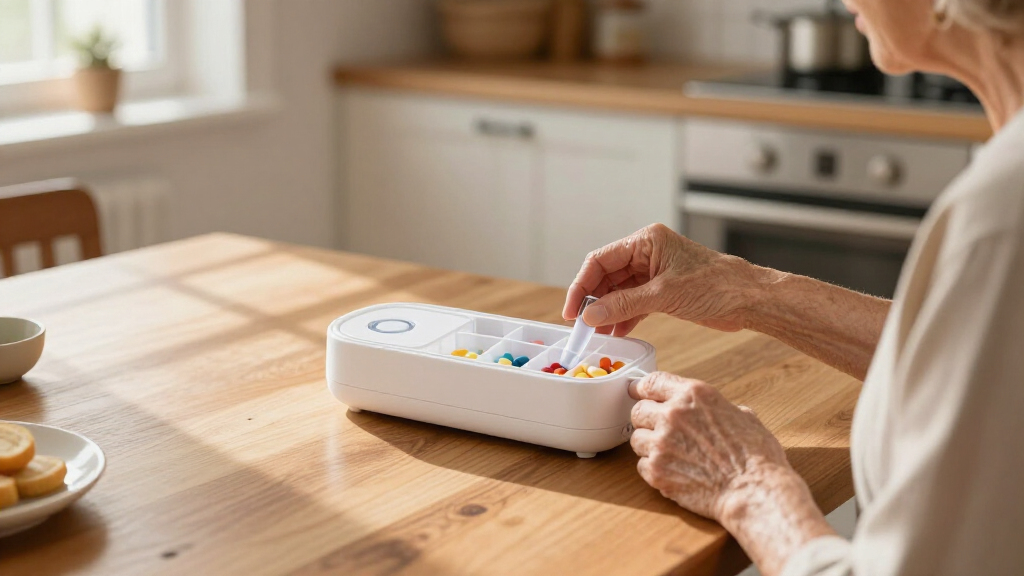

Automatic medication dispensers solve one specific problem: making sure the right pills come out at the right time, without relying on memory or a caregiver standing nearby. After comparing 15 current models, the Colorwing 2025 Smart Pill Dispenser stands out as my top overall pick because it combines Bluetooth alarms, a fingerprint lock, and 31 slots — the most complete feature set in this lineup. For buyers who want simplicity instead of smart features, the LiveFine 28-Day Locked Dispenser offers a dependable alarm-and-lock combo without app setup, while the EziMedPil 28-Day with frosted privacy lid suits shared households where discretion matters. The main tradeoff in this category is between app-connected models with remote monitoring and simpler alarm-only units that cost less and have fewer things to go wrong. Keep reading for the full breakdown of capacity, locking mechanisms, alarm behavior, and who each model actually fits.

Turn quiet afternoons into listening time
- Thousands of audiobooks, podcasts and originals
- Listen on your phone, tablet or Echo — also offline
- Cancel anytime
Complete the kit


Key Takeaways
- The Colorwing 2025 was the only dispenser in the lineup with both a fingerprint lock and a mechanical backup lock, which is why it earned the top spot for households concerned about dementia-related double-dosing.
- Across the lineup, app connectivity varied widely in usefulness: the Betife Bluetooth model and Bluetooth Alarm-and-App unit added genuine remote reminders, while some ‘app’ models added little beyond what a basic alarm already does.
- Capacity differences matter more than they appear — 28-day dispensers (the most common format here) suit once-daily regimens, but anyone taking morning and evening doses will drain them in two weeks, making the 42-day and 31-slot Colorwing models better fits.
- Locked versus clear lids is a real decision point, not a detail: the three LiveFine variants span both configurations, and clear lids allow visual verification while locked lids prevent tampering — caregivers should choose based on which risk they’re managing.
- The two Windtrace units and the no-app 28-day desiccant model prove that alarm-only dispensers remain the most reliable choice for seniors who find smartphones confusing, since there is no pairing, no app to update, and no Bluetooth to drop.
| 28-Day Automatic Pill Dispenser with App & LCD Display |  | Best for App-Assisted Home Care | Tray capacity: 14 pills per tray | Number of trays: 2 | Display: LCD | VIEW LATEST PRICE | See Our Full Breakdown |
| 42-Day Automatic Pill Dispenser with App & LCD Display, Digital Lock, and Alerts |  | Best for Longer Refill Intervals | Tray capacity: 14 pills per tray | Number of trays: 3 | Dosing schedule: Once, twice, or thrice daily | VIEW LATEST PRICE | See Our Full Breakdown |
| Windtrace Automatic Pill Dispenser for Elderly with Alarm |  | Best for Straightforward Alarm Reminders | Compartments: 28 | Alarm: Loud alarm with flashing light | Display: LCD | VIEW LATEST PRICE | See Our Full Breakdown |
| EziMedPil 28-Day Locked Automatic Pill Dispenser with Frosted Privacy Lid |  | Best for Locked, Private Storage | Compartments: 28 | Capacity: 672 pills; up to 24 aspirin-sized tablets per compartment | Power: 4 AA batteries included | VIEW LATEST PRICE | See Our Full Breakdown |
| LiveFine Automatic Pill Dispenser for Elderly, 28-Day Supply, Locking Lid |  | Best for Clear, Simple Controls | Supply: 28 days | Pill capacity: 18 pills per slot | Dosage rings: 9 | VIEW LATEST PRICE | See Our Full Breakdown |
| Windtrace Automatic Pill Dispenser for Elderly with Alarm |  | Best for Simple Setup | Compartments: 28 | Dosage Times: 6 per day | Alerts: Loud alarm and flashing light | VIEW LATEST PRICE | See Our Full Breakdown |
| Daviky Daily Pill Dispenser, Large Capacity 14-Day Pill Organizer Box |  | Best Budget Companion Organizer | Capacity: 14 compartments | Dispensing: Press-button | Labels: Color-coordinated AM/PM and rainbow weekly | VIEW LATEST PRICE | See Our Full Breakdown |
| Betife Automatic Pill Dispenser, 28-Day Smart Bluetooth Pill Box |  | Best for Remote Caregivers | Capacity: 28 days | Connectivity: Bluetooth | App: Pillcalendar | VIEW LATEST PRICE | See Our Full Breakdown |
| EziMedPil Automatic Pill Dispenser with Alarm for the Elderly |  | Best Accessibility Design | Capacity: Up to 672 aspirin-sized tablets | Compartments: 28 | Batteries: 4 AA (included) | VIEW LATEST PRICE | See Our Full Breakdown |
| 28-Day Automatic Pill Dispenser with Alarm and Desiccant, No App |  | Best for Pill Freshness | Capacity: 28 large compartments | Compartment Size: Fits tablets up to 0.79 in, capsules up to 0.75 in | Operation: Manual one-touch, no app required | VIEW LATEST PRICE | See Our Full Breakdown |
| LiveFine Automatic Pill Dispenser for Elderly, 28-Day Supply, Clear Lid | 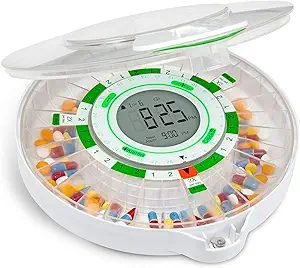 | Best for Caregiver Monitoring | Capacity: 28-day supply | Dosage Rings: 9 included | Display: Jumbo LCD | VIEW LATEST PRICE | See Our Full Breakdown |
| Betife 2nd Gen Automatic Pill Dispenser for Elderly with Alarm |  | Most Senior-Friendly Design | Button Console: 6 oversized buttons with icons | Seal: Under 2mm tray-to-cover gap | Cycle Durability: 5000+ rotations tested | VIEW LATEST PRICE | See Our Full Breakdown |
| Bluetooth Automatic Pill Dispenser with Alarm and App Reminder |  | Best Multi-Layer Reminders | Compartments: 31 | Battery: 1200mAh rechargeable | Connectivity: Bluetooth | VIEW LATEST PRICE | See Our Full Breakdown |
| Live Fine Automatic Pill Dispenser, 28-Day Medication Organizer with Clear Lid |  | Best Value Workhorse | Capacity: 28 days | Pills per Slot: Up to 18 | Display: Jumbo LCD | VIEW LATEST PRICE | See Our Full Breakdown |
| Colorwing 2025 Smart Pill Dispenser for Seniors – 31-Slot Automatic Medication Organizer with Bluetooth Alarms, Fingerprint & Mechanical Dual Lock |  | Best Premium Smart Pick | Slots: 31 | Battery: 1200mAh, lasts 30+ days | Connectivity: Bluetooth 5.0 | VIEW LATEST PRICE | See Our Full Breakdown |
| automatic medication dispenser | Display |
|---|---|
| 28-Day Automatic Pill Dispense | LCD |
| 42-Day Automatic Pill Dispense | LCD |
| Windtrace Automatic Pill Dispe | LCD |
| EziMedPil 28-Day Locked Automa | High-brightness LCD |
| LiveFine Automatic Pill Dispen | Jumbo LCD |
| Windtrace Automatic Pill Dispe | LCD |
| Daviky Daily Pill Dispenser | — |
| Betife Automatic Pill Dispense | LCD screen |
| EziMedPil Automatic Pill Dispe | High-brightness LCD with magnifying glass |
| 28-Day Automatic Pill Dispense | — |
| LiveFine Automatic Pill Dispen | Jumbo LCD |
| Betife 2nd Gen Automatic Pill | XL LCD screen |
| Bluetooth Automatic Pill Dispe | — |
| Live Fine Automatic Pill Dispe | Jumbo LCD |
| Colorwing 2025 Smart Pill Disp | — |
More Details on Our Top Picks
28-Day Automatic Pill Dispenser with App & LCD Display
App and on-device setup give this dispenser a useful middle ground: a caregiver can help remotely, while the person taking medication can also follow voice prompts at the device. Its two 14-slot trays are arranged for a supply of up to 28 days, which reduces refill interruptions compared with the three-tray 42-Day Automatic Pill Dispenser. Sound and light alerts add reminders without relying on a phone notification alone, and the sealed lid with desiccant helps protect stored pills from moisture. The tradeoff is that remote management depends on a smartphone, and the supplied details limit its intended use to the home. I’d choose it for a household that values guided setup and caregiver access; buyers who want longer intervals between refills should look at the 42-day model instead.
Pros:- Voice prompts and step-by-step instructions support setup at the device.
- App and on-device setup give caregivers and users different ways to manage it.
- Two trays support a stated 28-day supply.
- Sound and light alerts plus a sealed, desiccant-equipped lid cover reminders and moisture protection.
Cons:- App control requires a smartphone.
- Designed for home use rather than assisted living or institutional settings.
Best for: Seniors at home who benefit from voice-guided setup and caregivers who want app-based support.
Not ideal for: Institutional care settings or households that need remote management without a smartphone.
- Tray capacity:14 pills per tray
- Number of trays:2
- Display:LCD
- Setup:App and on-device
- Alerts:Sound and light
- Lock:Digital lock
- Moisture protection:Sealed lid with desiccant
- Guidance:Voice prompts and step-by-step instructions
Our verdict“Choose this model for voice-guided home dosing with caregiver app support; pick the 42-day model if fewer refills matter more.”
42-Day Automatic Pill Dispenser with App & LCD Display, Digital Lock, and Alerts
The standout here is three 14-pill trays, which provide a stated 42-day supply and stretch the time between refills beyond the two-tray 28-Day Automatic Pill Dispenser. That extra capacity suits a stable home medication routine, while support for once-, twice-, or thrice-daily schedules gives it room for different dosing patterns. App and on-device setup pair remote caregiver access with local controls, and the digital lock helps limit access to the stored medication. Alerts include sound, light, buzzer, and melody, so users have several reminder cues. The larger capacity comes with a practical tradeoff: this is still a home-use device, and remote management requires a smartphone app. I’d favor it over the 28-day model when refill frequency is the main concern, but its extra tray may be unnecessary for simpler schedules.
Pros:- Three trays provide a stated 42-day supply.
- Supports once-, twice-, or thrice-daily dosing schedules.
- App and on-device setup serve both caregivers and the person taking medication.
- Digital lock and multiple alert styles add access control and reminder choices.
Cons:- Remote management requires a smartphone app.
- Not intended for assisted living facilities or institutional use.
Best for: People at home with a steady medication routine who want to reduce how often they refill the dispenser.
Not ideal for: Institutional care providers or users with a short medication schedule who do not need three trays or app access.
- Tray capacity:14 pills per tray
- Number of trays:3
- Dosing schedule:Once, twice, or thrice daily
- Display:LCD
- Setup:App and on-device
- Lock:Digital lock
- Alerts:Sound, light, buzzer, and melody
- Storage:Sealed lid with desiccant
Our verdict“Pick this over the two-tray 28-day model if a longer supply between refills is the priority and app-supported home care fits.”
Windtrace Automatic Pill Dispenser for Elderly with Alarm
A 28-compartment tray, six dosage rings, and a loud alarm with a flashing light make this a direct, reminder-focused choice. It avoids the app and remote setup offered by the 28-Day Automatic Pill Dispenser with App, which can be an advantage for users who prefer to program a device locally. The LCD supports setup, while the removable tray makes refilling easier to handle. The source details describe alarms and visual alerts, but do not specify remote caregiver monitoring or a locking lid, so this pick is better suited to a household where a nearby helper can manage the routine. It runs on four AA batteries, which must be purchased separately, and the listed design may be bulky for travel. I’d choose it for simple electronic reminders, not for app-based oversight or portability.
Pros:- Removable 28-compartment tray supports organized refills.
- Six dosage rings allow different dosing configurations.
- Loud alarm and flashing light provide two reminder cues.
- LCD and easy-to-use lid support basic setup and access.
Cons:- Requires four AA batteries, which are not included.
- No manual override is specified.
- The design may be bulky for travel.
Best for: Seniors and caregivers who want a locally programmed dispenser with audible and visual reminders.
Not ideal for: Caregivers who need app-based remote oversight or people seeking a compact travel dispenser.
- Compartments:28
- Alarm:Loud alarm with flashing light
- Display:LCD
- Batteries:4 AA, purchased separately
- Material:Food-grade plastic
- Dosage rings:6
- Tray:Large and removable
Our verdict“Choose Windtrace for local alarm reminders and a removable tray; choose the app-enabled 28-day model for caregiver access from afar.”
EziMedPil 28-Day Locked Automatic Pill Dispenser with Frosted Privacy Lid
The lockable frosted lid makes this EziMedPil a practical choice when privacy and limiting casual access matter more than smartphone connectivity. Its 28 compartments hold up to 24 aspirin-sized tablets each, and as many as six daily alarms can support a busy routine. Compared with the LiveFine 28-Day Supply dispenser, which also has a locking lid, the EziMedPil details add a frosted cover, magnifying glass, and anti-slip grips; however, the LiveFine option specifies a manual key lock and jumbo LCD. The EziMedPil has no app connection, so a caregiver cannot use it for remote setup based on the listed features. Four included AA batteries make initial setup simpler, though regular replacement remains part of ownership. I’d favor it for local, locked medication storage with visual aids, not remote management.
Pros:- Lockable frosted lid adds privacy and helps restrict access.
- Twenty-eight compartments hold up to 24 aspirin-sized tablets each.
- Up to six daily alarms support complex routines.
- Magnifying glass, anti-slip grips, and high-brightness LCD aid local use.
Cons:- No smartphone connectivity or app integration.
- Four AA batteries need periodic replacement.
- Portable use is limited by reliance on batteries and the need to carry the dispenser.
Best for: Home users who want a locked, private dispenser with a high-capacity tray and local alarms.
Not ideal for: Caregivers who need smartphone setup or remote schedule management.
- Compartments:28
- Capacity:672 pills; up to 24 aspirin-sized tablets per compartment
- Power:4 AA batteries included
- Display:High-brightness LCD
- Alarm settings:Up to 6 daily alarms
- Connectivity:None
- Lid:Lockable frosted lid
- Additional features:Interchangeable dosage rings, magnifying glass, and anti-slip grips
Our verdict“Choose the EziMedPil for locked, locally managed storage with visual aids; choose an app-connected model if remote caregiver setup is needed.”
LiveFine Automatic Pill Dispenser for Elderly, 28-Day Supply, Locking Lid
Jumbo LCD text and audio-visual alerts put readability and reminders at the center of this LiveFine model. Its locking lid uses a manual key, giving it a clear access-control approach compared with the digital lock on the 28-Day Automatic Pill Dispenser with App. Nine interchangeable dosage rings allow more schedule configurations than the six listed for Windtrace, though the supplied information caps this model at nine doses per day. A stated 28-day supply and capacity of 18 pills per slot suit many home routines, while battery operation keeps it cordless. The tradeoffs are the need to replace batteries and a form factor described as potentially bulky for travel. I’d choose it for users who want straightforward controls and a large display; caregivers seeking app-based support should look to the connected 28-day option.
Pros:- Jumbo LCD supports readability for users who find small displays difficult.
- Audio and visual alerts provide two reminder cues.
- Manual-key locking lid helps restrict access.
- Nine dosage rings allow flexible dosing configurations.
Cons:- Battery operation requires ongoing battery replacement.
- Limited to nine doses per day.
- May be bulky for travel.
Best for: Home users who prefer a large, readable display, local audio-visual reminders, and a keyed locking lid.
Not ideal for: Caregivers who need app-based remote management or travelers seeking a compact dispenser.
- Supply:28 days
- Pill capacity:18 pills per slot
- Dosage rings:9
- Display:Jumbo LCD
- Alerts:Audio and visual
- Power:Battery-operated
- Locking:Locking lid with manual key
- Portability:Portable; may be bulky for travel
Our verdict“Pick LiveFine for readable local controls and a keyed lock; choose the connected 28-day model when remote caregiver support matters more.”
Windtrace Automatic Pill Dispenser for Elderly with Alarm
Between the app-driven models in this roundup, the Windtrace Automatic Pill Dispenser stands out for doing the basics without a smartphone in sight. The simple programming flow and clear printed instructions mean a caregiver can have it running in minutes, which is a genuine advantage over the Betife Bluetooth Pill Box, where full functionality depends on pairing with the Pillcalendar app. Its six dosage times and loud alarm-plus-flashing-light alerts cover most standard schedules, and the 28-compartment tray means refilling only happens monthly. The tradeoff is flexibility: users with irregular or complex schedules will bump against that six-alarm ceiling, and there is no lock, so it offers no protection against double-dosing by a confused user — a gap the LiveFine locking-lid models address. Batteries are also not included, so plan accordingly.
Pros:- Quick, intuitive programming with clear instructions — no app or smartphone needed
- Combined loud alarm and flashing light catches attention even for hearing-impaired users
- Large compartments fit multiple pills per dose
- Monthly refill cycle thanks to 28 compartments
Cons:- No locking lid, so it cannot prevent accidental overdoses
- Six alarms per day caps it for complex medication schedules
- Batteries not included and the unit is bulky for travel
Best for: Seniors living independently who want a straightforward alarm-based dispenser set up once by a family member
Not ideal for: Caregivers managing dementia patients, since the unlocked tray allows accidental double-dosing
- Compartments:28
- Dosage Times:6 per day
- Alerts:Loud alarm and flashing light
- Display:LCD
- Power:4 AA batteries (not included)
- Material:Food-grade plastic
Our verdict“This pick makes the most sense for seniors who need reliable reminders without any app complexity, as long as double-dosing is not a concern.”
Daviky Daily Pill Dispenser, Large Capacity 14-Day Pill Organizer Box
The Daviky Daily Pill Dispenser is not automatic in the same sense as the EziMedPil or Windtrace units — there is no alarm or motorized tray — but that is exactly why it earns a slot. At a fraction of the complexity, it delivers press-button dispensing that works for arthritic hands, plus a genuinely thoughtful labeling kit with AM/PM and rainbow-striped weekly stickers. Compared with the app-controlled Betife, setup is essentially zero: load pills, stick on labels, done. The wall-mounting option also lets it live where doses actually happen. The honest tradeoff is no reminders at all — if missed doses are the core problem, an alarm-equipped model is the better spend. The open press-button design also means anyone can access the pills, so it is unsuitable where security matters.
Pros:- Press-button design is genuinely easy for arthritic or weak hands
- Included label kit makes AM/PM and weekday sorting visually obvious
- Wall-mountable, so it can be placed at the point of use
- Accessories like pill cups and hooks add everyday convenience
Cons:- No alarms, timers, or dispensing automation whatsoever
- No lock or restricted access, so unsuitable for cognitive impairment
- Not spill-proof, and the 14-day footprint is bulky for travel
Best for: Budget-conscious buyers or caregivers who need a labeled, arthritis-friendly organizer to pair with phone-based reminders
Not ideal for: Anyone whose primary problem is forgetting doses — there are no alarms or alerts of any kind
- Capacity:14 compartments
- Dispensing:Press-button
- Labels:Color-coordinated AM/PM and rainbow weekly
- Accessories:Pill cups, hooks, stickers
- Mounting:Tabletop or wall-mounted
Our verdict“A solid low-cost organizer for people who remember their doses but struggle with pill bottles — skip it if reminders are the actual problem.”
Betife Automatic Pill Dispenser, 28-Day Smart Bluetooth Pill Box
If monitoring from a distance is the priority, the Betife 28-Day Smart Bluetooth Pill Box is the strongest option in this batch. Its fingerprint and mechanical dual lock means only the right person gets the right dose — a security step beyond the Windtrace, which has none — and the Pillcalendar app lets a caregiver track adherence remotely rather than relying on the user’s report. Compared with the Colorwing 31-slot smart dispenser, the Betife offers a similar connected experience in a more conventional 28-day format with a clear LCD for manual operation when the phone is out of reach. The real tradeoff is the technology barrier: an elderly user who has never used an app will depend on someone else for setup and troubleshooting, and Bluetooth range means the phone must stay nearby for syncing. It is also a poor fit for anyone who just wants alarms and nothing more.
Pros:- Fingerprint plus mechanical lock prevents both double-dosing and tampering
- App-based tracking gives caregivers visibility into missed doses
- LCD screen and manual operation work even without the phone
- Customizable alarms handle varied daily schedules
Cons:- Full functionality depends on a smartphone and app pairing
- Setup complexity can overwhelm first-time or elderly users
- Bluetooth-only connectivity limits remote range
Best for: Tech-comfortable caregivers who want remote dose tracking and locked access for a parent living alone
Not ideal for: Non-technical seniors managing their own medication without a helper to handle the app
- Capacity:28 days
- Connectivity:Bluetooth
- App:Pillcalendar
- Alarm:Customizable
- Security:Fingerprint and mechanical lock
- Display:LCD screen
Our verdict“Choose this if a caregiver needs to monitor and lock down medication remotely; choose a simpler alarm model if the user manages everything solo.”
EziMedPil Automatic Pill Dispenser with Alarm for the Elderly
What separates the EziMedPil from otherwise similar 28-compartment dispensers like the Windtrace is its attention to low-vision and dexterity needs: a high-brightness LCD paired with a magnifying glass, a genuinely simple three-button control scheme, and six included dosage rings for flexible scheduling. Batteries ship in the box — a small thing the Windtrace skips — and the capacity of roughly 672 aspirin-sized tablets keeps refills to a monthly rhythm. The two included security keys suggest a locking mechanism that basic clear-lid LiveFine models do not offer. The tradeoffs are familiar for this category: six daily alarms will not accommodate complex regimens, and it shares the same bulky footprint that makes all 28-day drum dispensers poor travel companions. Users taking large calcium-style tablets should also verify compartment fit before committing.
Pros:- Magnifying glass and high-brightness LCD make compartment contents readable
- Three-button operation is among the simplest in this roundup
- Batteries and six dosage rings included out of the box
- Security keys add tamper resistance over basic unlocked models
Cons:- Capped at six daily alarms for complex schedules
- Bulky drum design is impractical for travel
- AA batteries require periodic replacement
Best for: Seniors with declining vision or dexterity who need big, readable displays and simple controls
Not ideal for: Travelers or anyone with more than six daily dose times
- Capacity:Up to 672 aspirin-sized tablets
- Compartments:28
- Batteries:4 AA (included)
- Alerts:Audio and visual reminders
- Display:High-brightness LCD with magnifying glass
- Controls:3-button operation
- Included:6 dosage rings, 2 security keys, instruction booklet
Our verdict“The most thoughtful choice here for users whose main barriers are eyesight and fiddly controls rather than technology.”
28-Day Automatic Pill Dispenser with Alarm and Desiccant, No App
This 28-Day Dispenser with Desiccant solves a problem most competitors ignore entirely: moisture. While the Windtrace and EziMedPil store a month of pills in open-air compartments, this model’s water-resistant lid and dual desiccant chambers keep hygroscopic tablets and capsules from degrading over the full 28-day cycle — a real advantage for anyone in humid climates. The hygienic slide-door dispensing also reduces hand contact with medications compared with flip-lid organizers like the Daviky. Being fully manual with no app keeps it accessible to tech-averse users, in the same spirit as the Windtrace but with better storage conditions. The limitations are specific: gummy capsules can stick and jam, the maker explicitly excludes institutional use, and users with very weak grip may find the manual slide action tiring. There is no lock either, so dementia care is out of scope.
Pros:- Dual desiccant chambers and water-resistant lid keep a month of pills fresh
- Hygienic slide-door design minimizes direct pill handling
- Choice of sound, light, or combined alerts for missed doses
- No app, smartphone, or account required at any point
Cons:- Gummy or sticky capsules may jam and are not recommended
- Manual slide operation demands reasonable grip strength
- No locking mechanism and not rated for facility use
Best for: Users in humid environments or those taking moisture-sensitive medications over a monthly cycle
Not ideal for: Assisted living facilities and dementia care — no lock, and the maker excludes institutional use
- Capacity:28 large compartments
- Compartment Size:Fits tablets up to 0.79 in, capsules up to 0.75 in
- Operation:Manual one-touch, no app required
- Moisture Protection:Water-resistant lid, dual desiccant chambers
- Alerts:Sound, light, or both
- Design:Hygienic slide-door dispensing
Our verdict“The pick for moisture-sensitive medications and humid homes, provided the user has the grip to work the slide door and does not need locked access.”
LiveFine Automatic Pill Dispenser for Elderly, 28-Day Supply, Clear Lid
The clear lid is what sets this LiveFine apart in a crowded lineup. Most dispensers, like the Betife 2nd Gen, hide pills behind opaque covers, which means a caregiver has to open and inspect the unit to confirm doses were taken. Here, a glance tells you whether medication is being consumed on schedule — a small design choice that makes a big difference for remote or visiting caregivers.
Setup is refreshingly analog compared with app-driven models like the Bluetooth Automatic Pill Dispenser: no pairing, no accounts, just program the schedule and fill the tray. The tradeoff is convenience. You get no notifications on your phone, and the lock uses a manual key rather than a fingerprint scanner, so losing that key becomes a real problem.
Pros:- Clear lid allows instant visual confirmation that doses were taken
- Simple setup with no app or Bluetooth pairing required
- Customizable audio and visual reminders with three volume levels
- Secure lockable cover prevents overdosing or tampering
Cons:- Manual key lock means a lost key disables access to medications
- Bulky footprint makes it impractical for travel
- Nine daily doses is the ceiling, limiting complex regimens
Best for: Caregivers who want to visually verify doses without opening the unit or managing an app
Not ideal for: Tech-savvy families who want phone alerts and remote monitoring — this unit has no connectivity
- Capacity:28-day supply
- Dosage Rings:9 included
- Display:Jumbo LCD
- Alert Volume Levels:3
- Beeping Patterns:3
- Lock:Lockable cover with manual key
Our verdict“Choose this if you’re a caregiver who values at-a-glance dose verification over smart features.”
Betife 2nd Gen Automatic Pill Dispenser for Elderly with Alarm
Betife’s second-generation dispenser doubles down on accessibility where competitors stop at a loud alarm. The oversized icon buttons and a spoken quick-start video mean a senior can set it up without reading a manual — a genuine advantage over the LiveFine models, which assume the user can navigate an LCD menu unaided.
The engineering also earns its place: a gearbox tested past 5,000 rotations and a tight sub-2mm tray-to-cover seal suggest this unit is built to survive years of daily cycling, not just months. The compromises are real, though. It needs a continuous power source, unlike battery-driven rivals, and its six medication slots put it at the low end of capacity next to the 31-compartment Bluetooth dispensers in this roundup.
Pros:- Oversized buttons with icons and spoken setup instructions
- Durable gearbox tested for 5,000+ dispensing cycles
- Secure lock blocks unauthorized or accidental pill access
- Extra-large LCD is easy to read at a distance
Cons:- Requires a constant power source, limiting placement and portability
- Only six medication slots limits complex regimens
- Large footprint takes up counter space
Best for: Seniors living alone who struggle with small buttons and written instructions
Not ideal for: Travelers or anyone without a reliable wall outlet — it requires constant power and is bulky
- Button Console:6 oversized buttons with icons
- Seal:Under 2mm tray-to-cover gap
- Cycle Durability:5000+ rotations tested
- Display:XL LCD screen
- Setup Guidance:Spoken quick-start instructions
- Lock:Secure locking cover
Our verdict“The strongest choice when ease of use for an independent senior matters more than capacity or portability.”
Bluetooth Automatic Pill Dispenser with Alarm and App Reminder
This dispenser takes the most aggressive approach to making sure a dose is never missed. Where the LiveFine 28-Day relies on beeps and flashing lights, this model stacks three reminder layers: an audible alarm, a recorded voice message, and a push notification through the companion app. If a user is hard of hearing, the phone alert covers the gap; if the phone is in another room, the alarm still sounds.
The fingerprint lock with backup key also outclasses the manual-key systems on the LiveFine units — no key to lose or hide from a determined patient. The cost of all this capability is complexity. Someone must handle Bluetooth pairing and app setup, and the 1200mAh battery demands regular recharging, a chore the fully analog Windtrace style dispensers avoid entirely.
Pros:- Three reminder layers: alarm, voice message, and app notification
- Fingerprint lock with backup key eliminates the lost-key problem
- Arthritis-friendly push-button pill retrieval
- Customizable dosing with 7 included dose rings
Cons:- Requires Bluetooth pairing and app setup that some seniors can’t do alone
- Battery needs frequent recharging with daily use
- 31 compartments may still feel tight for very complex regimens
Best for: Families with a smartphone-comfortable member who can manage setup and wants redundant missed-dose alerts
Not ideal for: Seniors without reliable smartphone access or in-person setup help — the app dependence is a real barrier
- Compartments:31
- Battery:1200mAh rechargeable
- Connectivity:Bluetooth
- Reminders:Alarm, voice messages, app notifications
- Lock:Fingerprint with backup key
- Dose Rings:7 included
Our verdict“The pick for families who want every possible alert layer working together — as long as someone can handle the app.”
Live Fine Automatic Pill Dispenser, 28-Day Medication Organizer with Clear Lid
This is the straightforward, no-frills option in a lineup increasingly full of fingerprint scanners and Bluetooth apps. Like its LiveFine sibling with the locking lid, it handles the fundamentals well: a 28-day fill cycle, up to 18 pills per slot, and combined audible and visual alerts up to nine times daily. That pill capacity per slot is generous — larger-dose regimens that would crowd other carousels fit here comfortably.
Compared with the Colorwing 2025 Smart Dispenser, you give up app control, voice reminders, and biometric locking, but you also give up charging cables, pairing frustration, and a steeper price. The design explicitly supports users with arthritis and limited dexterity. Its weakness is plainness: nothing here helps a caregiver monitor remotely, and battery requirements go unspecified, which can mean trial and error.
Pros:- Up to 18 pills per slot accommodates large daily regimens
- Combined audible and visual alerts up to 9 times daily
- Lockable cover protects against double-dosing
- Designed for accessibility with arthritis and limited dexterity in mind
Cons:- No smart features, app support, or remote monitoring
- Battery type and life not clearly specified
- Bulky form factor limits travel use
Best for: Budget-conscious buyers who want a proven mechanical design for a single user with a moderate regimen
Not ideal for: Long-distance caregivers — there’s no connectivity or remote monitoring of any kind
- Capacity:28 days
- Pills per Slot:Up to 18
- Display:Jumbo LCD
- Alert System:Audible and visual
- Daily Reminders:Up to 9
- Lock:Manual lockable cover
Our verdict“A dependable, low-maintenance choice for a single user whose regimen is stable and whose family checks in person.”
Colorwing 2025 Smart Pill Dispenser for Seniors – 31-Slot Automatic Medication Organizer with Bluetooth Alarms, Fingerprint & Mechanical Dual Lock
The Colorwing sits at the top of this roundup’s sophistication curve. Its standout feature is the dual-lock system: fingerprint access plus a mechanical backup key, which means biometric convenience without the catastrophic failure mode of a fingerprint-only lock. Compared with the Bluetooth Automatic Pill Dispenser, which shares the app-plus-alarm concept, Colorwing’s Bluetooth 5.0 connection and reversible dose rings feel more refined, and the app adds remote scheduling and adherence tracking a caregiver can actually use from across the country.
Those smarts come with obligations. Someone has to get through the initial app configuration, which will frustrate non-technical users, and the 1200mAh battery demands recharging roughly monthly — the analog LiveFine 28-Day never asks for a cable. Voice reminders and one-touch access soften the learning curve for the senior, if not the setup helper.
Pros:- Dual fingerprint and mechanical key lock balances security with fail-safe access
- App support enables remote dose scheduling and adherence tracking
- One-touch access designed for arthritis patients
- Customizable voice reminders and reversible dose rings for flexible scheduling
Cons:- Setup and app configuration can frustrate non-technical users
- Requires recharging roughly every 30 days
- 31-slot ceiling may not suit highly complex regimens
Best for: Tech-comfortable families willing to invest in remote monitoring and biometric security for a senior’s regimen
Not ideal for: Buyers who want a plug-in-and-forget device — monthly charging and app setup are real commitments
- Slots:31
- Battery:1200mAh, lasts 30+ days
- Connectivity:Bluetooth 5.0
- App Support:Yes, remote scheduling and tracking
- Lock Type:Fingerprint with mechanical backup key
- Dose Rings:7 reversible rings
Our verdict“The most capable dispenser here for families who can handle setup and want the deepest remote oversight.”

How We Picked
I evaluated each dispenser against five buyer-facing criteria. Capacity and refill cadence came first, because a 28-day unit only holds a month of pills for someone on a once-daily schedule. Alarm flexibility mattered next: how many daily alarms are supported, how loud they are, and whether they persist until the dose is taken. Locking and safety features separated models designed for independent adults from those built for dementia or memory-care situations. Connectivity was judged on practical value — whether the app genuinely adds remote monitoring or just duplicates the onboard alarm. Finally, I weighed ease of setup and daily use, since a dispenser a senior cannot operate independently defeats its own purpose.
The ranking order reflects these priorities stacked against real buyer scenarios. Dispensers with robust locking plus flexible reminders rank highest because they serve the most demanding use case — medication safety for vulnerable users. Mid-tier picks trade some security for simplicity or lower complexity, and the ranking within that band follows alarm quality and capacity. The manual organizers, like the Daviky 14-day box, sit lower not because they are poorly made but because they lack the automatic dispensing function that defines this category — they serve a different, less dependent buyer.
| automatic medication dispenser | Display |
|---|---|
| 28-Day Automatic Pill Dispense | LCD |
| 42-Day Automatic Pill Dispense | LCD |
| Windtrace Automatic Pill Dispe | LCD |
| EziMedPil 28-Day Locked Automa | High-brightness LCD |
| LiveFine Automatic Pill Dispen | Jumbo LCD |
| Windtrace Automatic Pill Dispe | LCD |
| Daviky Daily Pill Dispenser | — |
| Betife Automatic Pill Dispense | LCD screen |
| EziMedPil Automatic Pill Dispe | High-brightness LCD with magnifying glass |
| 28-Day Automatic Pill Dispense | — |
| LiveFine Automatic Pill Dispen | Jumbo LCD |
| Betife 2nd Gen Automatic Pill | XL LCD screen |
| Bluetooth Automatic Pill Dispe | — |
| Live Fine Automatic Pill Dispe | Jumbo LCD |
| Colorwing 2025 Smart Pill Disp | — |
Factors to Consider When Choosing Automatic Medication Dispensers
Choosing between automatic medication dispensers comes down to matching the machine to the person who will actually use it every day. Before settling on a model, work through these factors in order — they explain most of the price and feature differences you will see.Match Capacity to the Actual Dosing Schedule
The headline capacity on the box assumes a once-daily regimen. A 28-slot dispenser only holds 28 doses, so someone taking morning and evening pills will need a refill every two weeks — and a missed refill means missed medication. This is the single most common mistake buyers make: purchasing based on the calendar count rather than the dose count. If the regimen involves two or more daily dose times, look at the larger formats like the 42-day or 31-slot models, or accept a biweekly refill routine. Also consider who does the refilling. If a caregiver visits weekly, a 28-day unit may work fine; if the user refills it themselves, a larger capacity reduces a recurring failure point.
Decide Whether You Need a Lock at All
Locking lids exist to prevent two specific problems: accidental double-dosing by someone with memory impairment, and deliberate tampering. If neither risk applies — say, an independent adult who simply forgets timing — a lock adds friction without adding safety, and a clear-lid model lets the user or a family member visually confirm doses have been taken. For dementia or memory-care situations, a lock shifts from optional to necessary, and the style of lock matters. A basic keyed lock stops casual access, while fingerprint-plus-mechanical systems like the Colorwing’s cover both intentional and opportunistic access. Be honest about the situation, because over-buying security creates a dispenser the user cannot open in an emergency, and under-buying leaves pills accessible when they should not be.
Weigh App Connectivity Against Realistic Usage
Bluetooth and app features sound appealing in product listings, but they only pay off under specific conditions: the user keeps their phone charged and nearby, or a remote caregiver genuinely monitors alerts. For many seniors, the phone is the weak link — uncharged, left in another room, or paired once and never again. When that happens, an app-connected dispenser performs no better than a basic alarm model that cost considerably less. My advice is to buy app features for the caregiver’s benefit, not the user’s. If nobody is monitoring remotely, choose an alarm-only unit with a loud, persistent tone and skip the pairing complexity. If someone is monitoring, confirm the app actually reports missed doses rather than just duplicating the alarm schedule.
Judge Alarm Behavior, Not Just Alarm Count
Specification sheets advertise how many alarms a dispenser supports, but the number matters far less than what happens when an alarm is ignored. The best units repeat the alert at intervals and keep the missed dose secure until the next scheduled time, while cheaper ones sound once and give up. Ask three questions: Does the alarm stop only when the dispenser is tipped or opened? Is there a missed-dose notification? Is the volume adjustable for hearing-impaired users? A visual component — flashing light or LCD prompt — helps users with hearing loss or in noisy households. Also consider nighttime alarms: a dispenser that cannot be silenced or muted becomes a problem in a shared bedroom.
Plan for Refills, Batteries, and Maintenance
Every automatic dispenser requires periodic work, and the difficulty of that work varies more than buyers expect. Loading 28 slots can take twenty minutes and demands care — one pill in the wrong slot becomes a dosing error — so check whether the tray design makes loading straightforward and whether it is labeled clearly. Battery configuration is another practical issue: models running on disposable batteries need a replacement schedule, and a dispenser that dies silently mid-month is a genuine safety hazard, so favor units with low-battery warnings. Desiccant compartments, like the one on the no-app 28-day model, protect medications from humidity and are worth having in humid climates. Finally, confirm the pill size compatibility: large tablets and capsules sometimes jam rotating trays, which is a failure mode no spec sheet mentions.
Know When a Manual Organizer Is the Better Buy
This roundup includes manual options like the Daviky 14-day box, and they exist for a reason: automatic dispensers cost more, require power, and can malfunction. A manual organizer suits users whose problem is organization rather than memory — someone who reliably takes pills once reminded but struggles with sorting bottles. The honest dividing line is timing. If the failure point is ‘I forget when to take them,’ an automatic dispenser with alarms earns its price. If the failure point is ‘I mix up which pills to take,’ a well-designed manual organizer solves it for far less. Some households run both: a weekly manual organizer for routine, with an automatic unit handling the most safety-critical medication.
Frequently Asked Questions
Can an automatic dispenser handle a medication schedule with multiple different pills per dose?
Yes, but with limits you should understand before buying. Automatic dispensers distribute pre-sorted cups or tray slots, so multiple pills destined for the same time slot are loaded together and dispensed together — that works well. The limitation is that the machine cannot sort pills for you; either you or a caregiver must load each slot correctly at refill time, which is where dosing errors actually occur. If the regimen involves pills that must be taken at odd, irregular intervals, or medications requiring refrigeration, no rotating dispenser is appropriate. For complex regimens, the larger 31- and 42-slot models make loading errors less frequent by reducing how often refills happen. Always have a pharmacist or caregiver verify the first load after any refill routine changes.
What happens if a dose is missed — does the dispenser still give it later?
Behavior varies by model, and this difference is worth checking before purchase rather than after. Most dispensers in this category hold the missed dose in its slot and advance to the next scheduled time, meaning the missed pills accumulate until someone empties them — safe, but it means the medication is genuinely skipped. Some units repeat the alarm at intervals first, giving the user several chances to respond before giving up. The safer designs keep the missed dose locked inside rather than dispensing it late, because a delayed double dose is more dangerous than a skipped one. If missed-dose awareness matters, favor models whose app or display flags skipped slots, and establish a routine of checking the tray weekly to clear missed doses and spot adherence problems early.
Are app-connected dispensers actually better for elderly parents who are not tech-savvy?
Usually not — and this is where many buyers overspend. The app features on these dispensers are designed for the caregiver, not the senior, so they only help if a family member actively monitors notifications and can act on them. For the parent’s side, the day-to-day experience is identical: an alarm sounds, the dispenser is tipped, pills come out. If the phone is uncharged or out of range, Bluetooth features silently stop working while the basic alarm continues. Where connectivity genuinely earns its cost is long-distance caregiving, where a missed-dose alert is the only way to know something is wrong. For a senior living alone without an engaged remote monitor, a loud alarm-only model like the Windtrace or the desiccant 28-day unit is the more dependable and simpler choice.
How do I stop a family member with dementia from accessing pills between doses?
Look for three features working together: a locked lid, alarms that only release the current dose, and a lock method the user cannot defeat. The locked LiveFine and EziMedPil models handle the basic case, keeping the tray inaccessible between scheduled times. For more determined users, the Colorwing’s combination of fingerprint access with a mechanical backup lock is the strongest configuration in this lineup, since it cannot be opened simply by finding a key or guessing a code. Keep in mind that no consumer dispenser is a substitute for supervision in advanced dementia — determined individuals can sometimes defeat latches or tip units over. Pairing a locked dispenser with storing backup medication supplies elsewhere closes the biggest remaining gap.
Is a 28-day dispenser or a larger 42-day model the better choice?
It depends entirely on dosing frequency and who refills the unit. A 28-day dispenser holds exactly one month of medication only for a once-daily regimen; at twice-daily dosing it holds two weeks, and at three times daily, just over nine days. The 42-day model buys you proportionally more runway, which reduces refill frequency — and since loading errors happen during refills, fewer refills means fewer opportunities for mistakes. However, larger units are physically bigger, hold more medication at risk if the unit malfunctions, and cost more upfront. If a caregiver refills weekly and verifies each load, the 28-day format is perfectly adequate and simpler to manage. If the user loads it independently, the larger capacity meaningfully reduces the most likely failure point in the whole system.
Conclusion
After comparing all 15 models, the right choice depends less on feature count and more on who is using the dispenser. For the best overall pick, the Colorwing 2025 Smart Dispenser earns it — the fingerprint-plus-mechanical dual lock, 31-slot capacity, and Bluetooth alarms cover the widest range of safety scenarios, making it the strongest option for memory-care households. For best value, the LiveFine 28-Day Locked Dispenser delivers the core alarm-and-lock combination that most buyers actually need, without paying for connectivity that may go unused. The 42-Day dispenser with digital lock and alerts is the best fit for high-frequency regimens, since its capacity halves the refill burden compared with every 28-slot competitor. For beginners and tech-averse seniors, the alarm-only Windtrace or the 28-day desiccant model strip away pairing and apps entirely — nothing to configure beyond the alarm times. The EziMedPil frosted-lid model is my pick for shared living spaces where privacy matters, and the Daviky 14-day manual box remains the right answer for users whose problem is sorting pills, not remembering them. Match the machine to the person, and the choice becomes straightforward.