

For many adults with perceived mild to moderate hearing loss, ELEHEAR Beyond Pro Rechargeable OTC Hearing Aids are my best overall pick in this lineup for their mix of app-based adjustments, Bluetooth features, and rechargeable convenience. ELEHEAR Beyond OTC Hearing Aids with AI Speech Enhancement stand out for shoppers focused on speech clarity, while Audien Atom One offers a simpler in-ear alternative. The main tradeoffs are how much control you want, whether a behind-the-ear or in-ear fit suits you, and how much setup you are comfortable handling. OTC devices are not right for every degree or cause of hearing loss, so fit and clinical guidance matter alongside features. Read on for my full comparison, buying advice, and help matching a model to your needs.

Turn quiet afternoons into listening time
- Thousands of audiobooks, podcasts and originals
- Listen on your phone, tablet or Echo — also offline
- Cancel anytime
Complete the kit

Key Takeaways
- ELEHEAR Beyond Pro ranks first because its app and Bluetooth-oriented feature set offers more adjustment flexibility than the simpler in-ear Audien Atom One.
- ELEHEAR Beyond with AI Speech Enhancement is the speech-focused alternative; buyers should still compare its controls and fit against the Beyond Pro rather than assuming an AI label alone means clearer speech in every setting.
- Form factor creates a real choice in this group: the Audien Atom One and Oricle Standard 2.0 are in-ear options, while several rechargeable models use behind-the-ear designs that may be easier to handle.
- Feature-rich models demand more setup. App control and Bluetooth can offer personalization, but buyers who want basic volume changes may prefer a model with direct controls such as the five-level-volume option.
- Product names do not establish clinical suitability. These OTC options are intended for adults with perceived mild to moderate hearing loss; sudden, one-sided, painful, or severe hearing changes call for professional evaluation rather than a device purchase.
| ELEHEAR Beyond Pro Rechargeable OTC Hearing Aids |  | Best for App-Based Fine-Tuning | Fit: Receiver-in-canal, behind-the-ear | Intended hearing loss: Mild to moderate | Amplification: 50 dB | VIEW LATEST PRICE | See Our Full Breakdown |
| TTQ Bluetooth Hearing Aids with Rechargeable Case |  | Best for Calls and Music | Fit: In-ear with flexible ear hooks | Bluetooth: Yes | Volume settings: 5 | VIEW LATEST PRICE | See Our Full Breakdown |
| Oricle Standard 2.0 Rechargeable In-Ear Hearing Aids with Charging Case |  | Best for Long Stated Battery Life | Fit: In-ear, completely-in-canal | Material: Silicone | Volume levels: 5 | VIEW LATEST PRICE | See Our Full Breakdown |
| Audien Atom One OTC Hearing Aids |  | Best for Simple, App-Free Controls | Fit: In-ear | Intended hearing loss: Mild to moderate | Controls: Analog volume and frequency dials | VIEW LATEST PRICE | See Our Full Breakdown |
| Qnmittry Rechargeable Hearing Aids with Adaptive Noise Cancellation, Charging Case, Blue and Red |  | Best for Background-Noise Reduction | Model: JH-A260 | Fit: In-ear | Controls: Button control with 5 volume levels | VIEW LATEST PRICE | See Our Full Breakdown |
| Rechargeable Behind-the-Ear Hearing Aids with Noise Reduction |  | Best for Simple, Button-Based Control | Fit: Behind-the-ear | Sound processing: 16-channel chip with noise reduction | Volume levels: 5 (24, 28, 32, 36, 40 dB) | VIEW LATEST PRICE | See Our Full Breakdown |
| Rechargeable Hearing Aids with 5-Level Volume Control |  | Best for a Flexible Receiver-in-Canal Fit | Technology: Receiver-in-canal (RIC) | Channels: 16 | Noise reduction: Intelligent noise-canceling technology | VIEW LATEST PRICE | See Our Full Breakdown |
| Oction Rechargeable Hearing Aids for Seniors, 16-Channel Smart Noise Reduction |  | Best for Longer Daily Wear Between Charges | Style: Behind-the-ear | Sound processing: 16-channel digital chip | Maximum sound gain: Up to 38 dB | VIEW LATEST PRICE | See Our Full Breakdown |
| ELEHEAR-Beyond Rechargeable OTC Hearing Aids for Seniors |  | Best for App-Based Listening Adjustments | Amplification: 50 dB | Noise reduction: Up to 24 dB | Listening modes: 4 | VIEW LATEST PRICE | See Our Full Breakdown |
| ELEHEAR Beyond OTC Hearing Aids with AI Speech Enhancement |  | Best for Feature-Rich Speech Support | Hearing loss range: Mild to moderate | Maximum gain: Up to 50 dB | Noise attenuation: 24 dB | VIEW LATEST PRICE | See Our Full Breakdown |
| ELEHEAR Delight Bluetooth OTC Hearing Aids, Sand White |  | Best for App-Based Personalization | Fit: In-ear | Hearing loss suitability: Mild to moderate | Bluetooth: 5.3 | VIEW LATEST PRICE | See Our Full Breakdown |
| Flaygo Rechargeable Behind-the-Ear Hearing Aids with Noise Reduction, Beige | 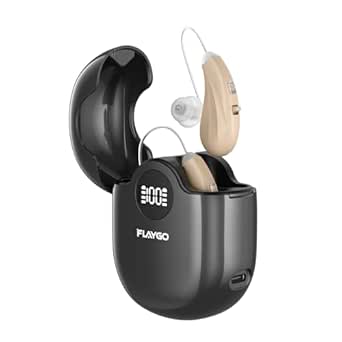 | Best for Simple Controls and Long Claimed Use | Fit: Behind-the-ear | Weight: 3.5 g | Volume control: One-button operation with four levels | VIEW LATEST PRICE | See Our Full Breakdown |
| ZAVYVAZ GM-922 Rechargeable 32-Channel OTC Hearing Aids |  | Best for Channel-Based Processing Without Bluetooth | Model: GM-922 | Fit: In-ear; fits either ear | Channels: 32 | VIEW LATEST PRICE | See Our Full Breakdown |
| Vivtone Lucid508+ Rechargeable OTC Hearing Aids |  | Best for Long Wear and Tinnitus Masking | Model: Lucid508+ | Fit: Behind-the-ear | Digital channels: 16 | VIEW LATEST PRICE | See Our Full Breakdown |
| Saliryj Rechargeable Bluetooth Hearing Aids with App Control | 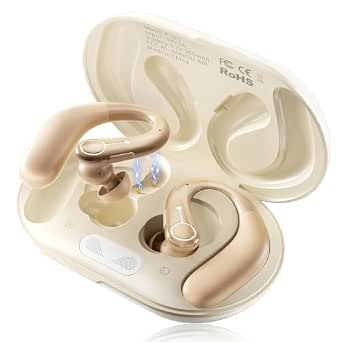 | Best for Independent Left- and Right-Ear App Control | Fit: In-ear | Connectivity: Bluetooth | App control: Volume adjustment and personalization | VIEW LATEST PRICE | See Our Full Breakdown |
| hearing aids for hearing loss | Fit |
|---|---|
| ELEHEAR Beyond Pro Rechargeabl | Receiver-in-canal, behind-the-ear |
| TTQ Bluetooth Hearing Aids wit | In-ear with flexible ear hooks |
| Oricle Standard 2.0 Rechargeab | In-ear, completely-in-canal |
| Audien Atom One OTC Hearing Ai | In-ear |
| Qnmittry Rechargeable Hearing | In-ear |
| Rechargeable Behind-the-Ear He | Behind-the-ear |
| Rechargeable Hearing Aids with | — |
| Oction Rechargeable Hearing Ai | — |
| ELEHEAR-Beyond Rechargeable OT | — |
| ELEHEAR Beyond OTC Hearing Aid | — |
| ELEHEAR Delight Bluetooth OTC | In-ear |
| Flaygo Rechargeable Behind-the | Behind-the-ear |
| ZAVYVAZ GM-922 Rechargeable 32 | In-ear; fits either ear |
| Vivtone Lucid508+ Rechargeable | Behind-the-ear |
| Saliryj Rechargeable Bluetooth | In-ear |
More Details on Our Top Picks
ELEHEAR Beyond Pro Rechargeable OTC Hearing Aids
The ELEHEAR Beyond Pro suits buyers who want to adjust hearing support from a phone rather than rely only on onboard buttons. Its app offers sound adjustments and multiple soundscapes, while speech enhancement, feedback reduction, and noise cancellation target common listening challenges. Compared with the button-controlled Audien Atom One, this model offers more digital control, but that flexibility depends on having a compatible smartphone or tablet. The receiver-in-canal fit and included dome sizes give buyers options for settling the earpiece comfortably, and the charging case adds four charges for use away from an outlet. A 15-minute charge can provide up to six hours, useful when time is short. Its main limit is its intended range: mild to moderate hearing loss, not more severe needs.
Pros:- App-based adjustments and multiple soundscapes provide more control than the Audien Atom One’s analog dials.
- Speech enhancement, feedback reduction, and noise cancellation address several listening challenges.
- A 15-minute fast charge provides up to six hours of use, and the case adds four charges.
- Multiple ear dome sizes support a more tailored fit.
Cons:- App features require a compatible iOS or Android device.
- Intended for mild to moderate hearing loss, limiting suitability for users with more severe needs.
Best for: Adults with mild to moderate hearing loss who want app-based sound adjustments, Bluetooth connectivity, and a rechargeable case for travel.
Not ideal for: People who do not use a compatible smartphone or tablet, or whose hearing loss needs support beyond the product’s stated mild-to-moderate range.
- Fit:Receiver-in-canal, behind-the-ear
- Intended hearing loss:Mild to moderate
- Amplification:50 dB
- Bluetooth:5.3
- Battery runtime:Up to 20 hours per charge
- Fast charging:15 minutes provides up to 6 hours of use
- Charging case:Provides 4 additional charges
- App compatibility:iOS and Android
- Battery type:Lithium-ion
Our verdict“Choose the ELEHEAR Beyond Pro if you want app-controlled adjustments and fast charging for mild to moderate hearing loss, and are comfortable managing settings on a smartphone.”
TTQ Bluetooth Hearing Aids with Rechargeable Case
The TTQ Bluetooth Hearing Aids are the clearest fit for someone who wants amplification and everyday audio functions in one in-ear device. Bluetooth supports calls and music, while five volume settings and three noise reduction modes offer basic ways to adapt listening. Compared with the ELEHEAR Beyond Pro, TTQ leans more on simple button control than app-based fine-tuning, so it may appeal to buyers who prefer direct adjustments. Flexible ear hooks and three ear-tip sizes can help keep the fit secure. The large-capacity case is a standout for charging away from home, but the listing does not state runtime per hearing-aid charge, making daily planning less certain. Its stated maximum volume increase is 42 dB, so buyers should compare that figure with their own hearing needs rather than assume it suits every degree of loss.
Pros:- Bluetooth combines hearing amplification with calls and music.
- Three noise reduction modes and five volume settings allow basic listening adjustments.
- The 2000 mAh case can recharge the hearing aids up to 17 times.
- Flexible ear hooks and three ear-tip sizes support a secure fit.
Cons:- Runtime per hearing-aid charge is not specified.
- The listed control is a single button, which may limit direct adjustment options.
- The product information does not specify an intended hearing-loss range.
Best for: People seeking an in-ear hearing aid that can also handle Bluetooth calls and music, with a case suited to frequent charging away from home.
Not ideal for: Buyers who need a clearly stated runtime per charge, app-based sound customization, or detailed guidance on suitability for a specific hearing-loss level.
- Fit:In-ear with flexible ear hooks
- Bluetooth:Yes
- Volume settings:5
- Noise reduction modes:3
- Maximum volume increase:42 dB
- Noise reduction:Up to 18 dB
- Charging case capacity:2000 mAh
- Case recharge capacity:Up to 17 hearing-aid charges
- Ear tips:3 sizes
Our verdict“Pick TTQ if Bluetooth calls and music matter as much as amplification, but skip it if you need a clearly documented per-charge runtime or more detailed fitting guidance.”
Oricle Standard 2.0 Rechargeable In-Ear Hearing Aids with Charging Case
The Oricle Standard 2.0 stands out for its stated up to 60 hours of use on a single charge, a much longer figure than the ELEHEAR Beyond Pro’s stated 20 hours. That could suit buyers who want fewer charging interruptions, and automatic on/off when the aids are removed from or placed in the case reduces routine handling. Five volume levels and noise reduction provide straightforward listening adjustments, while silicone tips support an in-ear fit. The tradeoff is uncertainty in the product details: the listing gives conflicting battery information, including a lithium-ion battery and a separate reference to a C battery. I would not choose it solely on the long runtime claim without clarifying that discrepancy. Compared with the Audien Atom One, Oricle offers automatic operation and a longer stated runtime, but less clearly documented power information.
Pros:- The listing states up to 60 hours of use on a single charge.
- Automatic on/off operation reduces the need to manage power manually.
- Five volume levels offer simple adjustment through button controls.
- Silicone tips and an included portable charging case support everyday use.
Cons:- Battery information is inconsistent, listing both lithium-ion and a C battery.
- The listing does not specify an intended hearing-loss range.
- Its basic controls offer less customization than the ELEHEAR Beyond Pro’s app.
Best for: Adults who favor an in-ear design, simple button controls, and a long stated runtime between charges, and who can verify the battery details before buying.
Not ideal for: Buyers who need clear, consistent battery specifications or who prefer app control and more extensive adjustment options.
- Fit:In-ear, completely-in-canal
- Material:Silicone
- Volume levels:5
- Battery life:Up to 60 hours on a single charge, as listed
- Battery information:Lithium-ion; listing also states 1 C battery included
- Controls:Button; 5-second press to turn on or off
- Automatic operation:Turns on when removed from the case and off when placed in it
- Included components:Hearing aids, case, charger
Our verdict“Consider Oricle if long stated battery life and automatic operation are priorities, but verify its conflicting battery information before relying on the runtime claim.”
Audien Atom One OTC Hearing Aids
The Audien Atom One is a straightforward choice for buyers who want rechargeable in-ear hearing aids without app setup. Its analog volume and frequency dials give users direct control over basic adjustments, unlike the ELEHEAR Beyond Pro, which relies on app-based features for its broader sound customization. Up to 24 hours of use per charge is a practical daily runtime, and the USB-C dock keeps charging familiar for people who already use USB-C devices. The package includes three dome sizes, cleaning tools, and expert-guided setup, which can help with initial fitting and care. The compromise is limited sound management: no noise control features are listed, so it is less suited to buyers who often need help separating speech from background sound. It is intended for mild to moderate hearing loss.
Pros:- Analog volume and frequency dials allow direct adjustment without a smartphone.
- Up to 24 hours of use per charge supports a full day of wear.
- Three ear-dome sizes and expert-guided setup help with fitting.
- USB-C charging dock and included cleaning accessories support regular maintenance.
Cons:- No noise control features are listed.
- Limited to the stated mild-to-moderate hearing-loss range.
- Charging takes about three hours, longer than the ELEHEAR Beyond Pro’s quick-charge option.
Best for: Adults with mild to moderate hearing loss who prefer physical controls, do not want app-based setup, and value included fitting and cleaning accessories.
Not ideal for: People who want noise reduction or speech-focused processing, or who need support beyond the stated mild-to-moderate range.
- Fit:In-ear
- Intended hearing loss:Mild to moderate
- Controls:Analog volume and frequency dials
- Battery:Rechargeable lithium-ion
- Battery life:Up to 24 hours
- Charging time:About 3 hours
- Charging connector:USB-C
- Ear dome sizes:Small, medium, and large
- Warranty:1 year
Our verdict“Choose the Audien Atom One for direct, app-free controls and guided setup, but look elsewhere if noise reduction is a priority.”
Qnmittry Rechargeable Hearing Aids with Adaptive Noise Cancellation, Charging Case, Blue and Red
The Qnmittry JH-A260 is the most directly targeted option here for buyers who want help reducing surrounding noise: its adaptive noise cancellation is designed to prioritize speech. That focus distinguishes it from the Audien Atom One, which offers physical volume and frequency adjustments but lists no noise control features. Five button-controlled volume levels keep operation simple, and the stated up to 60 hours per charge plus over 110 hours of backup power from the case may suit people who want extended use between charging opportunities. However, the listing gives conflicting weight figures—2 g in the description and 1 oz in product information—so I would treat the size and weight claims cautiously. It also provides no stated hearing-loss range, which makes it harder to judge fit for a particular level of hearing loss.
Pros:- Adaptive noise cancellation is designed to reduce background noise and prioritize speech.
- Five button-controlled volume levels make basic adjustments direct.
- The listing states up to 60 hours per charge and over 110 hours of case backup power.
- In-ear silicone fit is described as lightweight and discreet.
Cons:- Weight information conflicts between the description and product information.
- The listing does not specify an intended hearing-loss range.
- No app-based adjustment features are listed.
Best for: People who want simple button controls and a stated speech-focused noise feature, along with substantial backup power from a charging case.
Not ideal for: Buyers who need a clearly specified intended hearing-loss range, precise weight information, or app-based tuning and documented sound adjustments.
- Model:JH-A260
- Fit:In-ear
- Controls:Button control with 5 volume levels
- Noise control:Adaptive noise cancellation
- Battery life:Up to 60 hours per charge
- Charging case backup:Over 110 hours
- Weight:Conflicting listing figures: 2 g in description; 1 oz in product information
- Dimensions:1 x 1 in
- Color:Blue and red
Our verdict“Choose Qnmittry if background-noise reduction and extended stated battery support matter most, but skip it if you need precise product specifications or a documented hearing-loss range.”
Rechargeable Behind-the-Ear Hearing Aids with Noise Reduction
I’d choose this behind-the-ear model for someone who wants basic volume adjustment without an app. Its five volume levels and setting memory make daily adjustments straightforward, while the 16-channel processing and noise reduction are intended to help voices stand out from surrounding sound. Compared with the app-controlled ELEHEAR-Beyond, it offers fewer ways to customize listening, but also avoids relying on Bluetooth or a phone. The stated 25-hour runtime per charge is practical for a full day, and the case extends total use to 80–100 hours. The tradeoff is a less flexible feature set: there’s no Bluetooth, and the listing specifies only one item, so buyers should verify what is included before choosing it for a pair.
Pros:- Five volume levels with memory of the last setting
- Noise reduction and 16-channel processing are designed to help clarify voices
- Up to 25 hours of use per charge, with 80–100 hours stated with the case
- Behind-the-ear fit avoids the need for app-based adjustments
Cons:- No Bluetooth connectivity or app customization
- The listing describes only one item, which may not meet buyers seeking a pair
- The stated noise-reduction benefit is not accompanied by performance measurements
Best for: Adults with mild hearing difficulty who want rechargeable, button-operated amplification and do not want app controls.
Not ideal for: Buyers who want Bluetooth streaming, detailed app adjustments, or confirmation that the package includes a pair.
- Fit:Behind-the-ear
- Sound processing:16-channel chip with noise reduction
- Volume levels:5 (24, 28, 32, 36, 40 dB)
- Battery:Rechargeable lithium-ion
- Battery life:Up to 25 hours per charge; 80–100 hours with charging case
- Controls:Button control with volume memory
- Bluetooth:Not required
- Color:Matte black
Our verdict“Choose this for uncomplicated, rechargeable button control; pick the ELEHEAR-Beyond instead if phone-based customization matters more.”
Rechargeable Hearing Aids with 5-Level Volume Control
This is the most fit-focused pick among the simpler rechargeable models here: its receiver-in-canal design comes with four silicone tip sizes, giving buyers more room to find a secure seal than the Oction GM-363T listing specifies. It pairs that fit choice with five volume levels, setting memory, and a case rated for up to 100 hours of total use. The 16-channel chip and noise-canceling technology are intended to make speech easier to follow, while the stated amplification reaches up to 40 dB ± 5 dB. Compared with the ELEHEAR Beyond OTC models, it has no app controls or listed AI features, so it suits buyers who prefer physical buttons. Its limits are the lack of customization and the fact that runtime and sound claims come from the product listing.
Pros:- Receiver-in-canal design with four included silicone tip sizes
- Five volume levels and memory of the last setting
- Up to 25 hours per charge and up to 100 hours with the case
- 16-channel processing and noise reduction are designed for speech listening
Cons:- No app controls or Bluetooth features are listed
- Battery life and sound-quality claims are stated by the listing and not independently verified
- Five volume steps offer less fine adjustment than app-based controls
Best for: Adults who want a receiver-in-canal style, several ear-tip sizes, and physical volume buttons without app setup.
Not ideal for: People who need app-based tuning, Bluetooth features, or independently verified performance information.
- Technology:Receiver-in-canal (RIC)
- Channels:16
- Noise reduction:Intelligent noise-canceling technology
- Sound amplification:Up to 40 dB ± 5 dB
- Volume levels:5
- Battery life per charge:Up to 25 hours
- Total battery life with case:Up to 100 hours
- Ear tip sizes:1 small, 2 medium, 1 large
Our verdict“Pick this if fit options and straightforward buttons matter more than the app features offered by ELEHEAR Beyond models.”
Oction Rechargeable Hearing Aids for Seniors, 16-Channel Smart Noise Reduction
The Oction GM-363T is a strong match for buyers who value a longer stated run between charges over detailed app features. Its up-to-28-hour runtime exceeds the 25-hour claim for the nvdskn M2231 and the RIC rechargeable model, while the case is said to provide four additional charge cycles. Button controls cover both volume and listening modes, giving it a little more on-device flexibility than volume-only options. The 16-channel chip and up-to-38 dB gain provide basic sound-processing and amplification details, but the listing gives no measured noise-reduction performance. Unlike the ELEHEAR-Beyond, there’s no Bluetooth app for fine adjustments. I’d favor Oction for straightforward controls and stated endurance, but buyers who need detailed speech tuning have less information to work with.
Pros:- Up to 28 hours of continuous use per charge
- Charging case is stated to provide four additional charge cycles
- Buttons adjust both volume and listening modes
- Lightweight behind-the-ear design uses silicone material
Cons:- No specific noise-reduction performance figures are provided
- The case’s added runtime is not stated in hours
- No Bluetooth or app controls are listed
Best for: Older adults who want physical controls for volume and modes, plus a longer stated runtime between charges.
Not ideal for: Buyers who need app-based fine-tuning, Bluetooth connectivity, or specific evidence about noise-reduction performance.
- Style:Behind-the-ear
- Sound processing:16-channel digital chip
- Maximum sound gain:Up to 38 dB
- Charging time:About 2 hours
- Continuous use:Up to 28 hours
- Charging case:Four additional charge cycles
- Controls:Buttons for volume and listening mode
- Color:Beige
Our verdict“Choose Oction for physical mode controls and a longer stated charge interval, but choose ELEHEAR-Beyond for app-based adjustments.”
ELEHEAR-Beyond Rechargeable OTC Hearing Aids for Seniors
Among these five, the ELEHEAR-Beyond gives buyers the most detailed phone-based listening controls: its app supports four modes and adjustments for volume, frequency, directionality, and environment profiles. That makes it more adaptable than the button-only nvdskn M2231 or Oction GM-363T when listening conditions change. The product lists 50 dB amplification and up to 24 dB noise reduction, with VocClear AI intended to improve speech clarity. Nine dome sizes also give buyers more fit options than the four tips supplied with the other RIC model. The tradeoffs are meaningful: customization depends on the app, runtime is stated as up to 20 hours per charge, and comfort can vary by ear. It’s intended for mild to moderate hearing loss, not a substitute for care when hearing needs are more complex.
Pros:- App controls include volume, frequency, directionality, and environment profiles
- Four listening modes and VocClear AI speech enhancement
- Nine dome sizes provide multiple fit options
- Charging case is stated to provide up to 100 hours of total use
Cons:- Customizable controls require the companion app
- Runtime is up to 20 hours per charge, shorter than the 25-hour claims for several alternatives
- Fit and comfort may vary between users
Best for: Adults with mild to moderate hearing loss who want app controls for frequency, directionality, and listening environments.
Not ideal for: People who prefer device-only controls, need a longer single-charge runtime, or have severe hearing loss requiring professional assessment.
- Amplification:50 dB
- Noise reduction:Up to 24 dB
- Listening modes:4
- Runtime per charge:Up to 20 hours
- Total runtime with charging case:Up to 100 hours
- Quick charge:15 minutes for up to 6 hours of runtime
- Dome sizes:9
- Connectivity:Bluetooth app control
- Intended hearing loss:Mild to moderate
Our verdict“Choose ELEHEAR-Beyond for extensive app adjustments and fit choices; skip it if you want phone-free controls.”
ELEHEAR Beyond OTC Hearing Aids with AI Speech Enhancement
This ELEHEAR Beyond is the feature-led choice for buyers who want AI speech enhancement alongside feedback control and app adjustments. Its receiver-in-canal design and stated gain of up to 50 dB put it in a different lane from simpler button-operated options such as the Oction GM-363T, which lists volume and mode buttons but no app tuning. The iOS and Android app adds customizable settings, telephone speech enhancement, and translation features; automatic power on and off also reduces the steps involved in daily use. The tradeoff is a greater dependence on a phone for its extra functions, while the stated 20-hour runtime per charge is shorter than the 25-hour claims for the nvdskn and RIC alternatives. It is designed for mild to moderate hearing loss, so people with more severe needs should seek professional guidance.
Pros:- AI speech enhancement, noise reduction, and feedback control
- App works with iOS and Android and includes adjustable settings
- Automatic power on and off when removed from or placed in the case
- Up to 100 hours of total battery life with the charging case
Cons:- App access is needed for its customizable and additional features
- Up to 20 hours per charge is less than the stated runtime of several alternatives
- Not intended for severe hearing loss
Best for: Adults with mild to moderate hearing loss who want app tuning, speech-focused features, and automatic case-based power controls.
Not ideal for: People who want a phone-free device, need more than mild-to-moderate amplification support, or prioritize the longest single-charge runtime.
- Hearing loss range:Mild to moderate
- Maximum gain:Up to 50 dB
- Noise attenuation:24 dB
- Design:Receiver-in-the-canal
- Connectivity:Bluetooth
- App compatibility:iOS and Android
- Runtime per charge:Up to 20 hours
- Total battery life with charging case:Up to 100 hours
- Fit options:Multiple dome sizes
Our verdict“Choose this model for app-led speech features and automatic handling, but favor a button-controlled alternative if you want simpler operation.”
ELEHEAR Delight Bluetooth OTC Hearing Aids, Sand White
I’d put the ELEHEAR Delight near the top for buyers who want hearing support and phone features in one in-ear device. Its AI speech enhancement and background-noise reduction are aimed at making conversation easier to follow, while the app allows sound customization and translation. Compared with the ZAVYVAZ GM-922, which has 32-channel processing but no Bluetooth, the Delight is the more connected choice for streaming and smartphone control. Its IP67 rating also gives it a practical advantage for dust and moisture exposure. The tradeoffs are that it is intended for mild to moderate hearing loss, and the listing gives no battery runtime, making day-to-day charging expectations harder to judge. Remote audiologist support is available, but it does not replace an individual clinical assessment.
Pros:- AI speech enhancement and noise reduction target clearer conversation in busy settings.
- Bluetooth 5.3 supports smartphone audio streaming.
- App controls allow sound customization and include translation features.
- IP67 protection and a portable charging case suit everyday carry.
Cons:- Designed for mild to moderate hearing loss, not severe loss.
- The product information does not specify battery runtime.
- App-based features depend on a compatible smartphone.
Best for: Adults with mild to moderate hearing loss who want app-based sound adjustments, Bluetooth streaming, and access to remote audiologist support.
Not ideal for: People with severe hearing loss or buyers who need a clearly stated battery runtime before choosing a rechargeable device.
- Fit:In-ear
- Hearing loss suitability:Mild to moderate
- Bluetooth:5.3
- Peak gain:45 dB
- Background noise reduction:Up to 24 dB
- Water and dust resistance:IP67
- Battery:Lithium-ion
- Color:Sand White
Our verdict“Choose the ELEHEAR Delight if smartphone control and streaming matter more to you than a clearly specified runtime or support for severe hearing loss.”
Flaygo Rechargeable Behind-the-Ear Hearing Aids with Noise Reduction, Beige
The Flaygo is the straightforward pick for someone who would rather press a button than manage an app. Its four volume levels and one-button operation keep adjustments simple, while the listing claims up to 80 hours of total use with the charging case. That makes it more appealing for basic, low-interaction use than the Bluetooth-equipped ELEHEAR Delight, which offers more customization but also more reliance on a smartphone. Flaygo adds noise reduction and whistling suppression, and its 3.5 g weight is modest for a behind-the-ear design. I’d be cautious about treating its stated use time as a guaranteed routine: the product is also described as a hearing amplifier, and the listing provides limited detail on hearing-loss suitability and clinical support.
Pros:- One-button control provides four volume levels without requiring an app.
- Lightweight 3.5 g behind-the-ear design.
- Noise reduction and whistling suppression address common listening distractions.
- USB-C charging and a case accompany the claimed up-to-80-hour total use time.
Cons:- The listing also calls the product a hearing amplifier and gives limited detail on intended hearing-loss levels.
- No Bluetooth connection is specified for streaming calls, music, or television audio.
- The stated total use time is a claim, and per-charge runtime is not provided.
Best for: Adults who want a lightweight behind-the-ear device with physical volume controls and a charging case for less frequent charging.
Not ideal for: Buyers who want Bluetooth audio streaming, detailed hearing-loss guidance, or app-based fine-tuning.
- Fit:Behind-the-ear
- Weight:3.5 g
- Volume control:One-button operation with four levels
- Noise control:Active noise cancellation and whistling suppression
- Charging:USB-C; approximately 2 hours per charge
- Claimed total use time:Up to 80 hours
- Battery:Lithium-ion, 3.7 V
- Color:Beige
Our verdict“Pick Flaygo for simple button control and claimed extended use, but skip it if you need streaming or clearer guidance on clinical suitability.”
ZAVYVAZ GM-922 Rechargeable 32-Channel OTC Hearing Aids
The ZAVYVAZ GM-922 is the most processing-focused choice in this group for buyers who do not need phone connectivity. Its 32-channel processing, noise reduction, and feedback control are intended to support clearer listening for mild to moderate hearing loss. It contrasts with the ELEHEAR Delight, which has fewer specified channels but adds Bluetooth streaming, app controls, and remote audiologist support. ZAVYVAZ instead keeps the setup self-contained: the aids fit either ear, include several silicone domes, and deliver a stated 18–20 hours per charge, with more than 100 hours of backup from the case. That battery package is useful for travel, though the lack of Bluetooth means no direct audio connection to phones or TVs. Buyers seeking professional fitting or highly connected features should look elsewhere.
Pros:- 32-channel processing with noise reduction and feedback control.
- Fits either ear and includes seven silicone ear domes for fit options.
- Provides a stated 18–20 hours of use per charge.
- Charging case offers over 100 hours of backup power.
Cons:- Bluetooth is not supported, so direct device streaming is unavailable.
- Intended for mild to moderate hearing loss rather than severe loss.
- A 5 g in-ear design may not suit buyers who prefer behind-the-ear devices.
Best for: Adults with mild to moderate hearing loss who want rechargeable in-ear aids with multiple processing channels and do not need Bluetooth.
Not ideal for: People who want calls, music, or television audio streamed directly from a phone or other Bluetooth device.
- Model:GM-922
- Fit:In-ear; fits either ear
- Channels:32
- Supported hearing loss:Mild to moderate
- Use time:18–20 hours per charge
- Charging time:2 hours
- Charging case backup:100+ hours
- Bluetooth:Not supported
- Weight:5 g
Our verdict“Choose the GM-922 if you prioritize channel-based processing and substantial case backup over Bluetooth and app features.”
Vivtone Lucid508+ Rechargeable OTC Hearing Aids
I’d choose the Vivtone Lucid508+ for a buyer who wants straightforward controls, long stated use between charges, and a listening mode intended for tinnitus masking. Its three modes cover quiet, noisy, and tinnitus-masking situations, while noise reduction and feedback cancellation address common sources of listening irritation. The 25-hour per-charge claim and 125 hours of case backup give it a stronger stated endurance package than the ZAVYVAZ GM-922’s 18–20 hours per charge, though ZAVYVAZ offers more processing channels and an in-ear fit. Vivtone’s behind-the-ear form may be easier for some people to handle, but it is more visible and the listing does not explain detailed fit adjustments. The tinnitus mode is a feature, not a substitute for advice from a hearing-care professional.
Pros:- Three listening modes include tinnitus masking.
- Noise reduction and feedback cancellation support more comfortable listening.
- Up to 25 hours of stated use per charge, with 125 hours of case backup.
- Button controls and automatic on/off avoid reliance on an app.
Cons:- Behind-the-ear aids are more visible than in-ear alternatives such as the ZAVYVAZ GM-922.
- Detailed fit and adjustment options are not specified.
- Bluetooth connectivity is not listed.
Best for: Adults who prefer behind-the-ear controls and want a dedicated tinnitus-masking mode alongside extended stated battery support.
Not ideal for: Buyers who want a discreet in-ear design, detailed fit customization, or Bluetooth streaming.
- Model:Lucid508+
- Fit:Behind-the-ear
- Digital channels:16
- Peak gain:41 dB
- Listening modes:Quiet, Noisy, Tinnitus Masking
- Battery life:Up to 25 hours per charge
- Charging case backup:125 hours
- Charge time:2 hours
- Controls:Button control; automatic on/off
Our verdict“The Lucid508+ is a fit for buyers who value a tinnitus-masking mode and long stated battery support more than discretion or connectivity.”
Saliryj Rechargeable Bluetooth Hearing Aids with App Control
The Saliryj stands out for buyers who want to set each ear separately and use their hearing aids for streamed audio as well as everyday listening. Its app supports volume adjustment from 0–100, with independent left- and right-ear controls; three modes add different levels of noise reduction. That flexibility is more finely described than the basic four-step buttons on the Flaygo, while the Flaygo listing gives a claimed total use time that Saliryj does not provide. Bluetooth supports calls, music, and movies, but the product data identifies the included components as hearing amplifiers and does not specify suitability by degree of hearing loss. Battery runtime and charging details are also absent. I’d treat it as a connectivity-led option, not a clear fit for buyers who need well-documented clinical guidance or predictable charging schedules.
Pros:- Bluetooth supports calls, music, and movie audio.
- App allows volume adjustment from 0–100.
- Independent left- and right-ear controls allow separate adjustments.
- Three listening modes include general-purpose and two noise-reduction settings.
Cons:- Battery runtime and charging time are not specified.
- The listing describes the included components as hearing amplifiers and does not state hearing-loss suitability.
- Only brown is listed as a color.
Best for: Smartphone users who want Bluetooth audio and separate app-based volume adjustments for each ear.
Not ideal for: Buyers who need a stated battery runtime, defined mild-to-moderate suitability, or a device with detailed hearing-aid support information.
- Fit:In-ear
- Connectivity:Bluetooth
- App control:Volume adjustment and personalization
- Listening modes:General Purpose, Noise Reduction, Strong Noise Reduction
- App volume adjustment:0–100
- Device volume levels:20%, 30%, 50%, 80%, 100%
- Noise control:Active noise cancellation
- Battery:2 lithium-ion batteries required
- Color:Brown
Our verdict“Choose Saliryj if separate app control and Bluetooth streaming are your priorities, but pass if you need clear suitability and battery-life details.”

How We Picked
I ranked these 15 rechargeable OTC hearing aids by how well their stated features address everyday hearing needs: adjustment options, speech and noise features, wearing style, charging approach, and the likely effort required to set up and maintain them. I gave more weight to useful buyer control and a clear fit for a defined need than to channel counts or technology labels on their own. Because model names and listings do not establish clinical performance, I avoid treating marketing claims as proof of better hearing outcomes.
The ranking reflects practical differences visible across the lineup. ELEHEAR Beyond Pro leads for its combination of app and Bluetooth features; the AI Speech Enhancement model is a targeted alternative, while the Audien Atom One and Oricle Standard 2.0 give buyers compact in-ear choices. Simpler volume-control models and basic behind-the-ear designs may suit shoppers who value straightforward handling over connectivity. I also weigh limitations: OTC devices cannot diagnose hearing loss, fit preferences vary, and app-dependent features may not suit every user.
| hearing aids for hearing loss | Fit |
|---|---|
| ELEHEAR Beyond Pro Rechargeabl | Receiver-in-canal, behind-the-ear |
| TTQ Bluetooth Hearing Aids wit | In-ear with flexible ear hooks |
| Oricle Standard 2.0 Rechargeab | In-ear, completely-in-canal |
| Audien Atom One OTC Hearing Ai | In-ear |
| Qnmittry Rechargeable Hearing | In-ear |
| Rechargeable Behind-the-Ear He | Behind-the-ear |
| Rechargeable Hearing Aids with | — |
| Oction Rechargeable Hearing Ai | — |
| ELEHEAR-Beyond Rechargeable OT | — |
| ELEHEAR Beyond OTC Hearing Aid | — |
| ELEHEAR Delight Bluetooth OTC | In-ear |
| Flaygo Rechargeable Behind-the | Behind-the-ear |
| ZAVYVAZ GM-922 Rechargeable 32 | In-ear; fits either ear |
| Vivtone Lucid508+ Rechargeable | Behind-the-ear |
| Saliryj Rechargeable Bluetooth | In-ear |
Factors to Consider When Choosing Best Hearing Aids For Hearing Loss
Choosing a hearing aid is not just a feature comparison. I would start with the type of hearing difficulty you have, then weigh fit, controls, setup, and the support available if the sound needs adjustment. These broader checks can prevent a mismatch even when a product listing appears to offer an appealing set of features.
Match OTC Use to Your Hearing Needs
OTC hearing aids are intended for adults who perceive mild to moderate hearing loss, not for every hearing problem. If hearing changes came on suddenly, affect one ear much more than the other, or come with pain, drainage, dizziness, or ringing that concerns you, seek a hearing-care professional before buying. A hearing evaluation can reveal causes that amplification will not address. A common mistake is choosing a device based only on difficulty hearing conversation in noise, since that experience can have more than one cause. I would treat OTC as a reasonable starting point only when the symptoms and intended use fit the category.
Choose Fit for Comfort and Handling
In-ear models such as the Audien Atom One and Oricle Standard 2.0 may appeal if you want a compact style, while behind-the-ear designs can be easier to grasp and place. The smallest device is not automatically the most comfortable: ear-canal shape, sensitivity, and how securely a tip sits all affect daily wear. Check what sizes of ear tips are supplied and whether replacement parts are available before buying. If dexterity or vision makes small pieces difficult to manage, prioritize a design you can insert and clean without strain. A comfortable fit matters because a device left in its case cannot help with hearing.
Decide How Much Control You Will Use
App controls and Bluetooth can be useful when you want to adjust settings for different situations, as seen in several ELEHEAR models and the Saliryj app-control option. They also add steps: pairing, permissions, charging a phone, and learning the app interface. A direct volume control, such as the five-level model in this lineup, may be a better match for someone who prefers changes on the device itself. Before paying for connectivity, ask whether you will adjust settings often or mainly want a stable everyday setting. Do not assume more channels or a longer feature list will translate into a better personal fit.
Think About Speech, Noise, and Real Environments
Speech enhancement and noise reduction are intended to help manage listening conditions, but neither guarantees that speech will sound clear in a crowded restaurant or beside traffic. Buyers often expect a single noise feature to separate voices from every background sound; real listening environments are more complicated. Consider where hearing is hardest for you—quiet conversation, television, or group settings—and look for controls that let you adjust without frustration. A feature-rich model may offer more ways to tailor sound, while a simpler aid can be easier to learn. Give yourself time to adapt and note specific situations where adjustments help or fall short.
Compare Charging and Ongoing Care
Rechargeable models avoid routine disposable battery changes, but they still require a dependable charging habit and a place to keep the case. Check the listed charging method, expected wearing schedule, and whether the case is part of the package; product names alone do not tell you how long a charge will last in your routine. Earwax and moisture can affect performance, so ask how to clean the device and where to obtain filters or replacement tips. A common buying error is focusing on the first setup and overlooking regular care. Choose the maintenance routine you are most likely to follow consistently.
Check Returns, Support, and Clinical Limits
Hearing aids often need adjustment, and a product that is easy to return or supported by responsive help can reduce the risk of being stuck with a poor fit. Read the current return terms, warranty coverage, and support details directly from the seller before ordering; policies may vary by retailer and location. Ask whether help is available for fitting, app setup, or troubleshooting, rather than assuming every brand offers the same level of guidance. OTC aids do not replace an exam or a prescription device when hearing loss is beyond their intended use. I would favor clear support and return terms over an extra feature whose benefit is uncertain for your needs.
Frequently Asked Questions
Can OTC hearing aids help if I have not had a hearing test?
Adults with perceived mild to moderate hearing loss can consider OTC hearing aids without a prescription, but a hearing test can still help clarify what is happening. Testing may show whether the loss is in one or both ears and whether a medical issue needs attention. Do not self-treat sudden hearing changes, marked differences between ears, or hearing problems accompanied by pain or dizziness. If you are unsure whether OTC devices fit your situation, a clinician can help you make that call before you spend time adjusting a device.
Should I choose an in-ear or behind-the-ear hearing aid?
Choose based on comfort, handling, and how secure the device feels, not appearance alone. In-ear designs are more compact, but small bodies and tips can be harder to place and clean. Behind-the-ear models are more visible, yet some buyers find them easier to handle and adjust. If possible, check the return policy and supplied tip sizes before purchase, since fit varies with ear shape. A style that is comfortable enough for regular wear is usually a better choice than one selected only for discretion.
Are Bluetooth and app controls worth choosing over simple volume controls?
They are worth considering if you expect to adjust settings often or want the connectivity features a particular model lists. App-based control can give you more ways to personalize sound, but it brings phone pairing, software, and setup into your routine. Direct volume controls are simpler when you want quick changes without opening an app. Think about who will manage setup and how comfortable they are with a smartphone. If the answer is uncertain, ease of operation may matter more than extra controls.
Will noise reduction or speech enhancement make conversation clear in a crowded room?
These features may help manage some listening conditions, but no label can promise clear speech in every noisy place. Background sound, distance from the speaker, room acoustics, and the type of hearing loss all affect what you hear. Use the return period, if available, to judge performance in the settings that matter to you, and follow the fitting instructions. If group conversations remain difficult, ask a hearing-care professional about other strategies or whether a different level of care is needed. Do not choose solely on a feature name or channel count.
When should I choose a prescription hearing aid or see a clinician instead of buying OTC?
Seek professional care if hearing loss is severe, unusual, mainly in one ear, sudden, or paired with pain, drainage, dizziness, or other concerning symptoms. A hearing-care professional can assess the cause and determine whether an OTC device is suitable. Prescription hearing aids may be a better fit when you need tailored programming, ongoing clinical support, or treatment beyond the OTC category. OTC devices can be a practical option for some adults, but they are not a diagnosis or a substitute for care. If an OTC aid does not help after proper fitting and adjustment, get your hearing checked rather than simply increasing the volume.
Conclusion
For the broadest mix of app-based adjustment and connectivity in this lineup, I recommend ELEHEAR Beyond Pro as the best overall choice. Buyers prioritizing speech-focused features should compare it with ELEHEAR Beyond with AI Speech Enhancement, while the best value depends on current seller terms and whether a simpler model meets your needs—feature count alone is not a value measure. For a more compact, straightforward style, Audien Atom One is my pick for beginners who prefer an in-ear design, though buyers who need easier handling may prefer a behind-the-ear model. The best premium-style option here is a feature-rich ELEHEAR model for someone who will use its controls, not simply the one with the longest feature list. For specific needs, consider the five-level volume model for direct adjustments, or the Bluetooth and app-controlled options if phone-based setup suits you. Choose based on fit and daily usability, and seek professional guidance if your symptoms fall outside typical OTC use.
Halloween Picks

Pumpkin Halloween Fog Machine with 12-Color LED Lights, Bluetooth Speaker, and Remote

Gemmy 5.4 ft The Nun Animatronic Halloween Decoration

DomKom 6-Foot Halloween Inflatable Ghosts Roasting Marshmallows
As an affiliate, we earn on qualifying purchases.