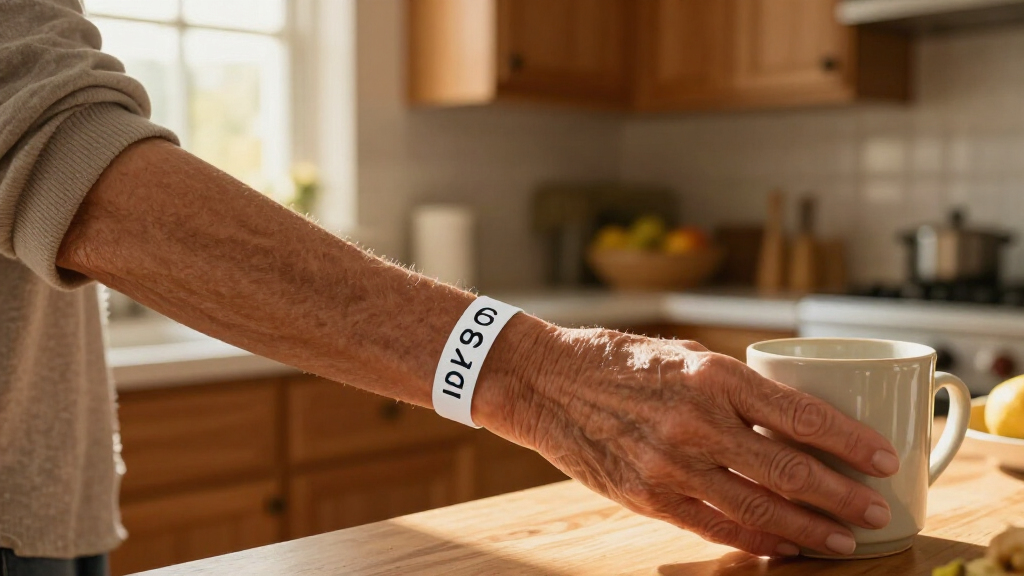

When shopping for a large-print medical alert bracelet, the key choice is not simply which one uses the biggest letters. Readers are usually choosing between a bracelet with text cut into the metal and one whose wording is printed or laser-marked onto its surface. Both can display important details such as a serious allergy, diabetes, a medical device, or an emergency contact, but they differ in how the lettering stands out, how well it holds up, and how much information fits on the band.

Turn quiet afternoons into listening time
- Thousands of audiobooks, podcasts and originals
- Listen on your phone, tablet or Echo — also offline
- Cancel anytime

Personalized Silicone Medical Alert Bracelet with Stainless Steel Plate
- ✔ Band material: Silicone
- ✔ Plate material: Stainless steel
- ✔ Engraving capacity: Up to 6 lines, 36 characters per line
Custom Engraved Medical Alert Bracelet with Adjustable Braided Nylon Band
- ✔ Materials: Nylon and stainless steel
- ✔ Band: Adjustable braided nylon
- ✔ Wrist size: 5.12–8.66 inches (130–220 mm)

Adjustable Braided Medical Alert Bracelet with Engraved Stainless Steel Tag
- ✔ Materials: Nylon and stainless steel
- ✔ Band: Adjustable, stretchy braided band
- ✔ Tag: Removable stainless steel
A deep-engraved bracelet is usually the safer pick for someone who expects to wear it every day and wants wording that remains part of the metal. A printed or laser-marked model may be a better fit when high contrast, a lower upfront price, or a particular color and style matters more. The right choice depends on whether the wearer needs maximum legibility at a glance, more room for details, or a marking method that is less likely to fade with friction. Because product terminology varies, confirm whether a seller’s “laser” option removes or darkens the metal, and ask for the finished letter height rather than relying on the large-print label alone.
At a Glance
| Criteria | Deep-engraved large-print medical alert bracelet | Large-print medical alert bracelet with printed or laser-marked text | Winner |
|---|---|---|---|
| Readability at a glance | Readable when lettering is large enough, but shallow engraving may have limited contrast on some finishes. | High-contrast text can be easier to distinguish, especially against a plain background. | B |
| Long-term legibility | Deep-cut text is physically part of the metal and usually resists rubbing away. | Varies widely: surface printing may wear, while some laser marking is highly durable. | A |
| Information capacity | Depends on band size and letter height; larger type leaves less room for extra wording. | Small bands still limit text; compact lettering may undermine the large-print goal. | Depends |
| Customization | Often supports names, conditions, allergies, and emergency contacts within available space. | May offer color choices and flexible layouts, but available text space remains limited. | Depends |
| Comfort and fit | Depends on material, width, clasp, and adjustability rather than engraving method. | Depends on construction and fit; marking method alone does not predict comfort. | Tie |
| Upfront value | Can cost more than basic printed models; worth the added cost for lasting daily wear. | Often lower cost, though replacement risk matters if markings fade. | B |
| Maintenance | Text needs no special care; clean the bracelet according to its material. | Avoid abrasive cleaning until the maker confirms the marking can tolerate it. | A |
Personalized Silicone Medical Alert Bracelet with Stainless Steel Plate
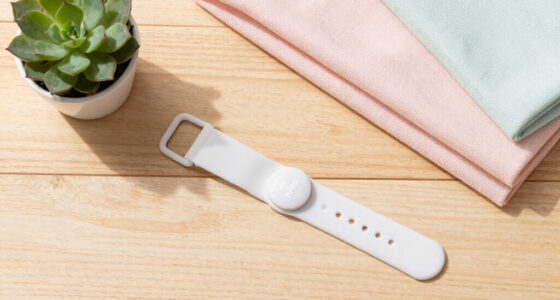
This is our most straightforward recommendation when we want a clear basis for planning what to engrave. The stainless steel plate accepts up to six lines with 36 characters per line, a useful limit for fitting a condition, allergy, or emergency contact without guessing how much text the tag can hold. That stated capacity puts it ahead of the stretchy braided option, whose engraving limit is not provided. It does not, however, confirm how large the lettering will be: buyers prioritizing large print should request the available font size and a layout preview.The band is lightweight, waterproof silicone, making it a practical choice for active routines or anyone who prefers a flexible band to braided nylon. It fits wrists from 5.75 to 9.5 inches and can be trimmed, while a double-locking accordion clasp is intended to help keep it secured. The tradeoff is that trimming is a one-way fit adjustment, so we would measure carefully before cutting. Compared with the dual-sided nylon pick, this one gives a defined total engraving capacity but no stated front-and-back layout; it also includes an emergency card and a 12-month PHR trial, useful extras that should not be treated as a substitute for readable information on the bracelet.
Pros:
- Specified capacity of up to six lines and 36 characters per line
- Waterproof, lightweight silicone band for active and everyday wear
- Trimmable fit covers wrists from 5.75 to 9.5 inches
- Includes an emergency information card and 12-month PHR trial
Cons:
- Requires trimming for a precise fit, which cannot be undone
- Engraving space is limited, and no font size is stated
Best for: Buyers who want a waterproof silicone band, a broad stated wrist range, and a known engraving limit to plan essential medical details.
Not ideal for: Anyone who needs verified oversized lettering, does not want to trim a band, or needs more than six lines of information.
Bottom line: We rank it first for its clearly stated engraving capacity and practical silicone build, provided buyers confirm lettering size before ordering.
“We rank it first for its clearly stated engraving capacity and practical silicone build, provided buyers confirm lettering size before ordering.”
Custom Engraved Medical Alert Bracelet with Adjustable Braided Nylon Band
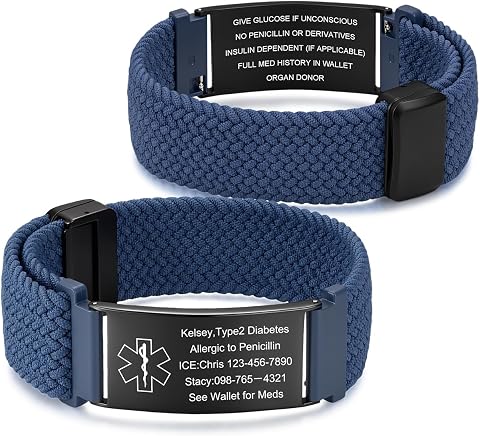
When the medical message needs more organization than a single face can offer, this braided nylon bracelet is the most flexible engraving concept in the lineup: its stainless steel plate can be customized on the front and back. We could use one side for a prominent condition or allergy and the other for medication notes or emergency contacts. That two-sided approach may make the information easier to arrange, but the supplied description does not state character limits, type size, or whether the seller can prioritize larger lettering. We would confirm all three before relying on it for large-print needs.The adjustable band covers wrists from 5.12 to 8.66 inches, a useful range that starts smaller than the silicone pick but ends sooner. Its braided nylon style is aimed at lightweight everyday comfort, while the corrosion- and rust-resistant steel plate offers a durable surface for the engraving. The main caution is a clasp description that conflicts: the product information refers to both a lobster claw and an adjustable clasp. We would verify the actual closure, especially if dexterity or one-handed fastening is a concern. Compared with the silicone bracelet, this gives more room to distribute information across two sides, but lacks a stated engraving capacity and the silicone model’s waterproof claim.
Pros:
- Custom engraving is available on both sides of the stainless steel plate
- Adjustable braided band fits wrists from 5.12 to 8.66 inches
- Lightweight nylon is designed for comfortable everyday wear
- Steel plate is described as corrosion- and rust-resistant
Cons:
- No engraving character limit or lettering size is specified
- Product information conflicts on whether the clasp is lobster claw or adjustable
- Water resistance is not specified
Best for: Buyers who want medical information and emergency contacts arranged on separate sides of a steel plate and whose wrist falls within the listed range.
Not ideal for: Anyone needing a confirmed large-letter layout, a specified engraving limit, a waterproof band, or dependable clasp details before purchase.
Bottom line: We recommend it when a two-sided information layout matters more than a documented text capacity or unambiguous clasp specification.
“We recommend it when a two-sided information layout matters more than a documented text capacity or unambiguous clasp specification.”
Adjustable Braided Medical Alert Bracelet with Engraved Stainless Steel Tag
This option makes the most sense for buyers who put flexible fit and a simple braided look ahead of a documented engraving plan. Its adjustable, stretchy nylon band is designed for everyday wear, and the removable stainless steel tag can carry medical and emergency-contact details. The tag is laser engraved, which is described as helping the marking remain legible over time. That says something about engraving durability, not about large-print size: the listing gives no character capacity, tag dimensions, or font information.Compared with the dual-sided nylon bracelet, this model emphasizes stretch and a removable tag rather than explicitly advertising front-and-back customization. Compared with the silicone pick, it also lacks a stated wrist range and a known line limit. Its magnetic clasp may be convenient for some wearers, but buyers who need a highly secure or easy-to-operate closure should confirm how it works in practice; the supplied details do not explain its fastening strength. The unknown engraving capacity is the deciding drawback for a large-print roundup. Before ordering, we would ask for a proof showing the actual text at its intended size and ensure the essential information fits without shrinking the lettering.
Pros:
- Stretchy, adjustable braided nylon band is designed for flexible everyday fit
- Removable stainless steel tag can carry medical and emergency information
- Laser engraving is described as helping maintain legibility over time
- Steel tag is described as resistant to rust and corrosion
Cons:
- Engraving capacity, tag dimensions, and font size are not specified
- No wrist measurement range is provided
- Magnetic clasp details and security are not explained
Best for: Buyers seeking an adjustable, stretchy braided band and a removable laser-engraved steel tag for basic medical and emergency information.
Not ideal for: Anyone who must know the engraving limit, needs a specified wrist measurement range, or requires confirmed large lettering before buying.
Bottom line: We see it as a comfort-led choice, not the safest pick for buyers who need confirmed large-print engraving space.
“We see it as a comfort-led choice, not the safest pick for buyers who need confirmed large-print engraving space.”
As an Amazon Associate we earn from qualifying purchases.
Key Differences
The largest practical difference is the balance between contrast and permanence. Printed or laser-marked wording can be conspicuous against a contrasting surface, which helps a reader or responder distinguish the letters quickly. That advantage is only useful if the type is genuinely large and the wording is not crowded. A polished metal surface, glare, low contrast, or an overly long inscription can make either bracelet harder to read. Ask for a clear image of the actual lettering and its dimensions when possible.
Deep engraving has a stronger case for people who will wear the bracelet through work, errands, and routine handwashing. Since the letters are cut into the metal, they are less dependent on a surface coating staying intact. But engraving does not automatically mean high readability: shallow or narrow lettering can be difficult to see, and very large type may leave room for only the most urgent facts. Printed and laser-marked options also vary substantially, so the word “laser” alone does not establish how the mark will wear. Check the maker’s explanation and warranty.
For either type, prioritize the medical information that could change immediate care. A short, clear alert and essential contact detail are generally more useful on a bracelet than a long medical history squeezed into tiny text. Confirm that the bracelet fits securely without pinching, and that the wearer can tolerate its weight and material. A medical alert bracelet supplements, rather than replaces, a current medication list or emergency records.
Detailed Comparison
Readability at a glance (Large-print medical alert bracelet with printed or laser-marked text wins — moderate)
Winner: printed or laser-marked, by a modest margin when contrast is high. A dark mark on a light band, or the reverse, can make the message stand out quickly. Deep engraving can also be clear, especially with a contrasting fill, but unfilled cuts on reflective metal may be harder to distinguish in poor light. The gap is moderate, not automatic: request the actual letter height, choose a simple font, and avoid finishes that create glare. If the type is too small, neither marking method qualifies as a useful large-print choice.
Long-term legibility (Deep-engraved large-print medical alert bracelet wins — moderate)
Winner: deep engraving, with a moderate advantage over surface printing. Cut lettering does not rely on ink or a surface layer, so ordinary rubbing is less likely to erase it. Printed text may fade or scratch, though quality and application make a difference. Laser marking can be durable, but the term describes processes with different results. For daily wear, ask what happens if the wording becomes unreadable and whether the seller covers fading. Choose deep engraving when replacement would be inconvenient or a worn message could create a safety problem.
Information capacity (major difference)
Winner: depends on the band and the wearer’s priorities. Neither technique creates more physical space. A wide plate can hold more, but large type takes up more area and reduces the number of lines. A printed layout may fit a clean, high-contrast arrangement, while engraving may make short wording especially robust. Do not trade legibility for a full medical biography. Put the most urgent alert first, then a key contact or concise instruction if space allows; keep less urgent details elsewhere.
Customization (minor difference)
Winner: depends, with a slight advantage to printed or laser-marked designs for visual choices. Some sellers provide more color, finish, and layout options for surface markings. Engravers may offer a broad range of text and symbols too, but the available characters and line count vary by model. Neither option should be bought on customization alone: unusual fonts or decorative symbols can slow reading. Confirm that the seller can reproduce the exact medical wording and that the final layout keeps the most important message prominent.
Comfort and fit (major difference)
Winner: tie. Marking method has little effect on comfort. Band width, weight, clasp security, adjustability, skin sensitivity, and the wearer’s wrist size matter more. A broad plate may offer room for larger letters but feel bulky; a narrow band may be comfortable but force smaller type. Measure the wrist as directed by the manufacturer and check return or resizing terms. A bracelet that is taken off because it irritates or catches on clothing cannot deliver its intended benefit.
Upfront value (Large-print medical alert bracelet with printed or laser-marked text wins — moderate)
Winner: printed or laser-marked, usually for initial cost. Basic models may cost less, making them appealing when budget is the main constraint or the bracelet is for occasional wear. The saving is less persuasive if the marking wears and the whole item needs replacing. Deep engraving can justify a higher price for someone who expects frequent, long-term use. Compare the total cost, including resizing, shipping, replacement, and warranties, rather than treating the sticker price as the full value.
Maintenance (Deep-engraved large-print medical alert bracelet wins — minor)
Winner: deep engraving, by a small margin. Engraved wording generally needs no special protection from rubbing, although the metal still needs care. Printed finishes may call for gentler cleaning and less abrasion, depending on the manufacturer’s instructions. Neither should be assumed waterproof or suitable for every cleaning product without checking the material guidance. If the bracelet is worn during frequent handwashing, ask whether the marking and clasp are rated for that routine.
Deep-engraved large-print medical alert bracelet: Pros and Cons
Pros:
- Cut lettering is less likely to disappear through ordinary surface wear.
- A strong option for continuous daily use when long service life matters.
- Can hold essential medical wording without relying on an applied print layer.
Cons:
- May cost more than a basic printed model.
- Unfilled text on reflective metal may have less contrast than a bold surface mark.
- Large letters limit how much information fits on a small plate.
Large-print medical alert bracelet with printed or laser-marked text: Pros and Cons
Pros:
- High-contrast layouts can be easy to pick out quickly.
- Often has a lower starting price and may provide more color choices.
- Can suit short-term, occasional, or budget-conscious use.
Cons:
- Surface printing can fade or scratch, depending on the process and wear.
- The label “laser-marked” does not by itself confirm long-term durability.
- A low price may not be good value if the bracelet needs early replacement.
Who Should Choose What
Choose Deep-engraved large-print medical alert bracelet if:
- The wearer plans to keep the bracelet on every day and wants lettering cut into the metal.
- Long-lasting legibility matters more than the lowest upfront price.
- The selected model has enough width for the urgent alert in a font the wearer or responder can read.
Choose Large-print medical alert bracelet with printed or laser-marked text if:
- A clearly contrasting design is the top priority and the actual sample text is easy to read.
- The bracelet will be worn occasionally, or the budget favors a lower-cost option.
- The maker can explain the marking process, expected wear, and replacement or fading coverage.
Skip both if: Neither model provides genuinely large, legible text, fits securely, or can display the wearer’s most urgent medical alert. Look for a wider plate or another medical ID format instead of accepting tiny lettering.
Value for Money
Paying more for deep engraving is worthwhile when the bracelet will be worn every day, the engraving is clearly legible, and the seller backs the workmanship. The premium buys a more permanent mark, not automatically better fit, larger letters, or better contrast. Check those features separately. A less expensive printed option is better value for occasional wear or a short-term need if its wording is easy to read and the buyer accepts the possibility of replacement.
Do not pay extra merely because a listing says “large print” or “laser engraved.” Compare the finished letter height, line count, contrast, material, clasp, and warranty. A modestly priced bracelet with readable type and a secure fit can be a better purchase than a premium model whose text is too small or whose plate is uncomfortable. The best value is the option the wearer will keep on and that keeps the urgent message legible.
Final Verdict
For most people choosing a bracelet for daily wear, select a deep-engraved model, provided the text is large enough and easy to distinguish on the chosen finish. Its main advantage is durability: the message is cut into the metal rather than depending on a surface print. Choose a printed or laser-marked model when strong contrast and lower initial cost matter more, especially for occasional wear, but verify what marking process is used and how the seller handles fading.
The deciding factor should be readable, durable wording on a bracelet the wearer will actually keep on—not the label or appearance alone. Keep the message concise, put the highest-priority alert first, and check fit and return terms before ordering. If neither option can show the essential information in comfortably readable type, choose a wider ID or another format rather than compromising legibility.
Frequently Asked Questions
Is engraved text always easier to read than printed text?
No. Engraving can last longer, but readability depends on letter size, contrast, font, finish, and lighting. A dark, high-contrast print may be easier to see than a shallow engraving on shiny metal. Review the actual layout and choose plain, sufficiently large letters.
Does “laser-marked” mean the lettering will not wear off?
Not necessarily. Sellers may use the term for different marking methods, and durability depends on the process, material, and daily wear. Ask whether the mark is cut into the metal or applied to its surface, and check the warranty and care instructions.
What information should go on a large-print medical alert bracelet?
Use concise, high-priority details that could affect immediate care, such as a serious allergy or a key medical condition, plus an emergency contact when space allows. Confirm the wording with the wearer or their care team. Avoid crowding the band with details that would make the type too small to read.
Is a more expensive bracelet worth it?
It can be worth the extra cost for daily wear when the premium buys durable engraving, a secure fit, and a clear warranty. Paying more does not guarantee larger print or better comfort. Compare the actual lettering, band dimensions, materials, and replacement terms before deciding.