TL;DR

Turn quiet afternoons into listening time
- Thousands of audiobooks, podcasts and originals
- Listen on your phone, tablet or Echo — also offline
- Cancel anytime
Grip pads improve traction but still require you to twist; under-cabinet openers hold a lid so you can turn the jar; electric models use a motor to turn the lid. Compare the effort each asks of you, its jar-size limits, setup, stability, and storage before choosing. For persistent pain or very limited hand function, ask an occupational therapist about a safe setup.
Grip pads add traction but still require you to twist the lid.
Under-cabinet openers hold the lid and can provide leverage while saving counter space.
Electric openers use a motor, but you still need to position the jar and check lid-size limits.
Compare stability, reach, setup, cleaning, and storage alongside the effort each device reduces.
For severe pain or very limited hand function, an occupational therapist may suggest a suitable device and setup.
Assistive kitchen guide · 3 common styles
Jar Openers Compared for Weak Hands
The right tool helps with the part of opening that is hardest for you: holding the lid, turning it, or supplying the force. Compare effort, fit, setup, and storage before choosing.
Each style changes a different part of the task: a grip pad adds friction, a mounted opener holds the lid, and an electric model powers the turn.
You still twist the lid.
The tool holds the lid.
Less manual turning.
Match the aid to your task.
Three styles, three different jobs
Start with the movement that causes the most trouble. Reduced grip, painful twisting, fatigue, and difficulty coordinating both hands can call for different kinds of help.
Grip pad
Textured material helps your hand hold the lid. You supply the twist.
Under-cabinet
A fixed gripping wedge holds the lid while you turn the jar.
Electric opener
A motor turns the lid; you still position and steady the jar.
Compare effort and kitchen fit
These are broad patterns, not guarantees. Jar shape, a tight vacuum seal, and positioning can all affect how an opener performs.
| Style | How it works | Effort reduced | Check before choosing |
|---|---|---|---|
| Grip pad or manual aid | Increases friction between your hand and the lid. | Grip assist Twisting remains yours. |
Hand comfort, lid condition, and whether turning is manageable. |
| Under-cabinet opener | Holds the lid as you turn the jar for leverage. | Grip reduced You turn the jar. |
Installation, cabinet clearance, reach, seated access, and jar range. |
| Electric opener | A motor grips and turns the lid, often with a jar clamp or base. | Turn assist Setup still takes effort. |
Power, controls, storage, cleaning, jar stability, and lid-size limits. |
Which part of the task gets easier?
Relative assistance varies by product and person. Use this as a simple guide to the kind of help each style supplies.
Bars illustrate the task each style assists, not measured performance or a guarantee of ease. A powered tool can reduce turning but does not remove the need to position and secure the jar.
Safety note: Keep the jar stable on the work surface. A damp cloth or nonslip mat may help if you can place it safely. Avoid prying with a knife or another sharp tool, which can slip.
What matters most in everyday use
Think about a typical jar you open, the counter where you work, and how comfortably you can set up and store an aid.
Try traction
A pad is compact, portable, and needs no installation or power. It may suit slippery lids when twisting remains comfortable.
Consider: Wet or worn lids, painful wrists, and whether you can still turn.
Consider leverage
A mounted opener can stay ready beneath a cabinet and keep counter space clear. Some designs fold away; features vary.
Consider: Screw installation, cabinet clearance, reach, and seated access.
Consider motor help
An electric model can reduce manual twisting. Controls, setup, and jar positioning still need to be comfortable.
Consider: Batteries or outlet, cleaning, storage, and lid-size range.
A practical fit check
Use the jars and workspace you already have to guide the decision.
Notice the hard movement
Does the lid slip, does twisting hurt, or is it hard to steady the jar?
Check jar and lid range
Compare stated limits with your usual jars, including small, wide, or unusual shapes.
Test the working position
Consider reach, cabinet height, clearance, and whether you can position the jar comfortably.
Plan setup and upkeep
Account for installation, controls, power, storage, cleaning, and accessible instructions.
Choose help for the part that is difficult
A grip aid may be enough when traction is the main problem. Leverage or motorized help may reduce more of the hand work, depending on your comfort and kitchen setup. No one style is best for everyone.
For persistent pain or very limited hand function: An occupational therapist may suggest a suitable opener and a safe setup tailored to your reach, grip, and routine.
Start with the part of opening a jar that hurts or slips
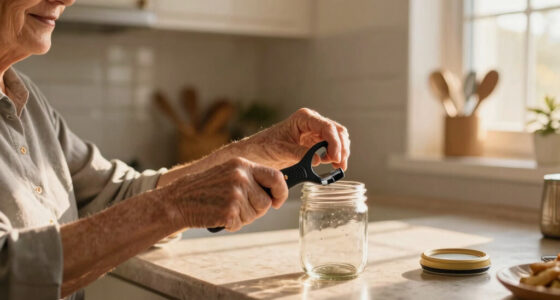
A jar opener helps by changing one of three things: how firmly you can hold the lid, how much you need to twist, or who supplies the turning force. That distinction is a practical way to compare styles. A grippy pad helps your hand hold on; a mounted opener holds the lid steady; an electric model turns it for you. Think about a jar of pasta sauce on a weeknight. If the lid slips because your palm is dry or sore, a textured pad may provide enough friction. If you can hold the jar but twisting hurts your wrist, an under-cabinet opener may take the lid-gripping job out of your hands. If gripping and twisting both feel difficult, a powered model may reduce more of the work, provided you can position the jar and use its controls comfortably. “Weak hands” can mean different things: reduced grip, pain with twisting, fatigue, or difficulty coordinating both hands. Those differences matter more than a label on a package. Notice whether the jar slips, whether the lid resists rotation, and whether holding the jar steady is hard. That small check helps you compare how much effort the options require and focus on what you need.Popular right now

Vitamix Propel Series 510 Professional-Grade Blender, 3 Programs, Black

Vitamix 5200 Professional-Grade Blender, 64 oz. Container, Black

Ninja Luxe Café Mini Plus Espresso and Drip Coffee Machine with AutoFroth, Stainless Steel (ES351)
As an affiliate, we earn on qualifying purchases.
See what each jar opener asks you to do
Jar openers compared side by side show a simple pattern: grip pads assist your hand, under-cabinet models hold the lid, and electric openers supply turning power. The best match depends on the movement you can manage comfortably and the space you have to use and store the device.| Style | How it works | Useful when | Things to check |
|---|---|---|---|
| Grip pad or manual aid | Textured material increases friction between your hand and the lid. | You can still twist but need a steadier hold. | Grip comfort, lid condition, and whether twisting remains manageable. |
| Under-cabinet opener | A mounted wedge or gripping mechanism holds the lid while you turn the jar. | You want leverage and a ready-to-use tool that saves counter space. | Installation, cabinet clearance, reach, and jar-size compatibility. |
| Electric opener | A motor grips and turns the lid, often with a separate jar clamp or base. | Manual gripping or twisting is especially difficult. | Power, storage, lid-size limits, controls, cleaning, and jar stability. |
Choose a grip pad when traction is the main problem
A grip pad is a textured sheet, strap, or rubber cone that makes it easier for your hand to hold a lid while you twist. It is compact, portable, and usually straightforward to store. It can be a sensible first try when a jar slips from your fingers but the turning movement itself remains comfortable. For example, you might keep a rubber pad in the kitchen drawer and use it on a small jam jar at breakfast. The pad gives your palm a less slippery surface to press against, so your hand can put more of its effort into the turn. A nonslip mat under the jar can help keep the glass from skidding, too, if you can place it safely and the jar remains stable. The limit is in the name: a grip aid improves your hold, but it still asks you to twist. A very tight lid, painful wrist, or severely reduced grip may remain difficult. Different materials and shapes also feel different in the hand, and performance can depend on a wet or worn lid. If you have difficulty gripping and turning, treat the pad as one possible aid rather than a promise that every jar will open. Avoid prying with a knife or another sharp tool; it can slip.Pick an under-cabinet opener for leverage and a clear work spot
An under-cabinet opener stays attached beneath a cabinet and grips the lid so you can turn the jar. It reduces the need to pinch the lid directly and can keep a useful tool off the counter. Some designs fold away, though features vary by model, so check the product details. Before buying, stand or sit where you expect to use it and check whether the mounting point will be easy to reach. A device that works comfortably for someone standing might sit too high or too far back for someone using a chair. Look at the mounting instructions, cabinet clearance, and the range of lid sizes it accepts. A cabinet lip or nearby wall can affect how you position a jar. Installation is another real part of the choice. Many models attach with screws, but that may call for tools or help from another person. Once fitted, imagine opening a large jar of pickles: can you place the jar under the opener, turn it without knocking nearby items, and retrieve it without straining? If those movements feel awkward in the intended spot, the space-saving design may not be a good fit for your kitchen.Consider an electric opener when turning takes too much effort
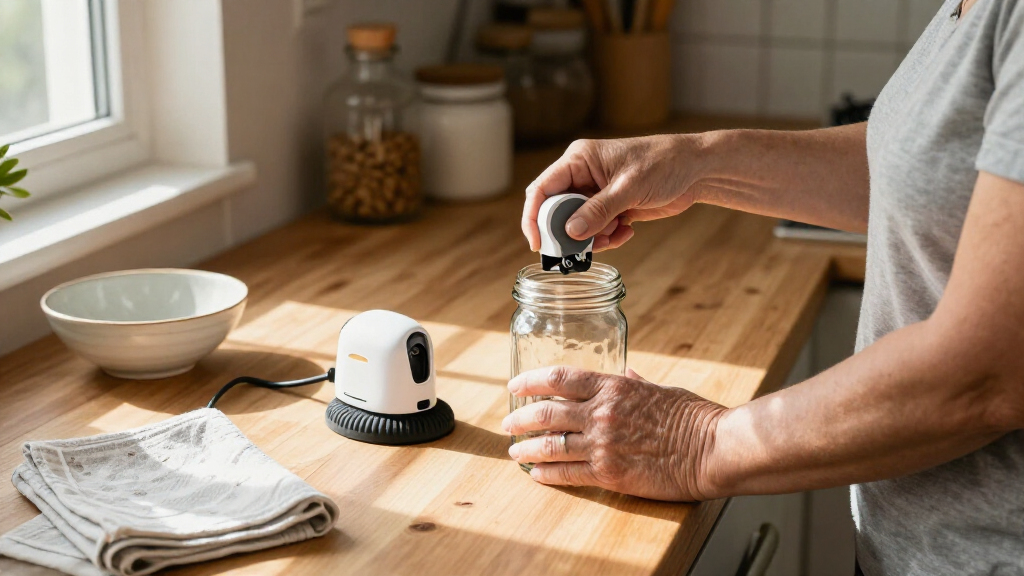
An electric opener uses a motor to grip and turn a lid, often while a separate clamp or base holds the jar. It can reduce how much twisting you do by hand, which may help when manual opening is painful or difficult. It still requires setup: you need to place the jar, position the opener, and operate its controls. Picture preparing dinner with a jar of sauce. A powered opener could be easier on your hands if you can position the jar securely and start the device without discomfort. But check whether it runs on batteries or needs an outlet, how much room it takes on the counter or in a cupboard, and how its parts clean. Clear, accessible controls may matter as much as the motor. An electric opener will not fit every jar. Models have limits on lid size and shape, and unusually shaped containers may be hard to secure. A device can also be less convenient when you want to open a small jar quickly but must set up a clamp first. Compare the stated size range with jars you actually use, and consider whether you can hold the jar steady during setup. Powered help can reduce the turning effort without removing every step.Check the jar, the surface, and your reach before deciding
The right opener depends on more than the lid. Jar size, counter stability, body position, and setup can change whether a device feels manageable. Use these checks with a jar you commonly open, such as a jar of honey or pasta sauce.- Name the hard movement. Notice whether the lid slips, your wrist hurts during the turn, or holding the jar steady is tiring. That points toward traction help, leverage, or powered turning.
- Check the size range. Compare the opener’s specifications with the small jars and wide lids in your cupboard. A model that handles one jar may not accommodate another.
- Try the intended position. Consider whether you can reach, place, and remove the jar while standing or seated. A comfortable working height may be as useful as strong gripping force.
- Think through setup and cleanup. Ask whether you can attach, clamp, or control the device yourself, and whether its surfaces are easy to wipe.
- Consider stability. The jar should not slide or tip during use. A nonslip mat may help if you can place it safely.