
TL;DR

Turn quiet afternoons into listening time
- Thousands of audiobooks, podcasts and originals
- Listen on your phone, tablet or Echo — also offline
- Cancel anytime
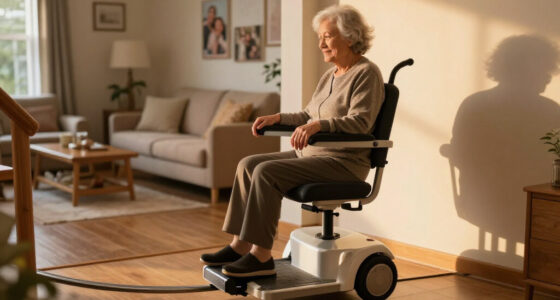
A standard recliner changes position for comfort; a lift chair uses a powered mechanism to tilt the seat forward and help you stand. Consider a lift chair when rising from a chair brings repeated rocking, pulling, pain, weakness, or unsteadiness, and ask a clinician or occupational therapist about transfer safety if you’re unsure. The right choice depends on your abilities, fit, home, and safe use—not your age.
If getting out of your favorite chair takes a running start, the chair may be asking more of your legs than it used to. A standard recliner can ease you back for a rest; a lift chair adds a powered motion that tips the seat forward to help you rise.
This guide helps you tell comfort versus assistance apart, notice when standing has become a daily challenge, and think through the chair’s fit, controls, room, and power needs. You’ll also see when a conversation with a clinician or occupational therapist can help you choose a safer way to transfer.
There’s no age test for needing help. Someone recovering from surgery, living with arthritis, or feeling unsteady may have different needs from a neighbor of the same age. The useful question is simpler: what happens when you stand, and can you operate the chair safely?
Choose a standard recliner for changing position to relax; consider a lift chair when standing itself has become difficult.
Repeated rocking, pulling on furniture, pain, weakness, unsteadiness, or caregiver help are reasons to discuss transfer safety with a professional.
Check body fit, lift movement, controls, room clearance, power backup, moving-part precautions, and service before choosing a model.
A lift chair may assist standing, but it cannot guarantee fall prevention or replace an individualized mobility assessment.
Confirm current manufacturer specifications and location-specific insurance or benefit rules before buying.
Recliner or Lift Chair Comfort or help standing?
A recliner changes position for relaxation. A lift chair adds powered forward tilt to assist with standing, so the right choice depends on your needs, fit, home, and safe use—not your age.
Know what changes
Many lift chairs also recline; the lift motion is the defining difference.
- Changes sitting position for comfort
- Usually not designed to tip the seat forward for standing
- Uses powered movement to tilt the seat forward
- May also recline, depending on the model
Notice the signs
Repeated difficulty rising is a reason to discuss transfer safety with a professional.
Rocking or pulling
You repeatedly rock forward, pull on furniture, or need another person’s help to stand.
Pain or weakness
Pain, reduced leg strength, or fatigue makes standing difficult.
Feeling unsteady
You feel less steady during the move from sitting to standing.
Regular assistance
A caregiver often helps you transfer from your chair.
Check the fit and setup
The chair should suit your body, transfer, and room.
- Check seat height, width, depth, back support, and footrest length.
- Try the lift and recline movement; make sure your feet are supported and knees bend comfortably.
- Confirm controls are easy to see, reach, understand, and operate.
- Measure clearance around the chair and ask about power backup, moving parts, service, and warranty.
Choose for your needs
Features such as heat or massage add comfort; they do not replace the lift function or establish medical suitability.
Notice what happens when you stand and how often you need help.
Discuss safe movement and chair suitability with a clinician or occupational therapist when needed.
Check current manufacturer specifications and location-specific insurance or benefit rules before buying.
A recliner helps you rest; a lift chair helps you rise
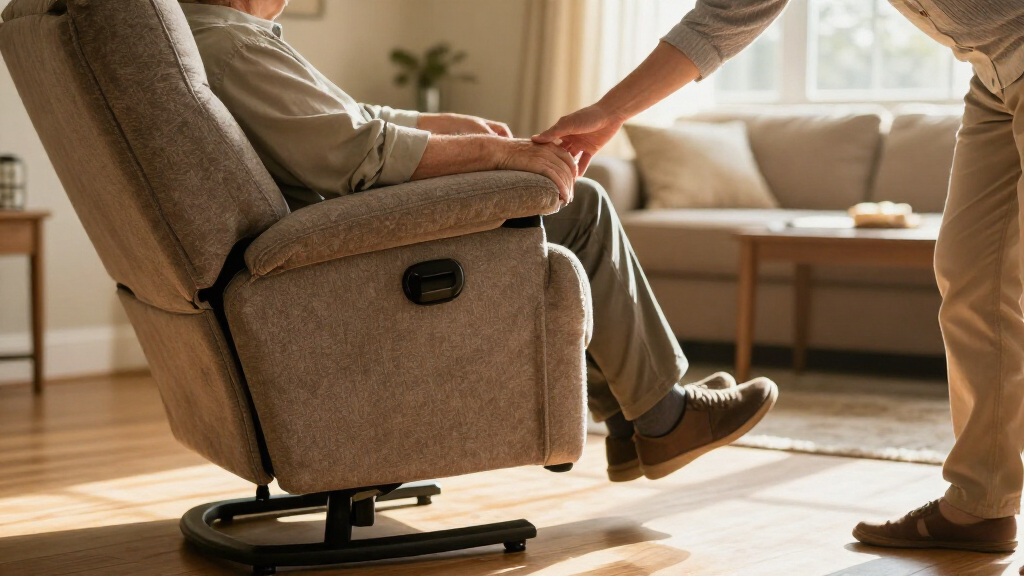
A recliner changes the chair’s position for relaxation, while a lift chair uses a powered mechanism to tilt the seat forward and assist with standing. Many lift chairs also recline, so the key difference is not whether the back moves; it’s whether the chair has a lift position designed to support the sit-to-stand move.
Think of the lift motion as a gentle ramp under your seat, not a hand pulling you upright. You remain responsible for your balance, timing, and use of the controls. A power recliner may feel luxurious for an evening of reading, but it won’t necessarily help if rising from its low, soft cushions has become the hard part.
For example, imagine Sam settles into a deep recliner after dinner. He can recline and return the footrest without trouble, but he has to rock three times and push down on the side table to stand. A lift chair may address that specific transition, while a chair chosen only for reclining comfort may leave the difficult moment unchanged.
The distinction matters because a lift feature is an aid to movement, not a promise of safety or a medical solution. Comfort and transfer assistance are separate needs. If you’re considering a lift chair because standing feels unsafe, a clinician or occupational therapist can assess how you move and whether this kind of chair suits you.
Popular right now

Vitamix Propel Series 510 Blender, 3 Programs, Slate

Breville Barista Express Espresso Machine with Built-In Grinder, Brushed Stainless Steel
KitchenAid Artisan Series 5-Quart Tilt-Head Stand Mixer with Pouring Shield, Cherry Tomato
As an affiliate, we earn on qualifying purchases.
Spot the everyday signs that standing takes too much effort
A lift chair may be worth discussing when standing repeatedly requires rocking, pulling on nearby furniture, another person’s help, or a painful burst of effort. The pattern matters more than any single difficult day: notice whether the movement feels harder, less steady, or more tiring across ordinary routines.
Picture carrying a warm mug of tea to your chair. You sit down safely, but when the phone rings you brace both hands on the armrests, rock forward, and still feel your knees wobble. Or perhaps your partner now waits beside you because they help you stand several times each day. These moments are practical clues that the transfer deserves attention.
Common reasons to seek guidance include reduced leg strength, arthritis pain, balance problems, fatigue, or recovery after surgery. A lift chair isn’t only for older adults. A person of any age may have a temporary or ongoing mobility limitation; equally, age alone does not show that someone needs powered assistance.
Keep track of what happens: do you need help every time, only when you’re tired, or only from a particular seat? Share those details with a healthcare professional. A chair can make one part of the day easier, but it cannot assess why standing changed or replace advice about safe transfer technique.
- Notice repeated rocking or pulling on furniture to stand.
- Pay attention to unsteadiness, pain, weakness, or unusual fatigue.
- Consider how often a caregiver helps with the transfer.
- Ask whether you can see, reach, understand, and use the controls reliably.
Compare a standard recliner and a lift chair by what they do
A standard recliner suits you when your main goal is to change sitting or lounging position; a lift chair adds powered help as the seat tilts forward for standing. Some lift chairs combine both functions, so compare the actual movement and controls instead of relying on a label such as “power chair.”
| What you need | Standard recliner | Lift chair |
|---|---|---|
| Raise the footrest or recline the back | Often manual or powered, depending on the model | Often available, but features vary |
| Help the seat tip forward for standing | Usually not its main function | Designed to provide a powered lift position |
| Main reason to choose it | Resting comfort and preferred sitting positions | Assistance with the sitting-to-standing transfer |
| What to check | Movement, fit, and room clearance | Fit, lift motion, controls, power backup, and transfer safety |
Say Jordan relaxes comfortably in a powered recliner but gets stuck when standing because the cushion is too low. A lift chair might address the rising motion, but a poor fit could still leave Jordan’s feet dangling or make the controls hard to reach. The feature alone does not settle the decision.
Some models offer several reclining or lift positions, quieter mechanisms, different upholstery, or add-ons such as heat and massage. Those options may affect comfort and day-to-day use. They don’t replace the lift function or prove that a chair is suitable for a specific person’s mobility needs. Check current manufacturer documentation for the exact model’s movements and specifications.
Choose a chair that fits your body, room, and daily routine
The right lift chair should fit your body, move in a way that suits your transfer, and operate safely in your room. Start with seat height, width, depth, back support, and footrest length; then check controls, clearances, and what happens if the power stops. A chair that doesn’t fit can make everyday sitting and standing harder.
Use this walk-through before you commit:
- Check the seated fit. Sit back and see whether your feet rest on the floor or footrest and your knees bend comfortably. The seat should support you without pressing awkwardly behind your knees.
- Try the movement. If possible, operate the lift and recline positions while seated. Notice whether the forward tilt helps you begin standing and whether you can control your descent back into the chair.
- Test the controls. Make sure you can see and reach the buttons and understand which one raises, lowers, or reclines the chair. Ask about alternate operation if the power goes out.
- Measure the space. Check the room around the chair and clearances behind and in front. Follow the manufacturer’s instructions so the chair can move without hitting a wall, table, or other obstacle.
- Ask practical questions. Confirm electrical needs, moving-part and pinch-point precautions, cleaning instructions, delivery and setup, service, parts, and warranty coverage.
Picture measuring a corner beside a sunny window before ordering. The chair looks like it will fit, but its back needs space to recline and its seat must move during the lift. Check both the room dimensions and the product’s spacing directions, and consider children or pets who might get near moving parts.
Finally, ask about cost and coverage before buying. Rules vary by place, plan, and eligibility; in the United States, Medicare coverage has historically been limited and may apply only to the lift mechanism under specific requirements. Confirm current requirements directly with Medicare, your insurer, or local benefits provider, and get current model details from the manufacturer.
Treat the chair as one part of a safer transfer
A lift chair can assist the move toward standing, but it cannot guarantee that you won’t fall or take the place of a mobility assessment. Safe use also depends on the person’s balance, ability to follow instructions, chair fit, transfer technique, and what’s around the chair.
For instance, Lee’s chair raises smoothly, but a rug edge curls up in front of it and a small table blocks the route to the walker. The seat helps Lee rise, yet the clutter still creates a problem as soon as Lee steps away. Clear the path, keep needed mobility aids within reach, and follow instructions for operating the chair.
Pay attention to whether you can control your descent into the seat and operate the buttons consistently. If you can’t follow the controls reliably, feel unsteady during the lift, or need another person to hold you up, ask a clinician or occupational therapist to assess the transfer and recommend suitable options. A caregiver who helps often can share useful details about when the movement becomes difficult.
Power and moving parts deserve a simple safety check, too. Ask the manufacturer how its model handles an outage, whether a battery backup is available, and how the chair returns to a safe position. Follow the manual around pinch points and children or pets, and get advice for unusual needs. The chair should match the person, not ask the person to adapt to a risky setup.
Plan for outages, upkeep, and the questions you’ll have later
Before choosing a lift chair, learn how it behaves during a power failure, what upkeep it needs, and whom to contact for service. Models differ: some offer battery backup, while others may require a different plan. The product manual and manufacturer can tell you what applies to the chair you’re considering.
Imagine the power goes out while the chair is partly reclined on a stormy evening. Knowing ahead of time whether you can return it to a safe position—or whom to call—can save confusion. Ask how backup batteries work, whether they are included, and what to do if the chair stops in a position that makes standing difficult.
Daily details matter just as much. Upholstery affects how easily you clean crumbs or spills; frequent use may make durable construction, available parts, and service access more important. Ask what the warranty covers, how to arrange repairs, and which maintenance steps the manufacturer recommends. Lifespan depends on the model, construction, and use, so avoid assuming one chair will last a set number of years.
Features and coverage rules can change, and local benefit programs differ. If you’re comparing models or hoping for reimbursement, confirm current specifications with the manufacturer and current requirements with your payer. Keep the manual where you can find it. A useful purchase decision includes not only how the chair feels on delivery day, but also how you’ll use and care for it months later.
Frequently Asked Questions
What is the difference between a lift chair and a power recliner?
A power recliner changes the backrest or footrest position for comfort. A lift chair also tilts its seat forward to assist with standing, though models differ and some combine both functions.
Who should consider a lift chair?
Someone who has difficulty rising safely from a seated position may want to discuss a lift chair with a clinician or occupational therapist. The person also needs to fit the chair and use its controls safely; age alone doesn’t determine suitability.
Does Medicare or insurance cover a lift chair?
Coverage depends on your location, plan, and eligibility. In the United States, Medicare coverage has historically been limited and may apply only to the lift mechanism under specific requirements, so confirm current rules and documentation directly with Medicare or your insurer before buying.
Can you sleep in a lift chair?
Some lift chairs recline substantially, but that doesn’t mean every model or position is suitable for overnight sleep. Ask a clinician about your personal needs, especially if you have concerns involving breathing, circulation, skin, or mobility.
How do you choose the right lift chair size?
Compare the manufacturer’s seat height, width, depth, back support, and footrest measurements with the person who will use it. When possible, try the chair and check that your feet are supported and your knees bend comfortably; a poor fit can make sitting and standing harder.
What happens if a lift chair loses power?
Power-outage options differ by model, and some chairs offer battery backup. Read the manual and ask the manufacturer how that chair returns to a safe position during an outage.
Can a lift chair prevent falls?
A lift chair may assist with the move from sitting to standing, but it cannot guarantee fall prevention. Fit, transfer technique, the person’s balance, supervision when needed, and a clear path around the chair also matter.
Conclusion
Start with the moment that gives you trouble: if you can relax in your chair but struggle to stand, ask whether a lift chair’s forward tilt fits your needs. Check the fit and controls, measure the room, and get a clinician or occupational therapist’s advice when the transfer feels unsafe or uncertain.
The best chair is the one that supports your real routine. Make the decision from the way you move today, then keep the path beside the chair clear enough for your next step.