
TL;DR
Listen free for 30 days with Audible
Thousands of audiobooks and originals — cancel anytime.
Start your free trialAs an affiliate, we earn on qualifying purchases.
One-handed kitchen tools are specially designed to help people with limited mobility cook safely and independently. They feature easy-to-use mechanisms, safety features, and recent innovations that make food prep less frustrating and more accessible.
Imagine trying to open a jar with one hand. Frustrating, right? Now imagine doing it every day, slowly losing strength or facing mobility challenges. One-handed kitchen tools are designed precisely for these moments, turning potential obstacles into simple tasks. Whether you’re recovering from an injury, managing arthritis, or caring for someone with limited mobility, these tools can make a real difference in your daily life. This guide walks you through what to look for, the latest innovations, and how to choose the right tools for you.
Choose tools with ergonomic handles and simple mechanisms to reduce effort.
Innovations like spring-loaded and electronic tools can simplify challenging tasks.
Assess your specific needs and try demo models or consult experts for best results.
Organize your kitchen to keep essential tools within easy reach for quick access.
Invest in safety features like non-slip bases and guards for peace of mind.
One-Handed Kitchen Tools
A practical guide to safer, simpler food preparation for people managing arthritis, limited mobility, reduced grip strength, disability, or recovery from injury. The right tool replaces force and coordination with stability, leverage, and intuitive action.
Designed around ability—not limitation
The best adaptive tools reduce gripping, twisting, stabilizing, and precise coordination. Each feature should solve a real task in your kitchen.
Ergonomic grip
Large, textured handles distribute pressure and reduce the force needed for peeling, cutting, or opening.
Non-slip base
Suction, magnetic, or rubberized surfaces hold tools and ingredients steady when a second hand is unavailable.
Simple action
Spring-loaded, lever-assisted, and one-touch mechanisms replace repetitive twisting or squeezing.
Guards & locks
Blade covers, safety locks, and enclosed cutting areas reduce accidental contact and unexpected movement.
Adjustability
Customizable angles, handle positions, and modular parts accommodate different hand sizes and strengths.
Better materials
Rust-resistant metals, durable plastics, and antimicrobial coatings support longevity and easier cleaning.
Smarter mechanisms, safer motion
Recent developments focus on reducing both physical and cognitive effort. The strongest improvements stabilize the task before adding technology.
From gentle press to finished task
Touch-sensor can openers, powered jar openers, and spring-loaded tools minimize twisting and tight gripping. Magnetic or suction bases then keep the device stable, helping prevent slips and spills.
Smart sensors and app-connected features may add useful alerts, but intuitive controls and reliable safety mechanisms should remain the priority.
Standard tools vs. adaptive design
A modern tool earns its place by lowering effort, reducing coordination demands, and protecting the user throughout the task.
| Feature | Standard kitchen tools | Modern one-handed tools |
|---|---|---|
| Design | ✕Often needs two hands, precise coordination, or sustained gripping. | ✓Lightweight, ergonomic, and built around one-touch, lever, or spring action. |
| Ease of use | ✕May require significant force, dexterity, and several operating steps. | ✓Minimal effort with large controls and intuitive operation. |
| Safety | ✕Protection often depends heavily on user grip and technique. | ✓Guards, safety locks, slip resistance, and stable bases reduce risk. |
| Innovation | ✕Traditional mechanisms with limited adaptive functionality. | ✓Powered assistance, sensors, modular parts, and improved materials. |
Pick the tool that fits your task
Start with the kitchen activity that creates the most strain or risk. A focused purchase is usually more useful than a large kit of unfamiliar gadgets.
Typical cost spectrum
Manual tools usually sit at the affordable end. Powered assistance, premium materials, and smart features increase the price.
Name the hardest task first: opening jars, cutting, peeling, grating, or stirring.
Consider grip strength, dexterity, reach, fatigue, and whether either hand can stabilize an object.
Choose the fewest steps and the largest comfortable controls. Complexity can create new barriers.
Try a demo model when possible or consult an occupational therapist for a personalized fit.
Store essential tools within easy reach and inspect guards, grips, and mechanisms regularly.
Frequently asked questions
Safety and fit vary by person. Manufacturer instructions and individualized professional advice remain important.
What should a beginner buy first?
Start with a universal jar opener, ergonomic can opener, or lightweight peeler with a simple mechanism and non-slip grip.
Are these tools suitable for severe disabilities?
Many support a broad range of abilities, but an occupational therapist can recommend safer tools for specific strength and mobility needs.
How do I know whether a tool is safe?
Look for stable bases, guards, locks, clear instructions, and controls that do not require uncomfortable reach or force.
Can financial assistance help?
Some health services, disability organizations, insurers, and regional programs offer grants or subsidies for adaptive equipment.
Independence begins with the right fit.
One-handed kitchen tools are more than convenient gadgets. When matched to the user’s strength, movement, and daily tasks, they can make cooking safer, less frustrating, and more enjoyable.
What Makes One-Handed Kitchen Tools So Easy to Use?
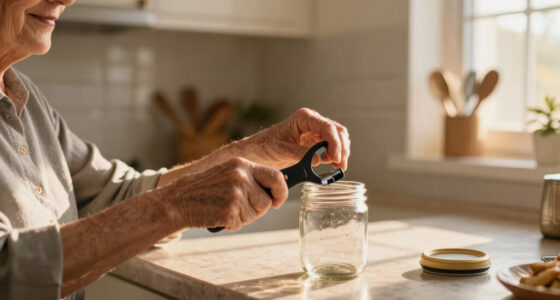
One-handed kitchen tools are built for simplicity. They feature ergonomic handles, lightweight designs, and mechanisms that require minimal effort. For example, a good jar opener might have a large, textured grip that turns with just a gentle twist, even if your hand isn’t very strong. Non-slip surfaces and intuitive operation mean you spend less time fiddling and more time cooking. Think of them like the kitchen’s version of a friendly assistant—ready whenever you need it, easy to handle, and safe.

Honeydak One Handed Jar and Bottle Opener One Handed Adaptive Equipment Jar and Bottle Opener for Those with a Weak Grip & Seniors with Arthritis
- Effortless Jar Opening: Ideal for weak grip and seniors
- Durable Construction: Made from plastic with rubber interior
- One-Handed Operation: Easy to use with a single hand
As an affiliate, we earn on qualifying purchases.
As an affiliate, we earn on qualifying purchases.
Latest Innovations That Make One-Handed Cooking Smarter and Safer
Recent innovations are pushing these tools well beyond basic design. Spring-loaded mechanisms help open cans with a single press, reducing the physical effort needed and decreasing strain on joints—crucial for those with arthritis or limited hand strength. Magnetic bases keep tools steady during use, preventing slips that could cause injury. Some gadgets even connect to apps or incorporate sensors, alerting you if a task isn’t done correctly, which adds an extra layer of safety and confidence. For example, a new electric can opener with a touch sensor activates with minimal effort, eliminating the need for twisting or gripping tightly. Improvements in materials, like rust-proof plastics and antimicrobial coatings, not only extend the lifespan of tools but also maintain hygiene, reducing the risk of infections or contamination. These innovations collectively reduce physical and cognitive effort, making cooking safer and more accessible for everyone, regardless of ability.

KUUCARE Jar Opener for Weak Hands, Seniors with Arthritis, Blue
- 5-in-1 Multi-Use Design: Combines jar, bottle, can opener, lid gripper, and ring pull opener
- Ideal for Seniors & Limited Mobility: Gentle on fragile joints, eases lid opening for those with hand limitations
- Universal Container Compatibility: Fits various container sizes including jars, bottles, cans, and tins
As an affiliate, we earn on qualifying purchases.
As an affiliate, we earn on qualifying purchases.
How to Pick the Perfect One-Handed Kitchen Tool for Your Needs
- Assess your main tasks—opening jars, slicing, peeling, or stirring—and consider which of these are most challenging. Prioritizing tasks helps focus on tools that will make the biggest difference.
- Check your hand strength and dexterity to determine the level of assistance you need. For example, if grip strength is minimal, look for tools with large, textured handles or automatic mechanisms.
- Look for tools with simple, intuitive mechanisms that match your physical capabilities. Complex tools may require more coordination or strength than you can provide, so ease of use is key.
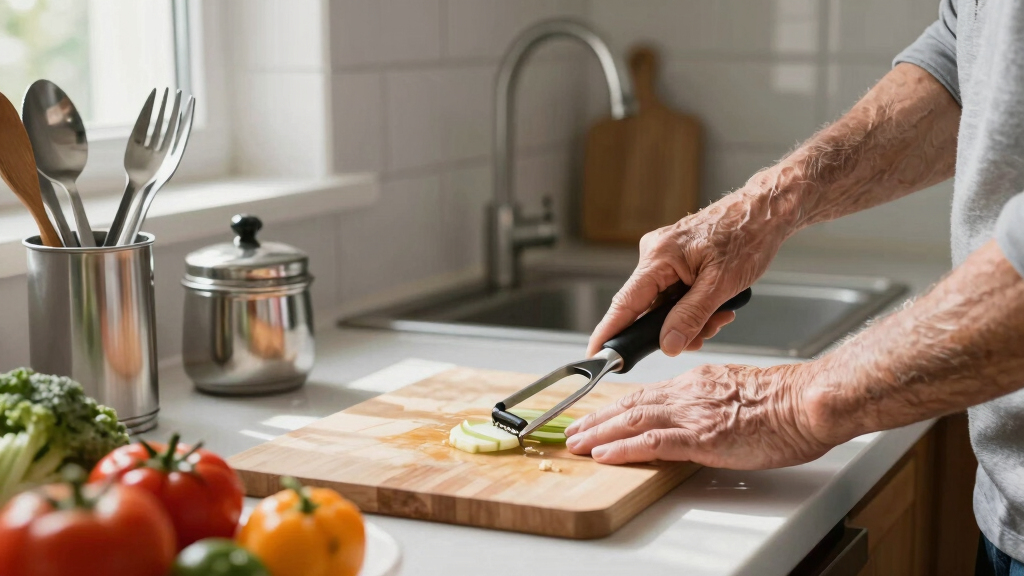
Choosing the right tools is about understanding the specific challenges you face in the kitchen. For instance, if opening jars is your biggest hurdle, selecting a jar opener with a large textured grip not only reduces the force needed but also minimizes the risk of slips, which could cause injury or mess. When slicing or peeling is difficult, ergonomic peelers or lightweight knives designed for single-handed use can help maintain safety and efficiency. It’s also crucial to consider how intuitive the tool’s operation is—complex mechanisms might seem innovative but could become frustrating if they require more effort or coordination than you can provide. Trying demo models or consulting with an occupational therapist can offer personalized insights, ensuring the tools you select truly fit your needs and avoid unnecessary frustration or injury. Ultimately, the goal is to choose tools that enhance your abilities and make cooking a safer, more enjoyable experience.
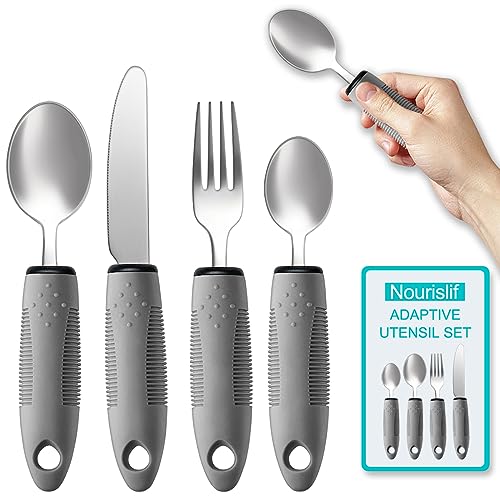
Nourislif Adaptive Utensils 4pcs For Hand Tremors,Elderly, Arthritis,Parkinsons-Built Up Utensils For Adults 2.5oz Each, Silverware Set With Handle, Flatware Cutlery Set For Seniors
- Easier Eating for Seniors: Supports independence for hand tremors and arthritis
- Enlarged Easy Grip Handle: Contoured, built-up handle for stability and control
- Premium Rustproof Material: Durable, high-quality stainless steel
As an affiliate, we earn on qualifying purchases.
As an affiliate, we earn on qualifying purchases.
Comparison Table: Standard vs. Modern One-Handed Kitchen Tools
| Feature | Standard Kitchen Tools |
|---|---|
| Design | Require two hands, often with complex mechanisms that demand precise coordination, which can be difficult for limited mobility. |
| Ease of Use | Varies widely; many require significant force, dexterity, or multiple steps, making them less accessible for some users. |
| Safety | Dependent on user skill; slips or improper use can lead to injuries, especially if mechanisms are not designed with safety in mind. |
| Innovation | Limited; most focus on traditional designs without adaptive features, which can hinder accessibility. |
| One-Handed Kitchen Tools | |
| Design | Ergonomic, lightweight, and often featuring one-touch or spring-loaded mechanisms that simplify operation, reducing physical effort and coordination requirements. |
| Ease of Use | Designed for minimal effort, allowing one-handed operation with intuitive controls, making them more accessible for various abilities. |
| Safety | Enhanced with guards, slip-resistant grips, and safety locks to prevent accidents, especially important for users with limited strength or coordination. |
| Innovation | Smart mechanisms, antimicrobial materials, and app-connected features that improve safety, hygiene, and functionality, reflecting ongoing advancements in accessible design. |
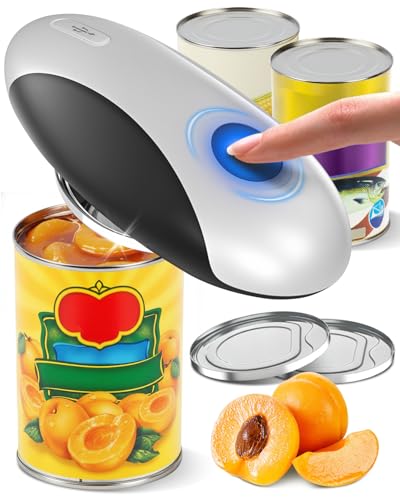
Zoomsnail Electric Can Opener, Automatic Rechargeable Can Openers with One-Touch Smooth Edge & Magnetic Lid – Hands-Free Easy-Grip Opener for Seniors with Arthritis and Most Cans
- One-Touch Automatic Operation: Effortless, hands-free can opening
- Safe, Smooth-Edge Cuts: Protects from sharp metal edges
- Magnetic Lid Lifter: Hygienic, contactless lid removal
As an affiliate, we earn on qualifying purchases.
As an affiliate, we earn on qualifying purchases.
Frequently Asked Questions
What are the best one-handed kitchen tools for beginners?
Look for multi-functional, easy-to-operate tools like ergonomic can openers, universal jar openers, and lightweight peelers. These require minimal force and are straightforward to use, making them perfect for those new to adaptive kitchen equipment.
Are these tools suitable for someone with severe disabilities?
Many are designed for a range of abilities, but it’s best to consult with an occupational therapist. They can recommend tools tailored to your specific mobility and strength levels, ensuring safety and effectiveness.
How do I choose the right tools for my needs?
Start by identifying the toughest tasks—opening jars, peeling, cutting. Consider your hand strength and dexterity. Reading reviews, trying demo models, or seeking advice from specialists can help you find the best fit.
Can I use these tools safely?
Yes, when used as intended. Always follow the manufacturer’s instructions, and prioritize safety features like guards and slip-resistant grips. Regularly inspect tools for wear or damage.
Are there resources or financial assistance available?
Some regions and organizations offer grants, subsidies, or insurance support for purchasing adaptive tools. Checking with local health services or disability support programs can provide options.
Conclusion
One-handed kitchen tools are more than just gadgets—they’re gateways to independence. By understanding their features and how to select them, you can transform cooking from a frustrating chore into an empowering activity. Remember, the right tools adapt to your needs, making every meal a little easier and a lot safer.
Think of your kitchen as a space where technology and design come together to support your daily life. With a few smart choices, you’ll find yourself cooking confidently—one hand at a time.
Back to school Picks
back to school
As an affiliate, we earn on qualifying purchases.