TL;DR
Listen free for 30 days with Audible
Thousands of audiobooks and originals — cancel anytime.
Start your free trialAs an affiliate, we earn on qualifying purchases.
Stair safety at home hinges on sturdy railings, slip-resistant treads, and good lighting. Regular checks and recent innovations help prevent falls and injuries.
Imagine walking down your staircase in the evening. The house is quiet, the glow of a nearby lamp casts warm shadows, but suddenly, your foot hits a slick spot or the edge of a step you can’t see clearly. That moment of hesitation could be the difference between a safe descent and a painful fall.
Stair safety isn’t just about avoiding accidents — it’s about creating a space that feels secure, welcoming, and accessible for everyone. Whether you’re caring for an aging parent or just want to protect your family, small changes to your stairs can make a big impact. This guide will walk you through the essentials: railings, treads, and lighting — the three pillars of safe stairs at home.
Sturdy, continuous railings on both sides are essential for safe stair navigation.
Non-slip treads and coatings significantly reduce the risk of slipping, especially on older stairs.
Proper lighting, including motion-activated options, prevents trips and falls in low light.
Regular inspections and maintenance catch hazards early before accidents happen.
Recent innovations like glass railings and smart lighting make stairs safer and more stylish.
Stair Safety at Home: Railings, Treads & Lighting
A safe staircase feels predictable underfoot, easy to grasp, and unmistakably visible. Strengthen these three pillars—and inspect them regularly—to turn a common household risk into a secure path for every age and ability.
Build safety into every step
Falls on stairs cause thousands of injuries annually, yet many hazards are preventable. The strongest strategy combines a secure handhold, reliable traction and consistent illumination—then protects all three through routine maintenance.
A firm anchor within easy reach
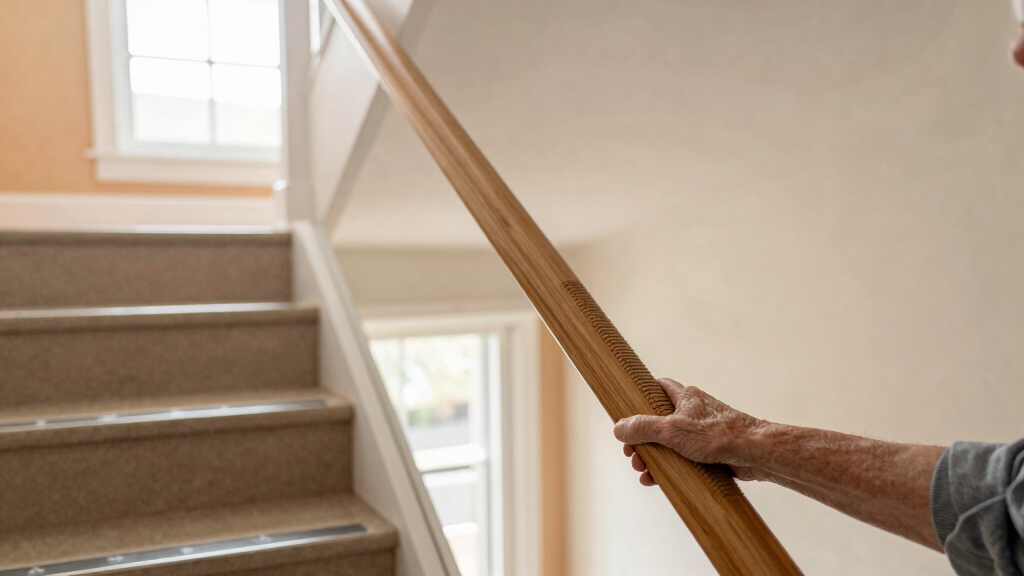
Install a securely anchored, continuous handrail on at least one side—ideally both. Choose a comfortable, non-slip profile that can be grasped quickly.
A stable surface for every footfall
Keep tread depth and riser height consistent. Add textured surfaces, rubber, vinyl or adhesive strips where smooth finishes become slick.
A clear visual rhythm from end to end
Illuminate the top, bottom and full run of the staircase. Reduce glare and shadows while making each nosing and landing easy to distinguish.
Dimensions that feel predictable
Consistency matters as much as the number itself. A sudden change in height or depth disrupts a person’s stepping rhythm and can become a trip point.
Safety range visualizer
Common residential guidance; verify requirements with your local building authority.
Quick stability test
A five-minute scan can expose hazards before they contribute to a fall.
Choose traction for the real household
The best tread treatment balances grip, durability, maintenance and appearance. Moisture, pets, children, older adults and footwear habits should all shape the decision.
| Surface option | Slip resistance | Durability | Easy retrofit | Best fit |
|---|---|---|---|---|
| Rubber tread cover | ✓ High grip | ✓ Strong | ~ Moderate | Busy stairs, children, older adults |
| Textured vinyl | ✓ Good | ~ Medium | ✓ Easy | Cost-conscious, easy-clean upgrades |
| Adhesive anti-slip strips | ✓ Targeted | ~ Replace over time | ✓ Very easy | Fast retrofit on existing stairs |
| Sealed hardwood | ✗ Low when slick | ✓ Excellent | ✗ Specialist work | Style-led spaces with added grip treatment |
| Stone or tile | ~ Finish dependent | ✓ Excellent | ✗ Difficult | Durable builds with textured finish |
Safety note: securely attach every covering. A loose mat or lifting strip can create the very trip hazard it was intended to prevent.
From hazard to safer movement
Effective stair safety is a connected system. Detection leads to correction, correction supports confidence, and confidence encourages consistent use of the stairs and handrails.
Find wobble, wear, clutter and shadows.
Anchor, repair, clean and replace.
Light every edge and landing evenly.
Keep a continuous grip within reach.
Inspect again every few months.
Safer can also mean smarter
Recent products make existing staircases easier to upgrade without a full rebuild. The most useful innovations remove friction from safe behavior and adapt to changing household needs.
Motion-activated LEDs
Automatic strips and smart bulbs illuminate the route on approach, reducing reliance on someone remembering a switch.
Retrofit grip coatings
Modern anti-slip coatings and adhesive products add traction to older treads without replacing the staircase.
Tempered glass guards
Properly specified glass panels preserve light and openness while providing a sturdy protective barrier.
Adjustable handrails
Flexible systems can accommodate changing mobility needs, users of different heights and evolving room layouts.
Small checks prevent large surprises
Inspect promptly after renovations, impact damage or any sign of wear. For routine care, put stair safety on the household calendar.
Tighten brackets, test anchors and keep the full grip path unobstructed.
Remove debris, repair movement and replace worn anti-slip treatments.
Clean lenses, replace failed bulbs and test sensors from both directions.
Confirm dimensions and guard requirements with local authorities or a professional.
Why Your Railings Are the First Line of Defense
Your stair railings are like the safety net that catches you when balance wavers. Properly installed, they provide support and confidence, especially for those with mobility challenges. Beyond just preventing falls, sturdy railings can help individuals regain their balance if they start to slip, reducing the severity of potential injuries.
Choosing the right height, material, and grip design isn’t just about compliance — it’s about ensuring safety in real-world scenarios. For example, a railing that’s too high or too low can be difficult to grasp quickly, especially in an emergency. Similarly, materials that feel comfortable and secure in the hand encourage regular use and provide reassurance.
Maintaining and inspecting your railings is equally important. Wobbly or loose railings not only fail to provide support but can become hazards themselves. Regularly checking for stability, ensuring proper anchoring, and replacing worn components can make the difference between safety and risk. Remember, a well-designed railing supports every step you take and can be the critical factor in preventing a fall.
Deeply understanding these aspects highlights how integral railings are to overall stair safety. A sturdy, correctly positioned handrail acts as an anchor during uncertain steps, especially in emergencies. The tradeoff often involves choosing durable materials that balance grip comfort with longevity, and installing at heights that accommodate users of various ages. Poorly selected or installed railings can give a false sense of security, so investing time in proper design and upkeep is essential for real safety.
As an affiliate, we earn on qualifying purchases.
How to Pick the Best Treads for Safety and Comfort
Think of treads as the foundation of stair safety. They are the surface on which every step is taken, and their design directly influences stability and confidence. Uneven, worn, or slick treads compromise this foundation, increasing the risk of slipping or tripping, especially in households with children or elderly residents who may have slower reaction times or balance issues.
Choosing the right treads involves understanding the tradeoffs between materials, cost, and durability. For example, rubber or textured vinyl provide excellent slip resistance, which is crucial in environments prone to moisture or spills. However, these materials may wear faster or require replacement over time. Conversely, wood or stone treads are durable and stylish but may need additional non-slip coatings or strips to ensure safety.
Proper installation is key: treads should be securely attached to prevent movement, which can cause trips. When choosing materials, consider their grip and how they interact with your household environment — for instance, a slippery wooden tread might be safe in dry conditions but hazardous when wet. Regular maintenance, such as cleaning to remove debris or applying anti-slip coatings, extends their effectiveness. For households with elderly or young children, investing in high-traction treads or add-on non-slip strips can significantly reduce fall risk, offering peace of mind and a safer home environment. Understanding these nuances helps you select options that balance safety, aesthetics, and long-term durability, ensuring your stairs remain a reliable support rather than a hazard.
As an affiliate, we earn on qualifying purchases.
Lighting Your Stairs: Brighten Up and Stay Safe
Effective lighting isn’t just about visibility; it’s about creating a visual cue that guides your eyes and feet safely across each step. Poor lighting conditions—such as dim bulbs, shadows, or uneven illumination—can distort depth perception, making it difficult to judge step height or detect hazards. This increases the risk of missteps and falls, especially during nighttime or in households with older adults who may have diminished vision.
Strategic lighting placement is essential. Installing LED strip lights along the underside of each step or along handrails can create a clear, consistent outline of the staircase, enhancing depth perception and making each step unmistakable. Adding switches at both ends ensures easy access, enabling you to turn on lights before descending or ascending.
Innovations like motion-activated lights add convenience and safety by illuminating the staircase automatically as you approach, reducing the chance of forgetting to turn on the lights. Regularly maintaining your lighting fixtures—cleaning lenses, replacing bulbs, and checking wiring—ensures consistent brightness. The goal is to eliminate shadows, glare, and dark spots, transforming your stairs into a well-lit, safe pathway that invites confidence in every step. The quality of lighting directly impacts safety by reducing visual ambiguities, so choosing the right placement and technology can prevent common hazards caused by poor visibility, especially in homes with varying lighting needs or older residents.
As an affiliate, we earn on qualifying purchases.
What’s New in Stair Safety? The Latest Innovations
Recent developments in stair safety technology and design are making homes safer and smarter. Smart lighting systems equipped with motion sensors turn on instantly as you approach, reducing the chance of stumbling in the dark and ensuring that every step is illuminated exactly when needed. Non-slip coatings and adhesive strips are now easier to apply, allowing homeowners to upgrade existing stairs without costly replacements, effectively extending the lifespan and safety of older stairs.
Design innovations like glass panels for railings merge style with safety, providing a sturdy barrier that doesn’t block light or visual openness. Removable or adjustable handrails offer flexibility, accommodating changing needs or household configurations. These features not only enhance safety but also contribute to a modern aesthetic that elevates your home’s overall appeal.
Building codes are increasingly emphasizing the importance of consistent dimensions, high-quality lighting, and sturdy, accessible railings—especially in homes with seniors or individuals with mobility challenges. Staying informed about these standards helps you make safety-conscious choices. For example, installing a motion-activated LED strip along the stair’s edge can dramatically improve nighttime visibility, preventing accidents when lighting conditions are poor. Additionally, innovations in materials, such as anti-slip coatings that are easy to apply and maintain, help ensure that safety upgrades are both effective and durable, allowing you to keep pace with evolving safety standards and technology trends.
As an affiliate, we earn on qualifying purchases.
Quick Checklist: How to Make Your Stairs Safer Today
- Install or repair sturdy handrails on both sides.
- Ensure treads are 10 inches deep, with non-slip surfaces.
- Add non-slip strips or coatings to existing steps.
- Brighten your stairs with LED lighting or smart solutions.
- Regularly inspect for loose parts or wear and tear.
- Keep lighting switches accessible from both ends of the staircase.
Frequently Asked Questions
How high should my stair railings be?
Railings should be installed between 34 to 38 inches from the stair nosing for optimal support. This height provides a comfortable grip and meets most safety standards.
What materials are best for non-slip stair treads?
Rubber, textured vinyl, or adhesive non-slip strips are popular choices. They provide reliable grip without changing the look of your stairs and are easy to apply or replace.
How can I improve lighting on my staircase?
Install bright, energy-efficient LED fixtures, consider motion sensors for automatic activation, and place switches at both ends of the staircase for easy access.
Are there safety standards or codes I should follow?
Yes, local building codes specify dimensions and safety features. Consulting a professional or your local authority ensures your stairs meet safety requirements.
What are some cost-effective ways to upgrade stair safety?
Adding non-slip treads, repairing or installing sturdy handrails, and improving lighting are affordable upgrades that make a big safety difference.
Conclusion
Every step counts when it comes to stair safety. Small upgrades — sturdy railings, slip-resistant treads, and bright lighting — transform your staircase from a hazard into a secure pathway.
Think of your stairs as the backbone of your home’s safety. Invest a little time now, and you’ll give your family peace of mind for years to come. After all, a safe staircase isn’t just good design — it’s good sense.
Fall Picks
fall essentials
As an affiliate, we earn on qualifying purchases.