
TL;DR
Listen free for 30 days with Audible
Thousands of audiobooks and originals — cancel anytime.
Start your free trialAs an affiliate, we earn on qualifying purchases.
Shower chairs are designed for seated showering inside the shower stall, while transfer benches help users move safely into and out of the tub. Choosing the right depends on mobility level and bathroom setup. Recent innovations make both safer and easier to use.
Imagine stepping into your shower and feeling confident you won’t slip or fall. That’s the goal of assistive bathing devices. But knowing which to choose—shower chair or transfer bench—can be confusing. They look similar but serve very different purposes.
If you or a loved one need help staying safe while bathing, understanding the key differences is crucial. This guide breaks down what each device does, when to use them, and what recent innovations can make your bathroom safer and more comfortable.
Shower chairs are best for seated bathing inside the shower or tub, offering stability and comfort.
Transfer benches help with safe, easy transfers into and out of the tub, reducing fall risk during mobility challenges.
Choosing the right device depends on your mobility level, bathroom size, and safety needs.
Latest designs focus on safety, hygiene, and convenience—look for adjustable, antimicrobial, and foldable features.
Always measure your bathroom and assess your abilities before selecting a device to ensure safe, comfortable bathing.
Shower Chairs and Transfer Benches: What Is the Difference?
Shower chairs support seated bathing inside the shower. Transfer benches create a stable bridge over the tub edge. The right choice depends less on appearance—and more on how safely the user can enter, sit, turn, and exit.
Similar seats. Different safety jobs.
Both devices reduce standing time and help preserve independence, but only a transfer bench is designed to span the tub edge during entry and exit.
Shower Chair
A compact, portable seat positioned entirely inside a shower stall or tub. It supports users who can reach the bathing area safely but need relief from standing, weakness, pain, or poor stamina.
- Non-slip feet and water-drainage holes
- Often lightweight and height-adjustable
- Optional armrests and back support
- Easy to move, clean, or store
Transfer Bench
A wider seat that extends over the tub wall. The user sits on the outside section, then slides or pivots across the bench instead of stepping over a high, wet ledge.
- Wide seat with an exterior extension
- Backrest and optional arm support
- Locking or stabilizing mechanisms
- May support wheelchair-to-tub transfers
Which one fits your bathroom?
Focus on placement, transfer ability, available floor space, and whether the user can safely clear the tub wall.
| Feature | Shower Chair | Transfer Bench |
|---|---|---|
| Primary use | Seated washing inside the bathing area | Safer entry, exit, and seated washing |
| Placement | Entirely inside the shower or tub | Spans the tub wall from outside to inside |
| Transfer support | Limited — user must already enter safely | High — reduces the need to step over the ledge |
| Space required | Lower; works well in compact stalls | Higher; needs clear floor space beside the tub |
| Portability | Usually light and easy to reposition | Wider, heavier, and more setup-dependent |
| Typical features | Drainage holes, adjustable legs, non-slip feet | Wide seat, backrest, extension, locking parts |
| Best suited to | Good seated balance with limited stamina | Difficulty lifting legs or crossing the tub edge |
| Main tradeoff | Does not solve a hazardous tub transfer | Consumes more room and requires careful fitting |
Highlighted column: the option designed specifically to reduce transfer demands.
Choose by movement, not by product name.
Walk through the bathing sequence in order. A device should support the point where control, strength, or confidence begins to break down.
Approach
Can the user reach the bathing area safely with any normal mobility aid?
Enter
Can both legs clear the tub edge without loss of balance or painful strain?
Sit
Can the user lower onto a seat with controlled movement and stable posture?
Bathe
Can the user reach supplies and wash without leaning beyond the base?
Exit
Can the process be reversed safely when the user and surfaces are wet?
Entry is safe, standing is not
A shower chair is often the simpler, more compact solution. It reduces fatigue while preserving an uncomplicated bathroom setup.
The tub edge is the barrier
A transfer bench usually addresses the larger hazard by replacing a standing step-over motion with a seated slide or pivot.
What matters before you buy.
Use this practical weighting as a selection framework. Transfer ability comes first because an ideal seat cannot compensate for an unsafe entry or exit.
Design is getting safer—and easier to live with.
Recent models focus on hygiene, adjustability, storage, and more secure contact with wet bathroom surfaces.
Antimicrobial surfaces
Easy-clean materials and antimicrobial treatments can help reduce odor and bacterial buildup between cleanings.
Better adjustment
Expanded height and width settings improve posture, foot contact, tub fit, and comfort for different users.
Foldable frames
Compact designs make shared bathrooms easier to navigate and allow the device to be stored when not needed.
Fall-alert sensors
Emerging connected models may detect unusual movement or a fall and notify caregivers, but availability remains limited.
From bathroom check to safer bathing.
A good device is only one link in the system. Fit, setup, technique, and ongoing inspection all affect the result.
Confirm the device fits without blocking doors, toilets, or safe caregiver access.
Check the manufacturer’s weight rating and seat dimensions for the intended user.
Verify every rubber foot contacts a clean, stable surface without rocking.
Test the full dry transfer sequence before introducing water and slippery surfaces.
Seek clinical guidance when mobility is changing or significant assistance is required.
What Exactly Is a Shower Chair and How Does It Help You?
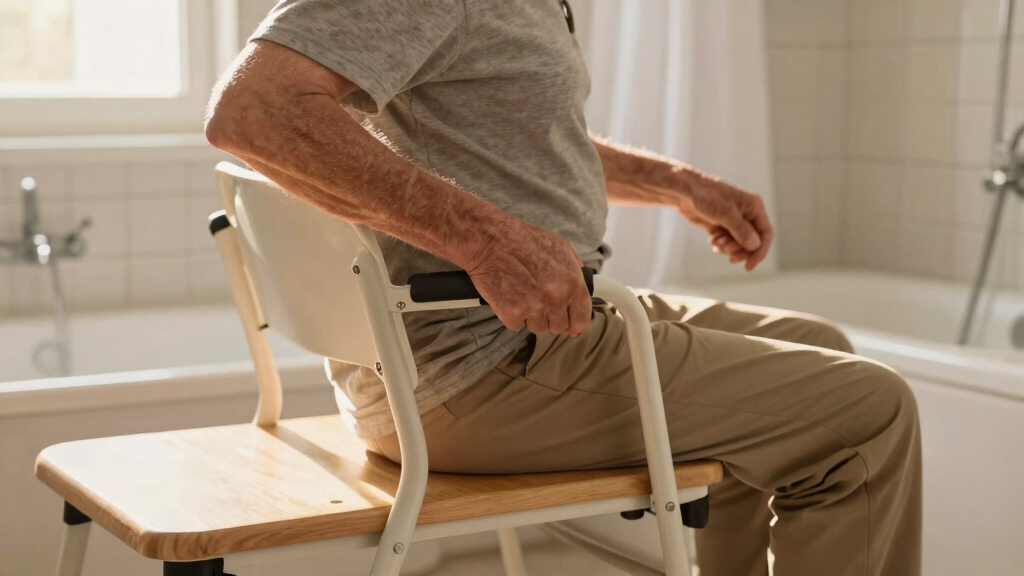
A shower chair is a simple, sturdy seat placed inside the shower or bathtub. It’s designed for sitting comfortably while washing, especially if standing for long periods is tough. Think of it as a portable throne that keeps you stable, with features like drainage holes, non-slip feet, and adjustable height.
But why does this matter? For many, standing in a shower can be risky due to balance issues, joint pain, or weakness. A shower chair reduces these risks by providing a secure seat, preventing slips and falls. This not only enhances safety but also allows users to maintain independence longer. The tradeoff is that some chairs might feel unstable if they’re poorly designed or if the user isn’t accustomed to sitting for bathing. Proper selection and placement are key to maximizing safety and comfort.

HOMLAND Shower Chair for Inside Shower with Padded Armrests and Back
- Heavy-Duty Frame: Supports up to 500 lbs with aluminum alloy
- Secure and Stable: Widened, skid-resistant feet for safety
- Comfortable Design: Wide seat with padded armrests and back
As an affiliate, we earn on qualifying purchases.
As an affiliate, we earn on qualifying purchases.
What Is a Transfer Bench and Why Is It a Game-Changer?
A transfer bench is a broader seat that extends over the edge of the tub or shower. It acts as a bridge, letting you sit outside the bath and then slide or pivot over the edge to get inside. Think of it as a sturdy, wide park bench with a side extension for safe transfer.
Why is this significant? For individuals with limited balance, leg strength, or confidence, stepping over the tub’s side can be a major hazard. The transfer bench provides a stable platform that minimizes this risk by allowing a seated transfer, which is inherently safer than stepping over a high ledge. Moreover, it offers a sense of security that encourages independence and reduces reliance on caregivers. The tradeoff is that these benches require more space and proper installation; if not correctly fitted, they can become unstable or uncomfortable, potentially compromising safety instead of enhancing it.

Drive Medical Tub Transfer Bench for Bathtub, Height Adjustable
- Supports Safe, Independent Bathing: Easy slide tub bench with backrest
- Secure and Stable Bathing: Drainage openings and suction cup feet
- Adjustable Height for Comfort: 0.5-inch incremental height adjustments
As an affiliate, we earn on qualifying purchases.
As an affiliate, we earn on qualifying purchases.
Comparison Table: Shower Chairs vs. Transfer Benches — Which Fits Your Bathroom?
| Feature | Shower Chair | Transfer Bench |
|---|---|---|
| Primary use | Sitting inside the shower or tub for bathing | Assists with transferring into and out of the tub or shower |
| Design | Compact, lightweight, portable | Wider, often with side extensions for transfer |
| Placement | Inside the shower or tub | Over the edge of the tub or shower |
| Best for | Users who can sit independently in the shower | Users needing help transferring into the tub or shower |
| Safety features | Non-slip feet, drainage holes | Wide seat, locking mechanisms, side extension |

Medline Shower Chair with Backrest and Padded Armrests – 350 lb. capacity, Bath Bench, Seat, Stool for Independent Adult, Seniors, Elderly & Disabled Patients
- Padded armrests and backrest for comfort: Supports balance and comfort during shower
- Adjustable height legs: Seat height from 16" to 21"
- Lightweight aluminum frame: Strong and easy to move
As an affiliate, we earn on qualifying purchases.
As an affiliate, we earn on qualifying purchases.
When to Pick a Shower Chair Instead of a Transfer Bench
If you can sit comfortably and safely inside the shower, a shower chair is your go-to. It’s perfect for those with good balance but limited stamina or joint issues. For example, someone recovering from a knee replacement might prefer a lightweight shower chair that they can easily move around.
But why choose a shower chair? Because it offers a more straightforward, space-efficient solution when transfers are unnecessary. It allows users to remain seated throughout the entire shower, reducing fatigue and the risk of slipping during transfers. Conversely, if stepping over the tub edge is problematic, a transfer bench becomes crucial. The decision hinges on your specific mobility challenges and bathroom layout, with each device offering distinct safety benefits and tradeoffs.

VEVOR Sliding Tub Transfer Bench with 360 Degree Swivel Seat, Height Adjustable Bathtub Transfer Bench with Armrest & Safety Belt, Non-Slip Rotating Shower Chair for Elderly Disabled, 400LBS Capacity
- Smooth Sliding & 360° Swivel Seat: VEVOR sliding tub transfer bench…
- Adjustable Height for Perfect Fit: Customize the proper height with…
- Strong and Non-Slip: Built with high-strength aluminum and…
As an affiliate, we earn on qualifying purchases.
As an affiliate, we earn on qualifying purchases.
Choosing the Right Device: Tips for Safe, Easy Bathing
- Measure your bathroom space carefully. Transfer benches need more room to extend over the tub, and improper fit can compromise safety.
- Assess your mobility level. Do you need assistance transferring, or can you sit independently? Knowing this helps select the most appropriate device.
- Pick adjustable models. They accommodate different users and make setup easier, ensuring a proper fit and reducing discomfort.
- Prioritize safety features like non-slip surfaces, locking mechanisms, and corrosion-resistant materials. These features prevent accidents and prolong device lifespan.
- Test the device if possible. Comfort and stability are essential; a device that feels secure and fits well will encourage regular use and reduce fall risk.
Latest Trends and Innovations in Bathing Aids
Manufacturers are constantly improving safety and convenience. Today’s models feature antimicrobial coatings to reduce bacteria, foldable designs for easy storage, and height-adjustable options for a perfect fit. Smart devices with sensors that alert caregivers if a fall occurs are also emerging but are still rare.
Why do these innovations matter? They enhance safety, hygiene, and ease of use, addressing common concerns like bacteria buildup and space constraints. Foldable designs, for example, enable easy storage in small bathrooms, making assistive devices less obtrusive. Height-adjustable features ensure the device can be tailored to individual needs, promoting comfort and stability. While smart sensors are still developing, they hold promise for real-time fall detection and immediate assistance, which could significantly reduce injury risks in the future.
Addressing Common Questions About Bathing Devices
- Which is better for me: a shower chair or transfer bench? It depends on your mobility. If you can sit safely inside the shower and don’t need to transfer over a tub edge, a shower chair offers simplicity and stability. If stepping over the tub’s side is difficult or unsafe, a transfer bench provides a safer, more secure transfer option. Your choice should consider your specific mobility challenges and bathroom configuration, balancing convenience with safety.
- How do I pick the right size? Measure your height, weight capacity, and available space carefully. Adjustable models can accommodate a range of sizes and needs, reducing the risk of discomfort or instability.
- Are these devices safe for everyone? Most are, when used properly and maintained. However, consult with healthcare professionals to ensure the device matches your individual health conditions and needs. Proper training on use is also essential for safety.
- Can I use these in both showers and tubs? Yes. Transfer benches are primarily designed for tubs, while shower chairs are suitable for stand-alone showers. Ensure the device fits your specific setup and is installed correctly to maximize safety.
- What maintenance do they need? Regular cleaning with mild disinfectants, checking stability, and inspecting for wear and tear are vital. Proper maintenance prevents bacterial buildup and ensures the device remains secure during use, prolonging its effectiveness and safety.
Conclusion
The right bathing aid transforms a risky, stressful task into a safe, independent one. Whether you opt for a shower chair or a transfer bench, focus on safety, comfort, and fit. A simple choice can make a big difference—so take the time to pick what truly meets your needs.
After all, a safer shower isn’t just about equipment; it’s about peace of mind. Imagine stepping into your bathroom knowing you’re protected—ready to wash away the worries and start fresh.
Evergreen bestsellers Picks
bestsellers
As an affiliate, we earn on qualifying purchases.