TL;DR

Turn quiet afternoons into listening time
- Thousands of audiobooks, podcasts and originals
- Listen on your phone, tablet or Echo — also offline
- Cancel anytime
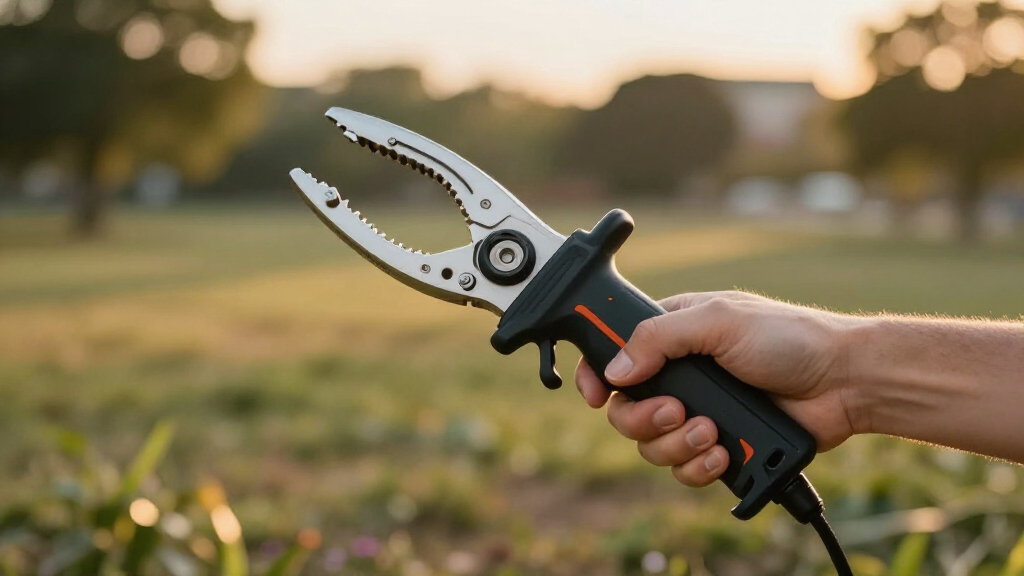
Choose a reacher grabber by starting with the places and objects you need to reach, then pick a manageable length, suitable jaw style, and trigger you can squeeze comfortably. A locking grip can reduce the need to hold the trigger, but it does not make the tool safe for heavy lifting or replace a stable ladder or help from another person.
A 36-inch reacher can grab a sock from the floor and still be the wrong tool if its long shaft wobbles when you try to pick up a tea bag. Reach matters, but control matters just as much.
A reacher grabber, also called a grabber tool, pickup tool, or reaching aid, lets you pick up or move light objects without bending or stretching. You might use one to retrieve a dropped shirt, reach a packet on a low shelf, or collect a wrapper from beside a chair. The right match can make these everyday tasks feel simpler; a poor match can leave you fighting the trigger or jaws.
This guide breaks down length, jaw style and locking grips in plain language. You’ll see how to match the tool to real household jobs, what to check before buying, and where a reacher’s limits matter. The aim is a tool you can handle comfortably from a stable position, not one with the longest list of features.
Many reachers are around 24 to 36 inches long; select the shortest length that comfortably reaches your usual targets while staying controllable.
Match jaw style and opening width to actual objects: broad jaws may suit clothing, while narrow jaws or a magnetic tip may help with small items.
Test the trigger with the hand you will use; repeated squeezing can feel different from one quick test.
A locking grip can reduce the need to hold the trigger, but it does not increase the tool’s safe load limit.
Use a reacher from a stable position for light objects; don’t use it to support body weight or replace a ladder.
Choose a length you can control, not just one that reaches
A reacher grabber should reach the places you need while staying easy to aim and hold. Many household models measure around 24 to 36 inches, though exact options vary by maker. A shorter tool often feels steadier for nearby tasks, while a longer one can reach farther but may take more effort to position.
Start with the actual job. If you want to pick up socks beside your chair or retrieve a dropped TV remote, a shorter reacher may feel like an extension of your hand. For a light packet on a high shelf, extra length may help—provided you can keep both feet planted and control the jaws. A long shaft acts a little like a longer fishing rod: it gives you more reach, but even a small movement at your hand can shift the tip noticeably.
Try thinking through a normal day rather than buying for a rare, extreme reach. Where do objects fall? How deep are your cupboards? Do you plan to carry the tool from room to room? A foldable model may tuck beside a walker or in a closet, though its hinge adds a joint to inspect for stiffness and secure locking. Convenient storage is useful only if the folded tool opens firmly and reliably.
Length is not a safety feature by itself. Don’t lean, twist, stand on an unstable surface, or use a reacher instead of an appropriate ladder or another person’s help. For example, if a mug sits at the back of a high cupboard and you need to stretch off balance to reach it, put the tool down and ask for help. A grabber is for retrieving light items from a stable position, not extending your balance.
Popular right now

Hisense 65-inch U6 Pro Mini-LED 4K UHD Smart Fire TV

Ninja Foodi Dual Zone Smart XL Air Fryer, 10 Qt, 6-in-1, Black (DZ550)

Bose QuietComfort True Wireless Earbuds with Active Noise Cancellation, Black
As an affiliate, we earn on qualifying purchases.
Match the jaws to the things you pick up most
The jaw style dictates the physics of how the tool interacts with objects, directly impacting success rates for specific items. Straight jaws offer a reliable default for flat or bulky items because they distribute pressure evenly, reducing the risk of crushing delicate packaging or slipping off smooth surfaces. However, this broad contact area becomes a liability in tight spaces, such as between books on a shelf or inside a cluttered drawer, where precision is prioritized over surface area.
Conversely, narrow or claw-shaped jaws excel at precision tasks like retrieving coins or keys because they can isolate a single item without disturbing neighbors. The tradeoff is stability: narrow contact points require more careful aiming and can slip on smooth, round objects like a glass or a plastic bottle. A magnetic tip is a specialized addition that solves the specific problem of dropping small metal items, but it introduces a dependency on material type; it is useless for the majority of household clutter, which is often plastic, fabric, or paper.
Rotating or angled heads address the geometry of reach. If you cannot bend or twist your torso to align the jaws with an object, a rotating head allows you to approach from a comfortable angle. However, this mechanical complexity introduces a weak point. If the rotation mechanism is loose or fails to lock securely, the object’s weight or resistance can cause the head to swivel during the lift, dropping the item. Therefore, prioritize jaw styles that match your most frequent targets, accepting that a specialized jaw for one task may compromise performance on another.
| Jaw style | Often suits | Check before choosing |
|---|---|---|
| Straight | Clothing, packages, general light items | Opening width and grip surface |
| Narrow or claw-shaped | Small objects and tighter spaces | Whether it can hold larger items securely |
| Wide or padded | Broader or delicate objects | Whether it fits in narrow spaces |
| Rotating or angled | Approaching objects from different directions | Whether the head locks in place |
| Magnetic tip | Small metal objects, such as keys | It only attracts suitable metal items |
Test the handle and trigger before you commit
The handle and trigger are the primary interfaces between your body and the tool, meaning their design dictates your endurance and risk of repetitive strain. A trigger that feels manageable during a single, dry squeeze in a store may become fatiguing after ten repetitions of gripping, lifting, and releasing. This is because the mechanical advantage of the trigger mechanism varies; some designs require significant finger force to close the jaws against resistance, while others use leverage to reduce the effort needed. If the trigger requires a hard pull, the cumulative load on your tendons can lead to pain or injury over time, turning a helpful tool into a source of discomfort.
Furthermore, the handle’s shape influences how force is transferred from your hand to the shaft. A poorly contoured handle may concentrate pressure on a small area of the palm, causing localized pain or numbness, whereas a well-designed grip distributes pressure across the hand. If you have conditions like arthritis or reduced grip strength, a lightweight frame combined with a low-tension trigger is critical. However, be wary of terms like “ergonomic,” which are marketing labels rather than standardized measurements. Always evaluate the tool based on your specific physical capabilities and the frequency of use. Repeated comfort matters more than a quick first squeeze.
If you can test the tool, use the hand that will operate it and try several slow squeezes. Notice whether the handle presses into your palm, whether your fingers can reach the trigger, and whether releasing it feels smooth. If testing in person isn’t possible, read the product instructions and look closely at the handle shape, weight, and any stated trigger design. Labels such as “ergonomic” do not tell you exactly how it will feel in your hand.
People with painful joints, reduced hand strength, or temporary injuries may prefer a lightweight reacher with a comfortable handle and a lower-effort trigger. Individual needs differ, so don’t assume that a feature marketed for one group will suit everyone. If a tool is meant to support daily tasks and you’re unsure whether its controls will be manageable, ask a qualified occupational therapist or other appropriate professional for guidance. The easiest trigger is the one you can operate reliably.
Know what a locking grip does—and what it cannot do
A locking grip fundamentally changes the user’s interaction with the tool by decoupling the act of grasping from the act of holding. Without a lock, your muscles must maintain constant tension to keep the jaws closed, which is unsustainable for prolonged tasks or for users with limited endurance. By engaging a lock, you transfer the load from your muscles to the mechanical structure of the tool, allowing you to rest your hand while the object is suspended. This is particularly beneficial for tasks that involve moving an item from one location to another, where you might want to pause or adjust your grip without dropping the object.
However, this convenience comes with significant limitations and risks. The lock mechanism itself is a mechanical component that can fail, stick, or be difficult to disengage, especially if your hands are wet or if your dexterity is impaired. If the lock jams while holding an object, you may be forced to drop it or struggle to free your hand, potentially causing a spill or injury. Moreover, the presence of a lock can create a false sense of security regarding weight capacity. The lock holds the jaws closed, but it does not reinforce the shaft or the jaw hinges. Exceeding the manufacturer’s weight limit can cause the shaft to bend or the jaws to break, regardless of whether the lock is engaged. A jaw lock holds a grip; it does not turn a reacher into a load-bearing tool. Follow the maker’s stated weight limit and use the tool only for the tasks it describes.
Before choosing a lock, ask two questions: can you operate it with the hand you plan to use, and can you release it without awkward finger movements? A lock that reduces effort during the hold but is difficult to disengage may create a new problem. Product terms also vary, so read the instructions to confirm whether the mechanism locks the jaws closed, locks the trigger, or serves another purpose.
Most household reachers suit light objects, not heavy, hot, sharp, or hazardous loads. Never use one to lift a person, support your body weight, or steady yourself. If an object feels unstable or too heavy to pick up safely, leave it in place and ask for help. A lock can ease hand effort, not remove the need for good judgment.
Check weight, joints, and storage for everyday reliability
Reliability in a reacher is determined by the durability of its moving parts and the structural integrity of its frame, not just its initial weight. A lightweight model may feel easy to lift, but if the materials are brittle, they may crack under the stress of repeated use or accidental impacts. The head joint, where the jaws attach to the shaft, is the most common point of failure. If this joint is loose, the jaws will wobble, making precise gripping impossible. If it is too stiff, it may require excessive force to adjust, leading to user fatigue. Therefore, inspecting the smoothness and security of this joint is a critical pre-purchase step.
Storage location also directly impacts usability. A tool that is inconvenient to access will likely be left unused, defeating its purpose. If the reacher must be unfolded or retrieved from a high shelf every time you need it, the friction of that process may discourage use. Conversely, a tool kept within arm’s reach of your primary activity zone (e.g., beside a chair or near the bed) is more likely to be integrated into your daily routine. Ensure that the folding mechanism, if present, is robust enough to withstand frequent opening and closing without becoming loose.
Before buying, make a short check of the practical details:
- Grip surface: Do the jaws have a non-slip area suited to your usual objects?
- Head joint: If the jaws rotate, do they stay in the selected position?
- Trigger: Can you squeeze, release, and repeat it comfortably?
- Storage: Can you hang or fold the reacher where you will actually use it?
- Instructions: Does the maker state a weight limit and explain care?
For instance, if you plan to pick up small packages from a bedroom floor every morning, a tool that closes cleanly and stores beside your chair may serve you better than a heavier model with several extra functions. Check the reacher periodically for cracks, loose joints, damaged jaws, or a lock that sticks. Simple, reliable operation beats a feature you rarely use.
Use this four-step check to find your best match
To choose a reacher, start with the objects and places you handle, then assess length, jaw fit, and control. This order helps you avoid paying for reach or features you don’t need. A simple tool that fits your hand and daily routine is often more useful than a complicated one that feels awkward.
- Write down your regular tasks. Name a few real items and locations: a sock beside the bed, a light package on a low shelf, or a key that slips under a chair.
- Choose a manageable length. Match the tool to those locations, and think about whether you can keep it steady. Compare a shorter option with a longer one if possible.
- Match the jaws to the objects. Check shape, opening width, padding, and any rotating or magnetic feature. Don’t guess from a product photo if a specific pickup matters.
- Test the controls and limits. Try the trigger and lock if available, check the stated weight limit, and review the care instructions.
For example, someone who mainly needs to retrieve clothing and light household items from beside a chair may favor a manageable length, broad non-slip jaws, and a trigger that feels easy to squeeze. Someone who often needs to pick up keys could value a magnetic tip, but should still check whether the jaws can grab nonmetal objects they also use the tool for.
If the reacher will support important daily tasks and hand comfort or balance is a concern, try it in a safe setting or ask a qualified professional for help selecting an aid. Don’t test it by reaching from a chair that rolls, leaning over stairs, or picking up a heavy object. Choose for your real routine, then confirm you can operate it safely from a stable position.
Frequently Asked Questions
How long should my reacher grabber be?
Choose a length that reaches your usual targets without feeling hard to steer. Many household models are around 24 to 36 inches, but your rooms, storage needs, and ability to control the tool matter more than a standard measurement.
Is a longer reacher always better?
No. A longer tool reaches farther but can be harder to aim and may feel less manageable. If you need to lean or lose your balance to reach an object, the tool is not making that task safe; ask for help instead.
Which jaw style works best for small objects?
Narrow or claw-shaped jaws may help with small objects, but performance depends on their opening and gripping surface. A magnetic tip can retrieve suitable metal items, such as some keys, but it won’t pick up plastic or fabric.
Are locking grips worth choosing?
A locking grip may help if holding the trigger is tiring. Check that you can engage and release it comfortably, and remember that the lock does not make the reacher suitable for heavier loads.
Can I use a reacher instead of a ladder?
No. A reacher can retrieve light objects from a stable position, but it does not replace a suitable ladder, step stool, or another person’s help. Don’t lean, stretch overhead, or use the tool to steady yourself.
What should I look for if squeezing the trigger is difficult?
Look for a lightweight reacher with a comfortable handle and an easy-to-squeeze trigger; a locking grip may reduce how long you need to hold pressure. If possible, test it with the hand you’ll use. For help selecting an aid around your needs, ask a qualified professional.
Conclusion
Choose your reacher in this order: name the objects you need to pick up, find a length you can control, match the jaws, then test the trigger and any lock. Comfortable control matters more than extra length or a long feature list.
Keep the tool where you’ll use it, follow its weight limit, and stay steady while you reach. The best reacher is the one that lets a dropped sock or misplaced key stop being a small daily obstacle—and nothing more dramatic than that.