

TL;DR
Choosing the right cuff size ensures accurate blood pressure readings, reducing misdiagnosis risks. Proper measurement, including arm size and placement, is key for trustworthy results at home or in clinics.
Imagine getting your blood pressure checked, only to find the cuff was too tight or too loose. That tiny mistake can skew your results and lead to confusion or even unnecessary medication. The size of the cuff matters more than most realize.
Whether you’re monitoring blood pressure at home or visiting a clinic, understanding how to pick the right cuff and measure your arm correctly makes all the difference. It’s a simple step that can improve your health tracking and give you peace of mind.
Always measure your arm to find the right cuff size — don’t guess.
A cuff that’s too small can inflate your blood pressure by up to 10 mm Hg.
Proper cuff placement and arm support are just as important as size.
Use larger cuffs for bigger arms to avoid inaccurate readings.
Regularly check your technique to ensure trustworthy blood pressure monitoring.
Measurement guide · Home & clinic
Blood Pressure Cuff Size: Why It Matters and How to Measure
The cuff is not just an accessory. Its fit directly affects the pressure recorded, the diagnosis considered, and the care you may receive. Measure first, match the size, then use consistent technique.
A poor fit can distort the whole health picture.
A borderline reading can influence whether blood pressure is considered normal, elevated, or hypertensive. Cuff size errors therefore affect more than a single number: they can alter monitoring plans, diagnosis, medication, and peace of mind.
Cuff too small
The cuff may require extra pressure to compress the arm, producing a falsely high result—potentially by up to 10 mm Hg.
Cuff too large
A cuff designed for a larger arm can underestimate pressure, making a concerning reading appear less urgent than it really is.
Matched to the arm
The correct size distributes pressure more evenly and gives clinicians and home users a more trustworthy basis for decisions.
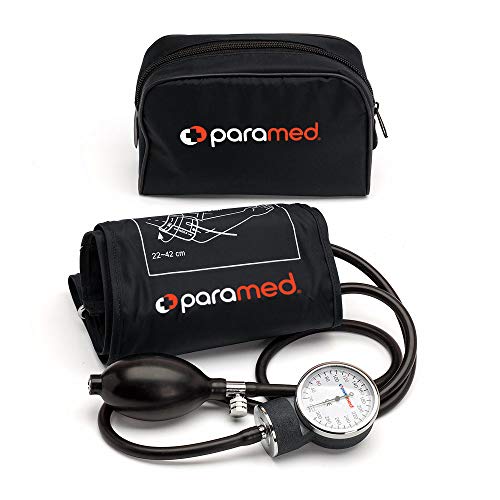
PARAMED Aneroid Sphygmomanometer – Manual Blood Pressure Cuff with Universal Cuff 8.7-16.5" and D-Ring – Carrying Case in the kit – Black – Stethoscope Not Included
No stethoscope in the set: stethoscope is not included
As an affiliate, we earn on qualifying purchases.
As an affiliate, we earn on qualifying purchases.
Find the perfect fit in three easy steps.
Use a flexible, non-stretchable tape measure. Keep the upper arm relaxed and measure the place where the cuff will sit—not the widest point by guesswork.
Locate the midpoint
Find the halfway point between the tip of your shoulder and the point of your elbow.
Wrap and record
Wrap the tape around the bare upper arm. Keep it snug, level, and not tight. Record centimeters.
Match the range
Choose a cuff whose printed range includes your measurement. Between sizes? Prefer the larger fit.
Fit check: the cuff should sit smoothly around the arm and allow roughly one finger underneath. The lower edge belongs about 2–3 cm above the elbow crease.
≈80%
Sinocare Blood Pressure Monitor, Upper Arm Blood Pressure Monitors for Home Use, Adjustable Arm Cuff 8.6"-16.5", One-Button Operation, Dual User, Accurate & Practical (Black)
✅ Easy to Use – One-button operation makes checking your blood pressure simple and hassle-free—no setup or calibration…
As an affiliate, we earn on qualifying purchases.
As an affiliate, we earn on qualifying purchases.
Which cuff fits your arm?
Manufacturer ranges can vary, so always check the markings on the cuff or device manual. These common ranges provide a practical starting point.
| Cuff size | Arm circumference | Typical fit | Match example |
|---|---|---|---|
| Small Adult | Up to 22 cm | Thin arms or petite adult build | ✓Arm measures 21 cm |
| Adult / Standard | 23–32 cm | Most adult upper arms | ✓Arm measures 29 cm |
| Large Adult | 33–42 cm | Thicker or muscular upper arms | ✓Arm measures 35 cm |
| Extra Large | Over 42 cm | Larger arms or limbs | ✓Arm measures 44 cm |
Range guide only · Use the size limits printed by the device manufacturer · Pediatric cuffs are designed specifically for children
Upper-arm sizing spectrum
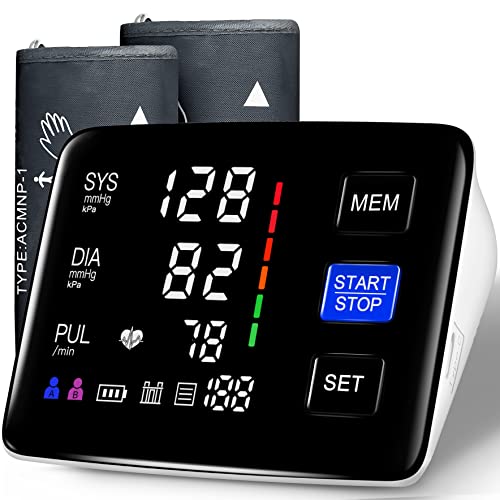
Blood Pressure Monitor, 9-17'' & 13-21'' Extra Large Blood Pressure Cuff Upper Arm, LED Color Backlit Screen Automatic Digital Blood Pressure Machine with USB Cable and 4 AAA Batteries
【Accurate Blood Pressure Monitor】: LIVAROCI digital automatic blood pressure monitor xl cuff with 2024 version smart chip and…
As an affiliate, we earn on qualifying purchases.
As an affiliate, we earn on qualifying purchases.
The right cuff still needs the right routine.
Size, placement, posture, and timing work together. Repeat the same careful process each time so that changes in your readings are more likely to reflect your blood pressure—not your setup.
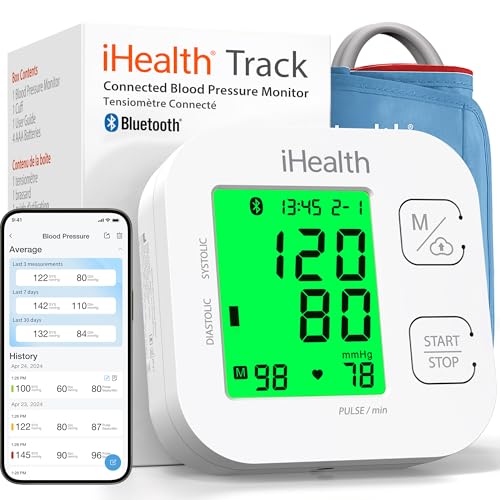
iHealth Track Smart Upper Arm Blood Pressure Monitor with Wide Range Cuff that fits Standard to Large Adult Arms, Bluetooth Compatible for iOS & Android Devices
Clinically Accurate: Easy Operation by two buttons, Advanced Accuracy, No Calibration required.
As an affiliate, we earn on qualifying purchases.
As an affiliate, we earn on qualifying purchases.
Smarter cuffs, clearer placement, broader fit.
New designs aim to make accurate monitoring easier across different arm shapes and sizes. Even with better hardware, correct positioning and validated upper-arm measurement remain essential.
More comfortable shaping
Newer materials conform more gently to the arm, helping distribute pressure and reduce discomfort during inflation.
Built-in fit indicators
Markers and device prompts can confirm orientation, tightness, and whether the cuff is wrapped correctly.
Better options for larger arms
Expanded ranges address a long-standing need for reliable measurements among people with larger upper arms.
How do I know which size I need?
Measure the midpoint of your upper arm in centimeters and select a cuff whose stated range includes that number.
Why do my readings vary?
Cuff fit, arm height, movement, talking, recent activity, and normal biological variation can all change a reading.
Are wrist monitors as accurate?
Upper-arm cuffs are generally preferred. Wrist devices are especially sensitive to position and must be held at heart level.
Should I use a pediatric cuff?
Pediatric cuffs are intended for children. Adults with smaller arms should use an adult cuff designed for their measured range.
One simple rule: never guess your cuff size. Measure your arm, use the manufacturer’s matching range, and review unexpected or persistently high readings with a qualified healthcare professional.
Why Your Cuff Size Can Make or Break Your Blood Pressure Reading
Using the wrong cuff size is like trying to fit a square peg in a round hole — it simply doesn’t give a true picture. A cuff that’s too small can inflate your reading by up to 10 mm Hg, making your blood pressure seem higher than it really is.
Conversely, a cuff that’s too large can underestimate your pressure, possibly missing hypertension. For example, if you’re on the borderline, this misreading could delay treatment or cause unnecessary worry.
Accurate readings depend on a perfect fit. Think of it like trying to measure a recipe — if your measuring cup is off, your dish turns out different. The same applies to blood pressure cuffs.
Choosing the correct cuff size is crucial because it directly influences your health decisions. Overestimating blood pressure can lead to unnecessary medication, with potential side effects, while underestimating can delay needed treatment. The tradeoff lies in selecting a cuff that provides the most accurate reflection of your true blood pressure, which is why understanding the impact of cuff size is vital for both patients and healthcare providers.
How to Measure Your Arm for the Perfect Cuff Fit in 3 Easy Steps
- Wrap a flexible tape measure around the midpoint of your upper arm — between your shoulder and elbow — where you’ll place the cuff. Keep the tape snug but not tight, just like fitting a shirt sleeve.
- Note the measurement in centimeters. For example, if your arm measures 29 cm, you need a cuff that fits that size range.
- Choose a cuff size based on your measurement. If you’re between sizes, opt for the larger one to ensure comfort and accuracy. Remember, the cuff should cover about 80% of your arm’s circumference.
Picture yourself sitting comfortably at your desk, arm relaxed, as you take this quick measurement. It’s a simple ritual that pays off in trustable readings.
Measuring your arm accurately is fundamental because an incorrect measurement can lead to selecting an inappropriate cuff size, which in turn skews your blood pressure readings. Proper measurement ensures that the cuff will fit well during actual use, minimizing errors caused by poor fit or uneven pressure distribution. This step may seem small, but it has significant implications for your health data—getting it right means your readings truly reflect your blood pressure, guiding better health decisions.
Comparing Cuff Sizes: Which One Fits You Best?
| Cuff Size | Arm Circumference | Best For |
|---|---|---|
| Small Adult | up to 22 cm | Thin arms, petite build |
| Adult (Standard) | 23–32 cm | Most adults |
| Large Adult | 33–42 cm | Thicker arms, muscular build |
| Extra Large | Over 42 cm | Obese arms or large limbs |
Matching your arm size with the right cuff ensures no guessing — just precise, trustworthy numbers. For example, if your arm measures 35 cm, a large cuff is your best fit. Using the wrong size can lead to inaccurate readings, which might cause you to misjudge your health status. Selecting the proper cuff not only improves measurement accuracy but also ensures comfort, encouraging consistent monitoring and better health management.
What Happens If You Use the Wrong Cuff? Real-Life Examples
Meet Sarah. She’s 5’5” with a 38 cm arm. She used a standard cuff, but it was too small. Her readings consistently hovered around 150/95 mm Hg. Turns out, her cuff was inflating her blood pressure by approximately 8 mm Hg.
On a different visit, her nurse switched to a larger cuff. Suddenly, her blood pressure was 142/90 mm Hg — still high, but less alarming. That small size difference changed her diagnosis and treatment plan.
This illustrates how improper cuff size can distort your health picture. It’s not just about comfort — it’s about accuracy, which directly impacts treatment decisions. Using an ill-fitting cuff can lead to over-treatment or under-treatment, both of which carry risks. Recognizing the importance of proper cuff size helps prevent these errors and ensures that health assessments are based on true measurements, leading to better health outcomes.
Simple Tips to Make Sure Your Blood Pressure Readings Are Reliable
- Use the right cuff size based on your arm measurement. Don’t guess — measure!
- Ensure the cuff is snug but not tight. You should be able to slide one finger underneath.
- Keep your arm at heart level, supported on a table or armrest, during measurement.
- Relax for 5 minutes before taking a reading. Avoid caffeine, exercise, or smoking 30 minutes prior.
- Take multiple readings — at least two, a minute apart — to get an accurate average.
Imagine sitting comfortably, your arm supported, breathing steady. These small habits make your readings more trustworthy.
Consistently applying these tips is essential because even small deviations in technique or cuff fit can lead to significant inaccuracies. For example, a slightly loose cuff or unsupported arm can cause readings to vary by several mm Hg, impacting clinical decisions. Understanding and implementing these practices ensures your blood pressure data is as reliable as possible, empowering you to manage your health effectively.
New Trends and What’s Coming Next in Cuff Technology
Modern cuffs are smarter and more comfortable than ever. Some feature materials that mold gently to your arm, reducing discomfort. Others include built-in indicators to confirm proper placement.
Wrist monitors are on the rise, but they require extra care with cuff size and position for accuracy. Researchers are also focusing on larger cuffs for obese patients, addressing a long-standing gap in reliable readings.
Guidelines from health authorities now stress the importance of cuff size for both clinical and home settings, pushing manufacturers to innovate and standardize.
Advances in cuff technology aim to improve measurement reliability and user comfort. For instance, new materials that adapt to different arm shapes can reduce errors caused by improper placement or fit. These innovations are crucial because they make blood pressure monitoring more accessible and trustworthy for diverse populations, including those with larger limbs or sensitive skin. As technology evolves, expect more integrated solutions that automatically adjust to your arm size and ensure consistent, accurate readings, ultimately supporting better health management for everyone.
Frequently Asked Questions
How do I know what cuff size I need?
Measure your arm circumference at the midpoint between your shoulder and elbow using a flexible tape measure. Match that measurement to the cuff size chart to find your best fit.Can I use a pediatric cuff if I have small arms?
No, pediatric cuffs are designed for children. For adults with small arms, use the small adult cuff that fits your measurement range for accurate readings.Why does my blood pressure vary so much?
Inconsistent cuff size, placement, or measurement technique can cause fluctuations. Using the correct cuff and following proper steps helps achieve more consistent results.Are wrist or finger monitors as accurate as upper arm cuffs?
Generally, upper arm cuffs are more reliable. Wrist and finger devices can be less accurate unless used carefully, with proper cuff size and positioning.How often should I check my blood pressure with the correct cuff?
Follow your healthcare provider’s advice. For most, regular monitoring — especially if managing hypertension — helps track your health reliably.Conclusion
Getting your blood pressure right starts with the basics: the right cuff size and proper technique. Think of it as tuning a musical instrument — small adjustments make all the difference in how you hear the music. When your readings are accurate, you’re better equipped to manage your health and avoid unnecessary worries.
Next time you check your blood pressure, remember — it’s about more than just the numbers. It’s about precision, comfort, and confidence in your health journey.