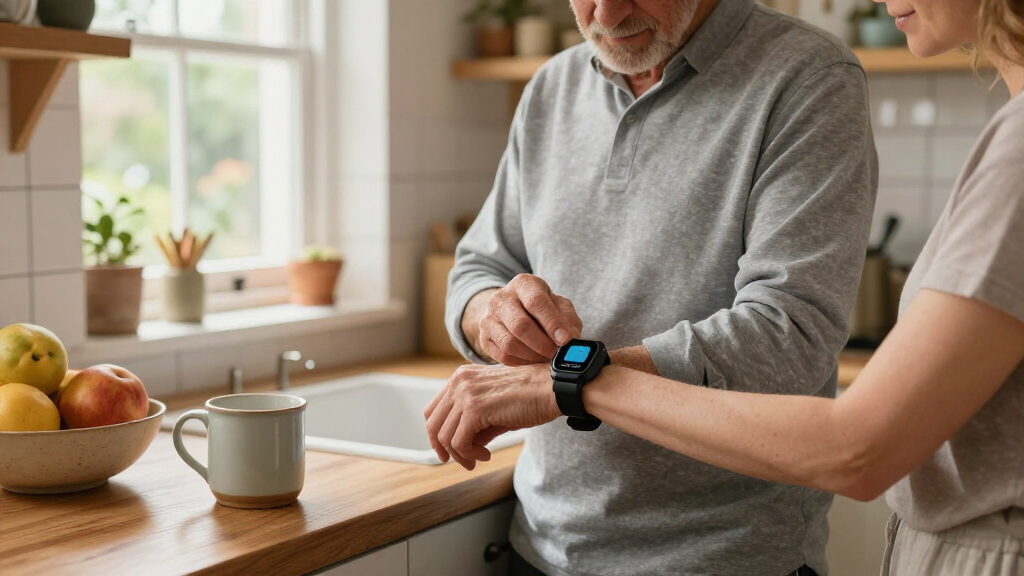

The SkyAngelSPORT Fall Detection Watch with SOS Button is a cellular safety watch for seniors and people who may be alone during an emergency. Its clearest advantage is that it can contact 911 without a smartphone or monthly subscription, while automatic fall detection and two-way voice communication add useful backup. The tradeoff is that fall detection and location sharing have limits, and contacting emergency services does not guarantee a particular response. It is a compelling option for buyers who want a no-subscription wearable and will treat it as one part of a safety plan—not as a guarantee of rescue.

Turn quiet afternoons into listening time
- Thousands of audiobooks, podcasts and originals
- Listen on your phone, tablet or Echo — also offline
- Cancel anytime

SkyAngelSPORT Fall Detection Watch with SOS Button
- ✔ Connectivity: Cellular (No smartphone required)
- ✔ Subscription: No monthly fees
- ✔ Water Resistance: Yes (Suitable for showers/hand washing)
Why This Product Stands Out
The SkyAngelSPORT’s strongest point is the combination of cellular emergency calling and no monthly subscription. Many safety wearables rely on a paired phone, a recurring service plan, or both. Here, the stated design is intended to let the wearer contact 911 directly from the watch. That makes it a distinctive fit for someone who wants an emergency call option but would rather avoid an ongoing monitoring bill or the complication of keeping a phone nearby.
It also brings together automatic fall detection, a physical SOS option, and two-way voice. Those functions address different situations: a wearer can press the button when able, while fall detection may act if they cannot. Voice communication can help clarify the situation once a call connects. This is a broader safety toolkit than a basic alert button, though its real value depends on reliable cellular service, correct operation, and local emergency dispatch practices.
Compared with a dedicated medical-alert system, the watch’s appeal is its wearable format and added wellness tracking. Its category-level limitation is just as important: it does not promise that every fall will be detected or that every alert will lead to immediate assistance. Buyers who need a structured monitoring center, caregiver notifications, or a clearly managed response chain should compare it with systems such as the ADT On-The-Go Mobile Medical Alert System. Those prioritizing GPS and 4G features may also want to compare other senior-focused fall-detection watches before deciding.
Key Features and What They Mean
Cellular calling without a smartphone is useful for someone who does not carry a phone consistently, finds phone setup difficult, or wants an emergency option on the wrist. The benefit is independence from a paired handset, not independence from network coverage: a cellular device still needs a usable connection to place a call.
The SOS button and automatic fall detection provide two routes to an emergency call. A wearer who can respond can use the button; if a fall leaves them unable to act, automatic detection may initiate a call. That makes the feature meaningful for people at elevated fall risk, but it should be understood as a helpful layer rather than assured detection. Motion patterns vary, and the stated limitation is that not every fall may be recognized.
Two-way voice communication gives the wearer a chance to explain their condition or say whether help is needed after a call connects. This can be more informative than a one-way alert, particularly when the wearer is conscious but cannot reach a phone. The practical result still depends on the call connecting and the receiving agency’s procedures; the watch cannot dictate how a local dispatcher handles a silent or unclear call.
The watch also lists heart-rate, blood-pressure, blood-oxygen, and step tracking. These readings can support general wellness awareness and make the device more useful between emergencies. They should not be treated as a diagnostic service or a replacement for prescribed monitoring equipment. For a buyer focused mainly on medical measurement accuracy, these sensors are a secondary extra, not the central reason to choose this watch.
Water resistance for showers and hand washing can make routine wear more convenient, since the watch does not necessarily need to come off for those everyday activities. The stated use does not establish suitability for swimming or other prolonged water exposure, so buyers should follow the product’s specific care instructions. Compatibility with pacemaker users is also listed, a relevant reassurance for that group, though people with medical-device concerns should confirm suitability with a clinician and the manufacturer.
Performance and Real-World Use
Day-to-day usefulness will depend on whether the wearer is comfortable keeping a watch on and using its SOS controls. A dedicated button can be simpler than unlocking a phone and finding an emergency contact, while cellular operation removes the need to pair a smartphone. Families should still go over how to make an SOS call and what the wearer should expect when a call is placed. A feature that is unfamiliar may be less useful during a stressful moment.
For emergencies, the most realistic expectation is an added way to request help, not a guaranteed rescue system. Automatic detection may help when a person cannot press the button, but missed detections remain possible. Likewise, cellular service and the local dispatch center’s ability to receive location data affect how effectively a call can be handled. Buyers should ask whether their local emergency services can work with the watch’s calls and location information, rather than assuming every agency operates the same way.
The no-subscription design reduces ongoing cost and avoids a recurring service commitment, but it also makes it worth checking what the purchase includes and how cellular calling is provisioned. The available product information does not specify battery life, charging frequency, network coverage details, or a monitoring-center service, so those points should be confirmed before purchase. Regular charging and keeping the device on the wearer are basic requirements for any wrist-based safety tool; leaving it uncharged or off-wrist defeats its main purpose.
Who Should Buy This
The SkyAngelSPORT makes the most sense for a senior or adult living alone who wants a wrist-worn way to call 911, does not reliably carry a smartphone, and prefers to avoid monthly subscription fees. It is also a reasonable candidate for someone who wants automatic fall detection as a backup to manual SOS use, along with basic wellness tracking in the same device. A family member or caregiver should be willing to help confirm cellular coverage, explain how the emergency call works, and set realistic expectations about fall detection and dispatch response. It suits buyers seeking an extra safety layer, not those relying on one device as their entire care plan.
Who Should Skip This
Skip this watch if the wearer needs guaranteed fall detection or a professionally monitored response service. A fall may not trigger the feature, and a call placed to 911 is not equivalent to a staffed monitoring center that follows a defined contact and escalation process. It may also be a poor fit for someone whose local cellular coverage is unreliable, who cannot comfortably wear or charge a watch, or whose family needs dependable location sharing without first verifying local dispatch support. If GPS-focused tracking is the priority, compare a senior watch specifically emphasizing GPS and 4G location features. If structured medical-alert monitoring matters more than avoiding a recurring fee, compare a dedicated system such as ADT On-The-Go instead.
Value for Money
Value here comes less from a long list of sensors than from avoiding a monthly subscription while retaining cellular SOS and fall-detection features. For a buyer who will wear the watch regularly and can use its direct-call design, that can make it a strong proposition in the senior safety wearable segment. The wellness readings add convenience, but they should not justify the purchase on medical grounds alone. The main qualification is that no-subscription calling may not offer the same response structure as a monitored service, and fall detection is not infallible. It is worth buying when subscription-free access to 911 is the priority; it is less persuasive when accurate location, caregiver coordination, or managed monitoring is essential.
SkyAngelSPORT Fall Detection Watch with SOS Button
The SkyAngelSPORT’s strongest point is the combination of cellular emergency calling and no monthly subscription . Many safety wearables rely on a paired phone, a recurring service plan, or both.
Pros:
- Cellular connectivity lets the wearer place an emergency call without carrying or pairing a smartphone, which suits people who want a simpler independent safety device.
- Automatic fall detection can initiate an emergency call when the wearer cannot press the SOS button, adding a useful backup for someone who becomes incapacitated.
- No monthly subscription or long-term contract lowers the ongoing commitment compared with many medical-alert services that charge recurring fees.
- Two-way voice communication allows the wearer to speak through the watch, helping responders or contacts understand what is happening when the call connects.
- Heart-rate, blood-pressure, blood-oxygen, and step tracking add everyday wellness information for users who want basic readings alongside emergency features.
Cons:
- Automatic detection cannot be treated as foolproof; some falls may not trigger an alert, so it should not replace a caregiver check-in or other safety plan.
- Direct 911 access is not the same as a fully monitored response service, and silent calls may be handled differently by local agencies.
- Location accuracy and the usefulness of location information depend partly on what the local 911 dispatch center can receive and use.
- The listed wellness sensors are supplementary tracking tools, not a substitute for clinical-grade equipment or medical advice.
Best for: Seniors or people living alone who want a cellular SOS watch with automatic fall detection and no recurring subscription.
Not ideal for: Anyone who needs guaranteed fall recognition, precise location in every setting, or a monitored service with a clearly defined response process.
Bottom line: The SkyAngelSPORT is worth considering for a senior or person living alone who wants direct cellular SOS access without a monthly fee .
Frequently Asked Questions
Does the SkyAngelSPORT require a smartphone?
No. The listed connectivity is cellular, and the watch is described as working without a smartphone. It still needs adequate cellular coverage to place calls, so check coverage where the wearer spends time.
Does it have a monthly subscription fee?
The product information states that there are no monthly fees or long-term contracts. Confirm what cellular access and other services are included with the specific purchase before ordering, since the available details do not spell out every service condition.
Can its fall detection be relied on to catch every fall?
No. Automatic fall detection can provide a useful backup if the wearer cannot press SOS, but some falls may not be recognized. It should supplement—not replace—caregiver check-ins or another safety plan.
Will 911 automatically know the wearer’s location?
Location usefulness depends on the watch’s connection and the capabilities of the local 911 dispatch center. Do not assume every agency can receive or interpret location data in the same way; verify local handling if location support is a key reason for buying.
Is this a good replacement for a monitored medical-alert system?
Not for buyers who need a staffed monitoring center and a defined escalation process. The SkyAngelSPORT is positioned around direct 911 calling and automatic fall alerts. A dedicated medical-alert service may be a better match when professional monitoring and caregiver coordination are more important than avoiding a recurring fee.
Final Thoughts
The SkyAngelSPORT is worth considering for a senior or person living alone who wants direct cellular SOS access without a monthly fee. Its combination of a manual SOS button, automatic fall detection, and two-way voice gives it more safety utility than a basic wellness watch, and the added health tracking is a practical bonus. Buy it only with a clear understanding that fall detection can miss events and that local 911 procedures affect how calls and location information are handled. Choose a GPS-focused alternative if location tracking is the priority, or a dedicated monitored medical-alert system if a managed response matters more than avoiding recurring costs.