
TL;DR

Turn quiet afternoons into listening time
- Thousands of audiobooks, podcasts and originals
- Listen on your phone, tablet or Echo — also offline
- Cancel anytime
Good home lighting depends on where light falls, how evenly it spreads, and whether important edges stand out—not just on brightness. Start by fixing one specific problem, such as a reflection on a screen, a dim reading spot, or a hard-to-see stair edge, then check the change under the room’s usual conditions.
A brighter bulb can make a room harder to see in. If it throws a white flash across your television, leaves the sofa in shadow, or shines straight into your eyes, more light has not solved the problem. Where the light falls matters as much as how bright it is.
This guide shows you how to make small home changes that make things easier to see: reduce reflections, bring out edges and controls, and light the places where you read, cook, or move around. You’ll also learn why contrast in lightness often helps more than picking a particular color, and how to test a change before making it permanent.
These adjustments may make some everyday tasks more comfortable, including for people with low vision or cataracts, but needs vary from person to person. A home lighting change does not replace an eye examination. If your vision changes suddenly or keeps making daily tasks difficult, talk with an eye-care professional.
Look for direct light and reflections before buying a brighter bulb.
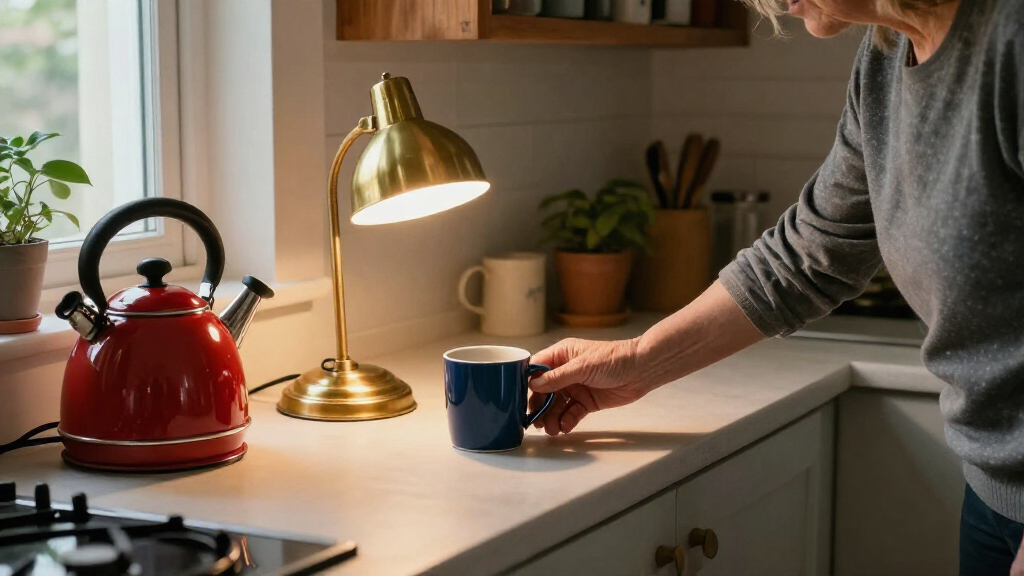
Use an adjustable, shaded lamp to light the task while keeping the beam out of your eyes.
Light hallways and room transitions so routes do not jump from bright to dim.
Use contrast in lightness to help locate stairs, switches, rails, and handles.
Test each change in the room and at the time of day when you need it.
A practical guide to seeing at home
Glare, Contrast and Color: Small Home Changes That Make Things Easier to See
Good lighting depends on where light falls, how evenly it spreads, and whether important edges stand out—not just on brightness. Start with one specific problem, make one change, and check it in the room’s usual conditions.
01 / The four levers
Better seeing starts with placement
Before changing bulbs, look at the source, the surface, the task, and the route. A small adjustment in the right place can help more than brightening an entire room.
Use each change to solve a specific issue, then judge comfort and visibility together.
Move the reflection
Shade a bare source, adjust a lamp, partly close a blind, or reposition furniture to keep bright reflections off screens and glossy surfaces.
Aim, then adjust
Use a shaded, adjustable lamp for reading, cooking, sewing, or sorting. Keep the beam on the work and out of your eyes.
Ease transitions
Light hallways, entrances, and room changes so the floor and doorways remain easy to follow without abrupt dark patches.
Make features distinct
Contrasting stair edges, handrails, switch plates, and handles can help important boundaries stand out from their surroundings.
Favor lightness contrast
Color can separate areas, but a clear light-to-dark difference is often more dependable than hue alone, especially in dim light.
Test at the right time
Sunlight shifts through the day. Try the setup during the activity and at the hour when glare or shadows usually appear.
Think of glare as a misplaced spotlight. A room can feel bright while the thing you need to see disappears in a reflection or shadow.
02 / Task lighting
Put light where your hands and eyes work
Focused, adjustable light can reveal small details without raising brightness everywhere. The right angle depends on the person, position, and activity.
Name the hard part
Pick a real activity, such as reading a recipe, sewing, or sorting small items.
Keep it nearby
A shaded or adjustable lamp can light a page while keeping the bright source out of view.
Light the work
Adjust the angle so the surface is clear and your hand or body does not cast a shadow.
Check comfort
Look for reflections, glare, and discomfort during the full activity—not just a quick glance.
Page bright, bulb hidden
Place a shaded lamp beside the chair and aim it at the book. Move it if the bulb enters your line of sight or light bounces off a glossy table.
Board clear of shadows
A ceiling fixture may leave your body shading the cutting board. A better-positioned task light can put illumination where the knife and ingredients are.
More light at the task can be more useful than a brighter room. Too little leaves details unclear; too much can reflect from a shiny knife, plate, or counter.
03 / Follow the route
Let light and edges work together
Hallways, entrances, and changes between rooms deserve attention. Your eyes need to adapt as you move, and sharp bright-to-dim shifts can make floors and thresholds harder to read.
Walk a familiar route at night and notice where the floor vanishes into shadow or a doorway blends into the wall.
Locate the path
A low night-light aimed toward the floor can reveal the route without shining directly into your eyes.
Remove trip obstacles
Keep walking routes clear of clutter and check that lamp cords do not cross the path.
Reduce dark gaps
A small light near an entrance can soften a transition. Equal brightness everywhere is not required.
A well-lit hall and a distinct stair edge solve different parts of the same problem: light reveals the surroundings; contrast marks the exact change in level.
04 / Contrast and color
Make the important edge easy to find
Contrast is the visible difference between an object and the surface behind it. A stronger difference in lightness often makes a boundary easier to spot, even when color alone does not.
Strong lightness contrast
Use distinct light and dark values where an edge, control, or route matters.
Color difference alone
Two hues can look different yet become hard to distinguish in dim light or with color-vision differences.
Trace the edge
Contrasting tape or edging can help identify stair nosings, thresholds, or a counter edge that is hard to distinguish.
Separate controls
Choose switch plates and frequently used handles that stand out from the wall, door, or cabinet behind them.
Make support visible
A darker handrail against a light wall can make its location easier to find quickly.
05 / A simple home test
Change one thing, then check the result
A setup that helps one person may create reflections or shadows for another. Test changes in the room, during the task, and at the time of day you need them.
These adjustments may make some everyday tasks more comfortable, including for people with low vision or cataracts. Needs vary, and a home lighting change does not replace an eye examination. Talk with an eye-care professional if vision changes suddenly or keeps making daily tasks difficult.
Fix the reflection before you add more light
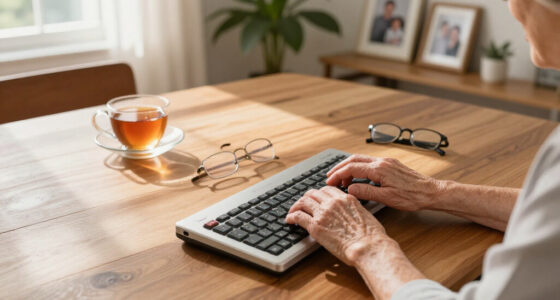
Glare is light that reaches your eyes from an uncomfortable or poorly placed source, or bounces off a surface and obscures what you are trying to see. It can make a room feel bright while leaving details harder to pick out. Before you buy a brighter bulb, look for bare bulbs, shiny surfaces, bright windows, and reflections on screens.
For instance, a person reading in an armchair might find the page dim but also see a bright stripe from a window across the glossy table. Raising the room’s overall brightness could make that stripe harsher. Moving the chair a little, closing a blind partway, or turning the table can cut the reflection first.
Shades and diffusers soften direct light, while changing a lamp’s position can keep its beam on a book instead of in your eyes. If a shiny countertop or frame reflects a fixture, a matte finish may help where a practical change is possible. Test one adjustment at a time, at the hour when the glare usually appears; sunlight shifts across a room, so a fix that works at breakfast may not work at dinner.
Think of glare as a misplaced spotlight: the room can be bright, but the thing you need can still disappear. Once you find the troublesome reflection, the next question is where useful light should go.
Popular right now

Hisense 65-inch U6 Pro Mini-LED 4K UHD Smart Fire TV

Ninja Foodi Dual Zone Smart XL Air Fryer, 10 Qt, 6-in-1, Black (DZ550)

Bose QuietComfort True Wireless Earbuds with Active Noise Cancellation, Black
As an affiliate, we earn on qualifying purchases.
Put task light where your hands and eyes work
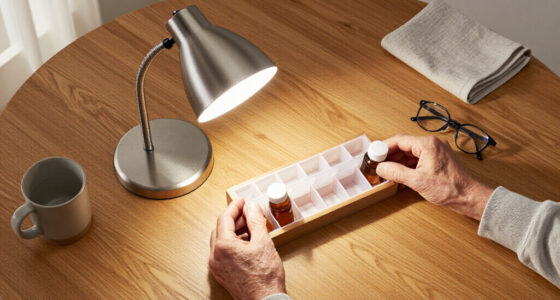
Task lighting puts focused, adjustable light on the activity in front of you, instead of making the whole room brighter. This matters because light aimed at the work can reveal small details without raising brightness everywhere, where it may create reflections or discomfort. It can help with reading, chopping vegetables, sewing, or sorting small items. The goal is to see the work clearly without aiming the lamp into your eyes or onto a reflective surface.
- Choose the task. Notice where details are difficult: a recipe on the counter, a book in your chair, or a needle and thread at the table. A specific task gives you something concrete to judge, rather than relying on whether the room merely feels brighter.
- Place a shaded or adjustable lamp nearby. A lamp beside a favorite chair, for example, can light the page without lighting the reader’s face. The shade helps keep the bright source out of view, while adjustability lets you account for your position and the shape of the work.
- Aim the beam at the work. Adjust the lamp until the page or surface is lit and the bulb itself is out of your direct line of sight. Light coming from the wrong side can make your hand or body cast a shadow, so the best angle depends on where you sit or stand.
- Try the task in its normal setting. Check for hand shadows, shiny reflections, and discomfort. Move the lamp or the work before deciding the setup is right. A setup that works for a quick glance may not be comfortable through a longer reading or meal preparation task.
A kitchen example makes the difference clear: a ceiling fixture may leave your body casting a shadow over a cutting board. A counter lamp or better-positioned adjustable light can put illumination on the board where you need it. More light at the task can be more useful than a brighter room, though the right amount depends on the person and the activity. Too little leaves details unclear; too much can make a shiny knife, plate, or counter reflect light back toward your eyes.
LED lamps make it easier to choose different brightness levels and color appearances, and some controls allow dimming. But an adjustable lamp that is too bright or poorly aimed can still feel uncomfortable. If reading is easier but the route out of the room is still dim, lighting the task alone has only solved half the problem.
Make routes easier to follow from room to room
Even lighting along a route helps you follow the floor, doorways, and changes in level without moving suddenly from a bright area into a dark one. Hallways, entrances, and the space between rooms deserve attention because your eyes have to adapt as you move. A bright kitchen beside a dim hallway can leave the hallway hard to read at a glance; the sharp change makes it harder to notice objects and edges until you are close to them.
Try walking the route you use at night, such as from the bedroom to the bathroom. Notice where the floor vanishes into shadow, where a doorway blends into the wall, or where a light source shines directly toward you. A low night-light can make the path easier to locate, provided it does not create a bright spot that causes discomfort. Its placement matters: a light aimed at the floor can help reveal the route, while one at eye level may become a distracting source you have to look past.
Keep walking routes clear of clutter, and check that a lamp does not leave a cord across the path. If a hallway ends at a dark doorway, a small light near the entrance or a better-positioned fixture may help make the transition gentler. Consistent light does not mean every corner needs equal brightness; it means you can see enough to follow the route without abrupt dark patches. A very bright hallway is not automatically safer if it creates glare or leaves a sharp transition into the next room.
For example, someone carrying laundry may see the well-lit living room clearly but miss a step at the edge of the hall. Improving the hall’s light and making the step visually distinct addresses two different parts of the problem. Better light helps reveal the surroundings; contrast helps mark the exact change in level. The route is easier to follow when the light and the edges work together.
Use contrast to make steps, switches, and handles stand out
Contrast is the visible difference between an object and the surface behind it. A clear difference in lightness often makes an edge easier to spot, even when color alone does not. That difference gives the eye a boundary to follow, which matters when a step or handle might otherwise blend into its surroundings. That is why a dark handrail against a pale wall can be easier to find than a rail in a similar shade to the wall.
| What is hard to see | Small change to try | What to check |
|---|---|---|
| Stair edges | Add a visible, secure edge marking that contrasts with the tread | It lies flat and does not create a trip hazard |
| A wall switch | Use a switch plate that stands out from the wall | You can locate it under the room’s usual lighting |
| A handrail | Choose a finish that differs in lightness from the wall | The rail’s start and end are easy to spot |
| A frequently used handle | Make the handle visibly different from the door or cabinet | The contrast holds up in dimmer light |
Imagine looking for a white switch on a white wall in a dim hallway. A more contrasting plate gives your eyes a clear shape to find, like a bookmark sticking out from a pale page. You can use the same idea for a counter edge or a threshold that disappears against its surroundings. The aim is not decoration for its own sake: a visible control or boundary is quicker to locate, especially when you are moving through the room or have little time to search.
Colors can still help distinguish areas, but hue alone is less dependable: two colors that look different in bright daylight may appear similar in dim light or to someone with color-vision differences. Check lightness as well as hue, and view the feature in the conditions where you use it. A high-contrast marking can also draw attention to an edge that is not a hazard, so use it where it clarifies a useful boundary rather than adding visual clutter. On stairs, any tape or marking needs to stay secure and flat; a visible edge is only helpful if it does not create a snag or trip risk.
Choose comfortable bulb light instead of chasing a color rule
No single bulb color works for everyone; the fixture, the task, the room, and your personal comfort all matter. Some people prefer the softer appearance of warm white for a living room, while another person may find a different color appearance more comfortable for close work. There is no universal warm-versus-cool answer in the guidance for this article.
Try a bulb in the actual fixture and use it during the activity you want to improve. A bulb that feels pleasant in a shaded reading lamp may look harsh in an exposed ceiling fixture. For example, if a craft table feels tiring to use in the evening, test whether a well-aimed task lamp helps before replacing every bulb in the room.
Brightness is only one part of the picture. A higher-output bulb can increase reflections, sharpen shadows, or create discomfort, while a less powerful lamp placed well may light the work more effectively. Comfortable and useful beats simply brighter; check whether you can see the details and move around without squinting or avoiding the light.
Smart controls can make dimming or scheduled lighting convenient, but their benefit depends on a setup that is easy to use. A physical switch that everyone can find may matter more than app features, especially if a phone is not always at hand. Start with the simplest control and bulb arrangement that fits the room; the best setting is the one that works reliably for the people using it.
Test small changes before you alter the whole room
The most useful home change is the one that solves a specific visibility problem in its real setting. A lamp that helps one person may cast a reflection for another, and a tape marking that looks clear at noon may fade into the stair at night. Age, eye conditions, medication, tasks, room surfaces, and individual preferences can all affect what feels comfortable. This variation is why a package description or someone else’s preferred setup cannot tell you whether a change will work in your room.
Suppose someone has trouble reading mail at the dining table after sunset. They move an adjustable lamp so it lights the envelope without shining across a polished tabletop, then open and sort a few letters as usual. If their hands now cast a shadow, they adjust the lamp again. That small trial tells them more than simply choosing a higher-brightness bulb from its package: they can see whether the light improves the task and whether the new angle creates a different problem.
Use a quick check: can you see the detail you care about, does the light cause a reflection, and does the change still work when you approach from your usual direction? Try it at the time of day the problem occurs. These checks matter because a room changes with daylight, position, and activity. If you are helping another person, ask what they notice rather than assuming that your preferred brightness or color feels right to them.
Begin with one change: reposition a lamp, adjust a blind, clear a walking route, or make one control stand out. Keep it if it improves the task without creating a new problem. For bigger changes involving stairs, wiring, or fixed lighting, an occupational therapist, lighting professional, or eye-care specialist can help you plan. Lighting can support visibility, but it does not diagnose or treat an eye condition.
Frequently Asked Questions
Does getting older mean I need much brighter lights?
More light may help with some tasks, but glare and uneven lighting can also make details harder to see. Try increasing light at the task and check whether it feels comfortable instead of brightening the whole room automatically.
What is the difference between glare and not enough light?
Too little light makes details hard to see. Glare comes from light that is too direct or reflects in the wrong place, reducing comfort or visibility. Both can happen together—for example, a dim room with a bright window reflection on a screen.
Are warm or cool white bulbs better?
Neither is best for everyone. The task, fixture, room, and your own comfort matter, so try a bulb in the space where you will use it. A bulb that feels comfortable in one lamp may not work as well in another.
How can I make stairs easier to see?
Use even lighting, reduce distracting shadows or reflections, and make the stair edges visually different from the treads. Any markings need to stay flat and secure so they do not create a trip hazard. If the stairs remain difficult to use, ask a qualified professional for advice.
Will a brighter bulb solve a vision problem?
Not necessarily. A brighter bulb can add glare or shadows, so first check the lamp’s position, reflections, and the light along the route. Persistent difficulty, sudden changes, or new vision symptoms call for advice from an eye-care professional; home lighting does not replace an eye examination.
Conclusion
Start where seeing feels hardest: a reflected screen, a shadowed counter, a dim hallway, or a switch that disappears against the wall. Change one thing, then try the task again under the same conditions. Useful light falls on the work, important edges stand out, and your eyes stay comfortable.
A small adjustment can make a familiar room feel easier to read, one clear edge at a time.