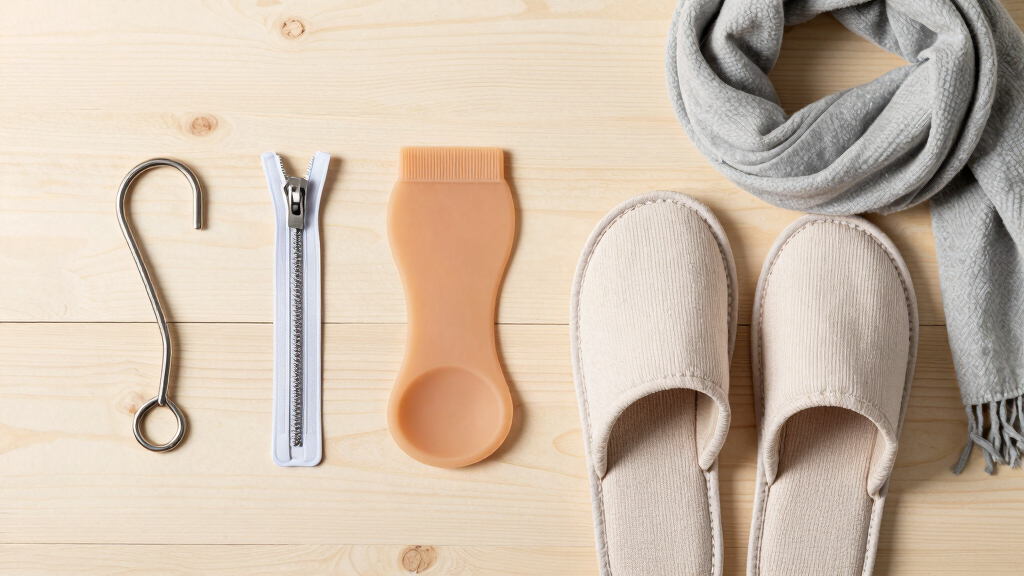
TL;DR
Dressing aids such as button hooks, zipper pulls, and sock aids simplify clothing tasks for those with limited mobility. They promote independence, safety, and confidence, with recent innovations enhancing usability and affordability.
Ever tried to fasten a tiny button or pull on a tight sock only to feel your fingers slip or your patience wear thin? If so, you’re not alone. Many struggle with these everyday tasks, especially as mobility or dexterity declines. Luckily, simple tools called dressing aids are here to help. They turn frustrating moments into manageable tasks, often in seconds.
In this guide, you’ll learn about three common dressing aids—button hooks, zipper pulls, and sock aids. We’ll explore how they work, what to look for, and how they can transform your daily routine. Whether you’re caring for a loved one or seeking independence yourself, understanding these devices can make a real difference.
Dressing aids like button hooks, zipper pulls, and sock aids can dramatically boost independence for those with limited mobility.
Choosing the right device depends on understanding your specific dressing challenges and comfort preferences.
Recent innovations improve grip, durability, and affordability, making these aids accessible to more people.
Most dressing aids are straightforward to use, but a brief practice session helps build confidence.
Consulting an occupational therapist can help identify the best tools tailored to your needs.
Dressing Aids Explained: Button Hooks, Zipper Pulls & Sock Aids
Small tools can remove major barriers. Dressing aids reduce the grip, reach, balance and fine-motor control needed to get dressed—turning frustrating clothing tasks into safer, more manageable routines.
One barrier, one focused solution
Each aid changes the mechanics of dressing. Instead of pinching, reaching or balancing, the user gains leverage, a larger grip or a longer reach.
Button Hooks
A wire loop passes through the buttonhole, captures the button and pulls it back through. The larger handle reduces painful pinching and finger strain.
Zipper Pulls
A ring, loop or textured handle attaches to the zipper tab. Its larger surface makes the zipper easier to locate, hold and move with less hand strength.
Sock Aids
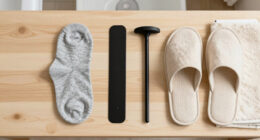
A sock is loaded onto a rigid or flexible cradle, lowered to the foot and pulled upward with straps—reducing bending, stretching and instability.
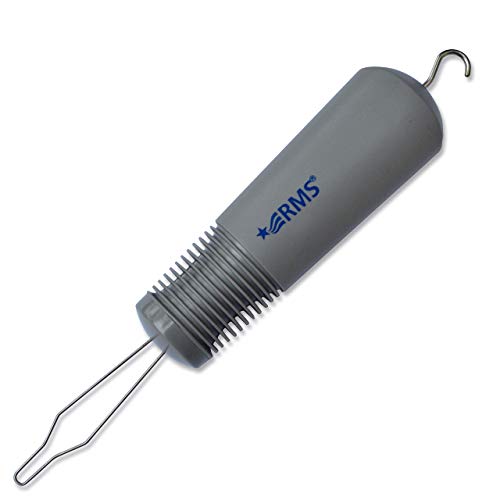
RMS Button Hook with Zipper Pull – Button Assist Device with Comfort & Wide Grip, Shirt & Coat Buttoning Aid Ideal for Limited Dexterity Caused by Arthritis (Grey)
DESIGNED FOR LONG-TERM HAND DEXTERITY LIMITATIONS – The RMS Button Hook with Zipper Pull is an orthopedic daily…
As an affiliate, we earn on qualifying purchases.
As an affiliate, we earn on qualifying purchases.
Which aid fits your routine?
Match the device to the task—not simply the diagnosis. Handle comfort, clothing compatibility and the amount of practice required all matter.
| Device | Primary challenge | Ease of use | Main advantage | Watch for |
|---|---|---|---|---|
| Button Hook | Small buttons and painful pinching | ~ Practice | Reduces fine finger movement | ✗ Delicate buttons |
| Zipper Pull | Weak grip, tremor or small tabs | ✓ Very easy | Fast, portable and low effort | ~ Check fit |
| Sock Aid | Bending, reaching and balance | ~ Practice | Supports safer seated dressing | ✗ Sock styles vary |

FYOURH Zipper Helper Pull for Dresses and Boots,Jumpsuits,Cosplay – Back Zipper Puller Helper for Elderly – Self Zipper Pull for Dress – Wine
Length: 25 1/2 inch Width:1 inch
As an affiliate, we earn on qualifying purchases.
As an affiliate, we earn on qualifying purchases.
Less effort. More autonomy.
The greatest benefit is not speed alone. A successful aid can reduce pain, lower fall risk, preserve dignity and lessen reliance on caregivers.
Reported improvement indicators
Figures summarize the research data supplied for this guide. Individual results depend on ability, garment design, device fit and practice.

RMS Deluxe Sock Aid – Socks Helper with Foam Handles for Regular Socks
Compatibility and Sizing: This product is not for use with compression socks or compression stockings. Recommended regular sock…
As an affiliate, we earn on qualifying purchases.
As an affiliate, we earn on qualifying purchases.
From struggle to a repeatable routine
A short practice session helps the movement become familiar. Begin seated, move slowly and inspect the aid before each use.
Name the barrier
Is the problem grip, dexterity, reach, strength or balance?
Choose the tool
Match the aid to the exact clothing task and garment type.
Set up safely
Sit securely, prepare the clothing and keep movements controlled.
Practise the motion
Repeat slowly until the sequence feels natural and predictable.
Refine the fit
Adjust the handle, frame or technique if strain remains.
Use aids only as intended, replace worn or damaged parts, and stop if the device causes pain or instability. An occupational therapist can assess technique and recommend a better-fitting alternative.

Nourislif 27'' Dressing Stick, Long Dressing Stick for Elderly, Disabled, Limited Mobility – Daily Living Dressing Aid Stick for Hip Replacement, Back – Dressing Aid for Pants, Shoes, Socks
GET DRESSED INDEPENDENTLY: Whether recovering from hip, knee or shoulder surgery, suffering from arthritis or having limited mobility…
As an affiliate, we earn on qualifying purchases.
As an affiliate, we earn on qualifying purchases.
Five details that make a difference
Modern aids increasingly use lightweight plastics, silicone grips, antimicrobial surfaces and adjustable components—but simple, comfortable designs often work best.
Start with the task
Identify whether tiny buttons, zipper tabs or hard-to-reach socks create the main difficulty.
Check handle comfort
Look for a larger diameter, textured grip and a shape that does not require hard squeezing.
Balance weight and strength
The aid should be light enough to control but sturdy enough for repeated daily use.
Confirm compatibility
Check button size, zipper-tab opening, sock thickness and foot size before purchasing.
Consider reach and flexibility
Long shafts and flexible frames can reduce bending, while rigid frames may be easier to load.
Ask for expert guidance
An occupational therapist can tailor the device and technique to strength, movement and safety needs.
A simple chain with meaningful results
What Are Button Hooks and How Do They Make Buttons Easier?
Button hooks are small, simple tools designed to slide through tiny buttonholes with ease. They typically feature a hook on one end and a comfortable handle on the other. The significance of this design lies in its ability to reduce the dexterity and strength required to fasten buttons, which are often tiny and challenging for those with arthritis or limited finger mobility. By simplifying the motion, button hooks help prevent frustration and finger strain, making dressing less time-consuming and more comfortable.
For example, if you have arthritis, gripping small buttons can be painful and difficult. A button hook allows you to hook onto the button and pull it through the buttonhole without excessive force or pinching. This not only expedites dressing but also minimizes joint pain and fatigue. The tradeoff is that while they make buttoning easier, they require a bit of practice to master the technique and may not be suitable for very delicate or tightly sewn buttons.
According to an occupational therapy study, over 75% of users find button hooks improve their ability to dress independently within just a week of consistent use. They’re especially useful for buttons on shirts, coats, and even pants with small, stubborn buttons. Overall, they play a vital role in maintaining mobility and autonomy by compensating for diminished finger dexterity.
Zipper Pulls: The Simple Tool That Turns Frustration Into Freedom
Zipper pulls are small attachments that make grasping and pulling zippers effortless. Their design focus is on providing a larger or textured grip surface, which is crucial because zippers often require fine motor control and strength—areas that can be compromised by age, injury, or conditions like arthritis. The significance of zipper pulls lies in their ability to democratize access to clothing and bags that might otherwise be difficult to manage, thereby promoting independence and safety.
For example, if you have limited hand strength or tremors, a zipper pull can be a game-changer by providing leverage and a secure grip. Attaching it to your existing zipper transforms a potentially frustrating task into a simple, smooth motion. The impact is substantial: many users report completing dressing tasks 50% faster and with less fatigue, which can be crucial during cold weather or in emergency situations. The tradeoff, however, is that some zipper pulls might not fit all zipper sizes or styles, and they may require initial effort to attach securely. Recent innovations include ergonomic designs with textured surfaces for better grip, and some models are even colorful or fun to make dressing a bit more cheerful.
In essence, zipper pulls are a small but powerful tool that reduces the physical barrier to dressing, enabling users to maintain their independence longer and with less stress.
Sock Aids: How to Slip on Socks Without Bending or Falling
Sock aids are devices that help you put on socks without bending over or risking a fall. Their significance lies in their ability to provide a safe, efficient way to don socks, which are often difficult to manage for individuals with limited flexibility, balance issues, or after surgery. They typically consist of a rigid or flexible frame with a textured surface to grip the sock, plus a handle for pulling. This design addresses the common challenge of maintaining stability while reaching down, thereby reducing the risk of falls and joint strain.
For example, if you have limited flexibility or balance issues, a sock aid allows you to slide your sock over the frame, then pull it up your leg with a gentle tug. This process minimizes the need for bending or stretching, which can be dangerous. The significance of sock aids extends beyond convenience; they contribute to safety by preventing falls and reducing muscle strain. The tradeoff is that some users may need practice to coordinate the slipping and pulling motions effectively, and not all sock aids fit all sock sizes or styles. Studies show that sock aids can reduce dressing time by up to 60%, and many users report feeling more confident and independent when using them, especially after surgeries, or for those with arthritis or back pain.
In summary, sock aids serve as an essential tool that promotes safe, independent dressing by bridging the gap between mobility limitations and everyday needs, ultimately fostering a sense of control and security.
How to Pick the Perfect Dressing Aid for Your Needs
- Assess your specific challenges—tiny buttons, tight zippers, or socks that are hard to reach. Recognizing the particular difficulty helps tailor your choice of tools, making your dressing routine more efficient and less frustrating.
- Try different designs—larger handles, textured grips, or flexible frames—to see what feels easiest. The right design can significantly reduce effort and discomfort, especially if you have joint pain or tremors.
- Think about your strength—do you need a device with a bit of electronic help, or is a simple tool enough? Weighing this helps avoid purchasing overly complicated or insufficiently effective aids.
- Test the size and weight—lighter devices are easier to handle for arthritis or tremors, but they must also be sturdy enough to withstand regular use. Finding a balance between durability and ease of handling is key.
- Consult an occupational therapist if possible—they can recommend the best-fit tools for your situation. Professional guidance ensures you select aids that complement your specific needs, optimizing safety and independence.
For example, someone with rheumatoid arthritis might prefer a button hook with a larger, textured handle and a sock aid with a flexible frame for comfort. Choosing the right aid can mean the difference between struggle and ease, ultimately empowering you to dress with confidence and minimal effort.
Remember, the right device should fit comfortably, feel intuitive to use, and address your unique challenges, transforming dressing from a chore into a manageable part of your day.
Comparing Common Dressing Aids: Which One Fits Your Routine?
| Device Type | Best For | Ease of Use | Cost Range |
|---|---|---|---|
| Button Hooks | Buttons on shirts, coats, pants | Very simple, quick to learn | $5 – $15 |
| Zipper Pulls | Zippers on jackets, bags, pants | Easy, especially with textured grips | $3 – $12 |
| Sock Aids | Putting on socks, especially with limited flexibility | Moderate, requires some coordination | $10 – $30 |
Use this chart to weigh your options based on your specific dressing challenges and budget. Understanding the strengths and limitations of each aid helps you make an informed decision, ensuring that you select a tool that aligns with your physical capabilities and daily needs.
Each device complements different needs, so choosing the right one makes dressing smoother and faster, while also considering long-term usability and comfort.
Conclusion
Simple tools often turn big challenges into manageable routines. Whether it’s a button hook for tiny buttons, a zipper pull for stubborn zippers, or a sock aid to keep you on your feet—these devices empower you to dress with less stress and more independence.
Investing a few minutes to find the right aids can save hours of frustration and boost your confidence. After all, dressing shouldn’t be a daily battle—it should be a straightforward part of your day.