
TL;DR
Listen free for 30 days with Audible
Thousands of audiobooks and originals — cancel anytime.
Start your free trialAs an affiliate, we earn on qualifying purchases.
Adjusting kitchen storage heights and swapping out fixed shelves for pull-outs can make everyday use safer and easier. These small changes help prevent ladder use and reduce fall risk, especially for seniors.
Imagine reaching for a jar on a high shelf, then stretching onto a chair, wobbling dangerously. It’s a common scene—and a common risk. The good news? Small changes in how you organize your kitchen can make a huge difference.
By focusing on what’s within easy reach—roughly from knee to shoulder height—you’ll cut down climbing, bending, and twisting. That’s not just convenience; it’s safety. This guide shares specific swaps and layout tips to help you create a kitchen that’s safer, more functional, and easier to use every day.
Keep your most-used items between knee and shoulder height to reduce climbing and bending.
Replace fixed shelves with pull-outs, pull-downs, and corner trays to improve access and safety.
Heavy appliances and seldom-used items should be stored at waist or counter height, not overhead or on the floor.
Small organizational changes, like swapping shelves or adding labels, can dramatically boost safety without a full remodel.
Regularly reassess your kitchen setup—your needs and abilities change over time, and so should your storage plan.
Storage Swaps That Prevent Ladder Use
Reaching for a jar on a high shelf, then stretching onto a chair, wobbling dangerously—it’s a common scene and a common risk. Small changes in how you organize your kitchen bring everything into the safe reach zone between knee and shoulder height, cutting out climbing, bending, and twisting for good.
Proper kitchen organization can reduce fall risk by up to 50%.
Research shows keeping frequently used items between knee and shoulder height significantly improves safety for seniors.
Why the Right Height Matters — And How to Find Yours
The best kitchen setup puts your most-used items within comfortable reach. When items are stored outside this zone, you’re more likely to reach for a step stool or ladder—the single most common trigger for senior kitchen falls. If you’re often seated, shift everything to waist height. Comfort directly correlates with safety: if a reach feels strained or unstable, the risk of slips increases.
Standing? Keep dishes and food between counter height (~36″) and shoulder level (~48″). Heavy pots and frequently used utensils belong at waist level—easy to lift without strain. Heavy, breakable, or hot items should never sit above shoulder height.
Smart Storage Swaps That Keep You From Climbing
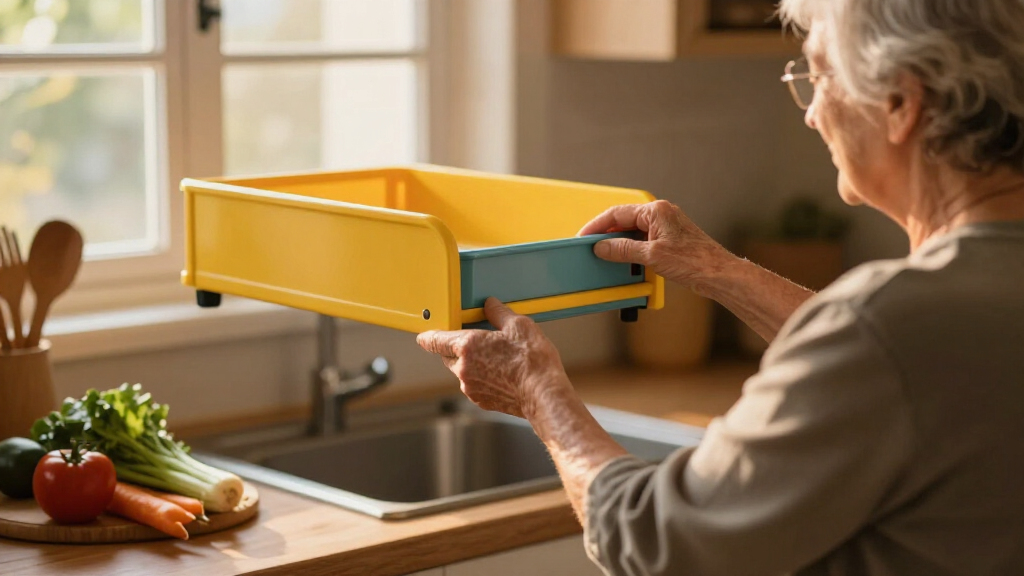
Deep shelves and fixed cabinets force you to stretch or squat into positions that compromise balance. Pull-out, pull-down, and rotating hardware brings the contents to you—reducing physical strain and eliminating the ladder from the routine entirely.
Pull-Down Shelves
Mechanisms lower stored goods toward you, with controlled motion and secure stops. Essential for anyone with limited mobility or balance issues.
Full-Extension Drawers
Roll-out trays glide completely forward, revealing items at a comfortable height and angle—no more kneeling to see the back of the cabinet.
Swing-Out & Lazy Susan
Corner cabinets become black holes. Kidney-shaped pull-outs and corner trays rotate everything into arm’s reach without contorting your body.
Countertop or Drawer Model
Hot food doesn’t need to travel downward from overhead. Moving the microwave to counter height or a microwave drawer cuts spill and burn risk.
Vertical Racks & Dividers
Digging through a mountain of pots causes imbalance and accidental drops. Vertical racks inside deep drawers keep every pan visible.
Labeled Bins with Handles
Clear bins with large labels, contrasting colors, and D-shaped handles prevent rummaging—helpful for reduced vision, dexterity, or memory.
The Complete Swap Chart
Every fixed, hard-to-reach feature in the kitchen has a safer, pull-out alternative. Use this chart to audit your own kitchen, one row at a time.
| Instead of… | Use | |
|---|---|---|
| High shelves for everyday dishes | → | Lower shelf, dish drawer, or pull-down shelf |
| Deep base cabinets | → | Full-extension drawers or roll-out trays |
| Blind corner cabinets | → | Swing-out shelves or corner drawers |
| Over-range microwave | → | Countertop, built-in, or microwave drawer |
| Stacked cookware | → | Dividers, vertical racks, or deep drawers |
| Loose pantry packages | → | Lightweight, labeled bins with handles |
| Small round knobs | → | D-shaped pulls or loop handles |
| Heavy appliances stored overhead | → | Waist-height appliance garage or pull-out shelf |
| Step stool or ladder | → | Permanent accessible storage arrangement |
How to Reorganize Your Kitchen in 5 Simple Steps
You don’t need a full remodel. One senior homeowner started by moving her coffee mugs to a lower pull-out shelf—that single change made her morning routine measurably safer. Work through the steps below, starting with your most-used zone.
Map Your Routine
List most-used items—plates, utensils, spices, pots—and measure their current heights. Prioritize what needs to be reachable.
Identify Problem Areas
Spot high shelves, deep cabinets, and awkward corners that require climbing or bending. Address the riskiest zones first.
Plan the Swaps
Choose pull-down shelves, drawer conversions, or corner pull-out units tailored to your reach, strength, and balance.
Implement Gradually
Start with daily dishware and work outward. Test each change for comfort and safety before moving to the next.
Test & Adjust
Live with the setup for a week. Still awkward spots? Reassess regularly—your needs change over time, and so should your storage.
Hardware That Helps — And Safety Non-Negotiables
Storage changes work best combined with good lighting, uncluttered floors, and stable work surfaces. These are the features worth specifying, and the rules that should never be broken.
Never place heavy, breakable, or hot items above shoulder height. Avoid storing objects so low that you must kneel. Keep walkways clear when pull-outs are extended, check that hardware is securely anchored—and never overload a pull-out, since a heavily loaded shelf is hard to start, stop, or control even within its weight rating.
Why the Right Height Matters — And How to Find Yours
The best kitchen setup puts your most-used items within a comfortable reach—roughly from your knees to your shoulders. For most people, that’s between about 18 inches above the floor and 48 inches. This range is crucial because it minimizes the need for awkward stretching or bending, which can lead to falls or muscle strain. When items are stored outside this zone, you’re more likely to use a step stool or ladder, increasing the risk of accidents.
If you’re seated often, or have limited mobility, these ranges shift. A seated person might prefer everything at waist height—around 30 inches off the ground. Personal comfort is key because comfort directly correlates with safety; if reaching feels strained or unstable, the risk of slips increases.
For example, if you’re standing, keep dishes and food between the counter (about 36 inches high) and shoulder level (around 48 inches). Heavy pots and frequently used utensils should be stored at waist level—easy to lift without strain. Understanding and customizing these zones helps you organize in a way that reduces the need for risky reaches and improves daily safety.
Knowing your ideal height helps you decide what to move and what to keep in the high or low zones, reducing the need for a step stool or ladder. This personalized approach takes into account your height, mobility, and comfort, creating a safer, more accessible kitchen environment.
kitchen pull-out shelves for seniors
As an affiliate, we earn on qualifying purchases.
As an affiliate, we earn on qualifying purchases.
Smart Storage Swaps That Keep You From Climbing
Replacing fixed, deep shelves with pull-out drawers is one of the simplest yet most effective swaps because it directly addresses the challenge of accessing items stored in hard-to-reach areas. Deep shelves and cabinets often force users to stretch or squat into uncomfortable positions, which can compromise balance and lead to falls. By swapping these for pull-out drawers or shelves that glide out smoothly, you bring the contents to you, reducing physical strain and increasing safety.
Imagine a deep corner cabinet—hard to see, harder to reach. Swap it out for a corner swing-out shelf or a lazy Susan. These allow you to access items without contorting your body or risking a fall. The tradeoff is that you might need to invest in some hardware or reorganization, but the safety benefits are significant.
Here’s a quick list of swaps that make a real difference:
- High shelves: Use pull-down shelves that lower toward you, which significantly reduces the need to climb or reach overhead. This is especially important for those with limited mobility or balance issues, as it minimizes the risk of falling from a ladder or chair.
- Deep base cabinets: Convert to full-extension drawers or roll-out trays that glide out easily, revealing items at a comfortable height and angle. This not only improves safety but also enhances organization and efficiency.
- Over-range microwave: Move it down to countertop or install a microwave drawer—hot food doesn’t need to travel upward, reducing the risk of spills or burns when reaching high.
- Stacked cookware: Use vertical racks or dividers inside drawers. No more digging through a mountain of pots, which can cause imbalance or accidental drops.
- Pantry items: Store in clear, labeled bins with handles at waist level. This prevents unnecessary bending or rummaging, which can lead to slips or falls.
For example, replacing a high, fixed shelf with a pull-down unit allowed an elderly homeowner to access her favorite dishes without a step stool. The simple swap doubled her usable space and cut her fall risk. These practical upgrades are easy to implement and can make a noticeable difference in everyday safety and convenience.
adjustable kitchen cabinet shelves
As an affiliate, we earn on qualifying purchases.
As an affiliate, we earn on qualifying purchases.
Corner Cabinets and Heavy Appliances — Make Them Safe and Easy to Use
Corner cabinets often turn into black holes—hard to reach and dangerous to get into. Replacing fixed shelves with corner swing-out trays or diagonal pull-outs can turn that space into a safe, accessible zone. These modifications eliminate the need for awkward reaching or crawling into tight corners, which can cause loss of balance or injuries. They also help in organizing items so that everything is within arm’s reach, reducing the tendency to overreach and risk falling.
Heavy appliances like mixers or Dutch ovens should never be stored overhead. Instead, place them at waist or counter height on sturdy, pull-out shelves. For example, a homeowner moved her mixer from a high shelf to a pull-out drawer at waist level. Now she reaches it easily—and safely—every day. This prevents the strain of lifting heavy objects from above head or the risk of dropping them during retrieval. Think of it like a well-organized toolbox: everything is where your hand naturally falls. It’s safer, faster, and less stressful, especially for those with limited strength or mobility.
As an affiliate, we earn on qualifying purchases.
How to Reorganize Your Kitchen in 5 Simple Steps
- Map your routine: List your most-used items—plates, utensils, spices, pots. Measure their current height and decide where they should go for easiest reach. Understanding your daily patterns helps prioritize what needs to be accessible and what can be stored higher or lower, reducing unnecessary stretching or bending that could cause accidents.
- Identify problem areas: Spot high shelves, deep cabinets, or awkward spots that require climbing or bending. Recognizing these areas allows you to target your modifications effectively, ensuring that the most hazardous or inconvenient zones are addressed first.
- Plan swaps: Choose simple modifications like installing pull-down shelves, converting to drawers, or adding pull-out corner units. These changes should be tailored to your specific needs, balancing safety with convenience.
- Implement gradually: Start with the most-used zone—like your daily dishware—and work outward. This phased approach makes the process manageable and allows you to test each change for comfort and safety before moving on.
- Test and adjust: Use your new setup for a week. Does it feel easier? Are there still awkward spots? Make tweaks as needed. Continuous reassessment ensures your kitchen remains safe and functional as your needs evolve.
For example, one senior homeowner started by moving her coffee mugs to a lower, pull-out shelf. That small change made her morning routine safer and more comfortable, illustrating how targeted adjustments can have a big impact.
As an affiliate, we earn on qualifying purchases.
Safety First: Things to Watch Out For When Reorganizing
Rearranging isn’t just about convenience—safety comes first. Be mindful of heavy, sharp, or hot items that shouldn’t be stored where they could fall or cause burns. For instance, storing heavy glass jars on high shelves increases the risk of falls and injuries if they drop. Keep such items in sturdy, lower locations where they’re easier to access and less hazardous if accidentally knocked over.
Keep walkways clear. When you open a drawer or pull out a shelf, make sure nothing blocks your path or could fall on you. Cluttered or narrow aisles can cause trips, especially if you’re reaching or balancing on a step stool. For example, avoid storing heavy or breakable items on high shelves, and ensure that there’s enough space to move safely.
Check that all hardware—hinges, pulls, slides—are sturdy and secure. Loose fittings can be dangerous, especially if they suddenly give way during use. Regular maintenance and inspections help prevent accidents caused by hardware failure.
Also, consider your physical abilities—climbing a ladder might be safe for some, but for others, even a small step stool can be risky. When in doubt, opt for lower storage, better lighting, and ergonomic tools to enhance safety and ease of use.
Latest Innovations Making Kitchens Safer Without Looking Like a Clinic
Modern accessibility features blend seamlessly into stylish kitchens. Motorized pull-down shelves, touch-to-open drawers, and voice-activated appliances are no longer just for hospitals. They look like regular upgrades and make life easier.
For example, a recent trend is counterbalanced pull-down shelves that lower with minimal effort—perfect for reaching high cabinets without the need for a ladder. Or, a homeowner installed a microwave drawer at waist level, making hot food retrieval safer and more comfortable. These innovations reduce physical strain and eliminate the need for risky reaching or climbing.
Other innovations include adjustable-height work surfaces, drawer-style refrigerators, and motion-activated lighting—no more fumbling in the dark or stretching to turn on switches. These smart features are designed to integrate seamlessly, offering enhanced safety without sacrificing style or functionality. They demonstrate that safety and aesthetics can coexist, providing peace of mind and a more enjoyable cooking experience.
Frequently Asked Questions
What is the best height for frequently used kitchen items?
Typically, keep frequently used items between about knee and shoulder height—roughly 18 to 48 inches from the floor—adjusting for your personal comfort and mobility needs.Are pull-down cabinet shelves safe?
Yes, when properly installed and loaded with lightweight items, pull-down shelves are safe and make reaching high cabinets easier. Always test the operating force and stopping mechanism first.Are drawers better than lower cabinets?
In most cases, yes. Full-extension drawers allow you to see and reach everything from above, reducing the need to bend or stretch into dark corners.Where should heavy appliances be stored?
Place heavy appliances like mixers or slow cookers at waist or counter height on sturdy shelves or pull-out drawers for safe, easy access.Can a kitchen be improved without a full remodel?
Absolutely. Moving items, adding labels, installing retrofit pull-outs, and swapping shelves can make a big difference at a fraction of the cost and effort of a full renovation.Conclusion
The right organization isn’t just about convenience—it’s about safety. Simple swaps and thoughtful layouts can make your kitchen a secure space where you can cook and clean confidently, without the risk of falls or injuries.
Imagine a kitchen where every item is within easy reach, every step is safe, and you feel in control. That’s not a dream—it’s a setup you can create today. Start small, think smart, and enjoy the peace of mind that comes with a truly accessible kitchen.
Grilling season Picks
grills
As an affiliate, we earn on qualifying purchases.