
TL;DR
Listen free for 30 days with Audible
Thousands of audiobooks and originals — cancel anytime.
Start your free trialAs an affiliate, we earn on qualifying purchases.
Wi-Fi-enabled blood pressure monitors offer remote access, automatic syncing, and health app integration. However, Bluetooth-only models often suffice for personal use and are simpler to set up. The best choice depends on your health routine and comfort with technology.
Imagine checking your blood pressure in the comfort of your home, then instantly sharing those numbers with your doctor without lifting a finger. That’s the promise of smart blood pressure monitors. But do you need Wi-Fi to make it all work smoothly? Not necessarily.
In this guide, you’ll learn whether Wi-Fi is a must-have or just a nice-to-have for your health tracking. We’ll explore what Wi-Fi adds, what you might lose without it, and how to pick a monitor that fits your lifestyle. If you want simple, reliable readings or fancy remote features, this will help you decide.
Wi-Fi-enabled blood pressure monitors offer remote access, automatic data uploads, and app integration, but aren’t necessary for basic needs.
Bluetooth-only monitors are simpler, cheaper, and still highly accurate, perfect for everyday use without the fuss.
Setup for Wi-Fi monitors can be more involved, but most brands now provide clear instructions and support.
Privacy and security matter—choose devices with strong encryption and verify manufacturer security features.
Your choice depends on your health routine—if remote monitoring or telehealth is key, Wi-Fi is helpful; otherwise, Bluetooth is sufficient.
Do You Need Wi-Fi for a Smart Blood Pressure Monitor?
Not for the measurement itself. Wi-Fi adds automatic cloud syncing, remote access and easier telehealth sharing—but a Bluetooth-only monitor is often simpler, cheaper and fully capable for everyday personal tracking.
The value is in the data journey
Wi-Fi does not make the pressure reading inherently better. It changes what happens afterward—moving results automatically, making them available remotely and connecting them with a broader care routine.
Care from a distance
Doctors, caregivers or family members may be able to review uploaded readings without being beside the monitor or paired phone.
Fewer manual steps
Readings can move to a cloud account automatically, reducing forgotten entries and transcription mistakes in a long-term record.
A wider health picture
Compatible models can connect with Apple Health, Google Fit or brand platforms to place blood pressure beside other health trends.
Wi-Fi or Bluetooth?
Both can support accurate home monitoring. Choose based on how the readings need to travel—not on the assumption that more connectivity means a better measurement.
| Feature | Wi-Fi monitor | Bluetooth-only monitor |
|---|---|---|
| Connection | ✓Direct to the home network | ✓Direct to a nearby phone or tablet |
| Basic readings offline | ✓Yes; syncing may wait | ✓Yes; sync when the phone reconnects |
| Automatic cloud upload | ✓Usually available | ~Often depends on the phone app |
| Remote access | ✓Designed for remote viewing | ✗No direct remote connection |
| Setup effort | ~App, account and network credentials | ✓Usually one phone-pairing step |
| Typical cost | ~Higher | ✓More affordable |
| Security exposure | ~Verify encryption and update policy | ✓Less exposed to internet-based risks |
Convenience has conditions
Wi-Fi is most useful when continuous sharing matters. Its extra cost, setup steps and security responsibilities deserve equal weight.
Where Wi-Fi earns its keep
- Regular telehealth appointments using up-to-date readings
- Hypertension management with clinician oversight
- Caregivers monitoring someone in another location
- Multiple household users with separate profiles
- Automatic records without relying on phone proximity
What can get in the way
- More involved network and account configuration
- Remote features pause during internet outages
- Cloud services introduce privacy considerations
- Manufacturer security quality can vary
- Extra features may go unused in a simple routine
Match the connection to the routine
The strongest reason to choose Wi-Fi is not novelty—it is a recurring need to move readings beyond your phone with minimal effort.
Relative importance by use case
Illustrative fit based on the connectivity needs described in this guide.
How a Wi-Fi reading travels
A connected monitor creates a hands-off chain from measurement to review. If the network drops, the reading can still be taken, but later stages may wait.
What to remember before buying
Start with your monitoring routine, then pay for the connectivity that supports it. Accuracy, cuff fit and clinical validation remain more important than Wi-Fi alone.
It adds remote access, cloud uploads and integrations—not the ability to inflate the cuff and calculate a reading.
It is typically simpler and cheaper while still moving readings into a nearby smartphone app.
Remote monitoring, telehealth and caregiver access are the clearest reasons to accept extra setup and cost.
Look for encryption, account protections, software updates and a clear manufacturer privacy policy.
The monitor may keep measuring locally, but cloud syncing and remote viewing require an active internet connection.
Choose proper cuff sizing, dependable support and a reputable, clinically validated model before optional smart features.
Useful upgrade or unnecessary extra?
Choose Wi-Fi when readings must reach doctors or caregivers automatically. Choose Bluetooth when you want reliable personal tracking with less setup and a lower price. Either way, your blood pressure measurement does not depend on internet access.
What does Wi-Fi do for your blood pressure monitor?
Wi-Fi in a blood pressure monitor connects it directly to your home internet. This isn’t just about making your device look fancy. It unlocks features like remote access, automatic data uploads, and integration with health apps.
Why does this matter? Because health data is sensitive and personal. When your monitor automatically uploads your readings to a secure cloud or app, it reduces manual entry errors and ensures your data is stored safely and accessibly. This seamless flow of information can be crucial if you’re managing a chronic condition, as it allows healthcare providers to monitor your progress remotely and make timely adjustments. However, this convenience comes with tradeoffs: increased dependency on internet stability and potential privacy concerns. If your Wi-Fi is unreliable, remote features might be inconsistent, which could frustrate users relying on real-time data sharing. Also, the complexity of setup and security protocols can be a barrier for some, emphasizing the need to weigh these factors against the benefits.
But here’s the key: basic measurements don’t require Wi-Fi. Bluetooth monitors connect directly to your smartphone, which acts as a bridge to store or share data. This method keeps things simple, secure, and less dependent on internet reliability, making it suitable for everyday use without the extra costs or setup complexity.
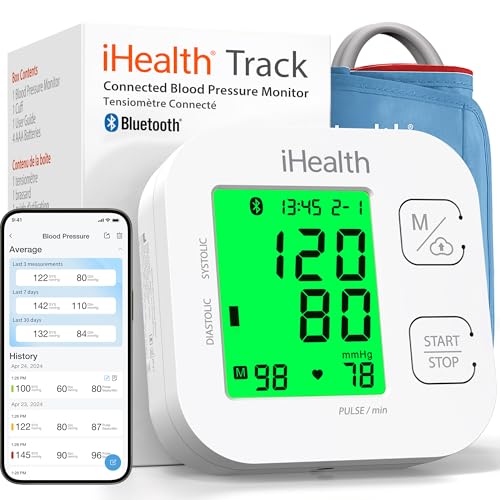
iHealth Track Smart Upper Arm Blood Pressure Monitor with Wide-Range Cuff
- Clinically Accurate: Easy operation, no calibration needed
- Large Multi-Color Display: Oversized numbers with color-coded readings
- Easy Data Management: Store up to 99 readings on device
As an affiliate, we earn on qualifying purchases.
As an affiliate, we earn on qualifying purchases.
The real benefits of Wi-Fi blood pressure monitors
If you’re managing high blood pressure or just want peace of mind, Wi-Fi can significantly enhance your health management by providing real-world advantages. For instance, remote monitoring allows your healthcare team to access your data in real-time, facilitating quicker interventions or adjustments to your treatment plan. This is especially beneficial if you have mobility issues or live far from your healthcare provider. Automatic data syncing reduces the risk of manual entry errors, ensuring your records are accurate and current, which can be critical in tracking trends over time. Integration with health apps like Apple Health or Google Fit allows you to view your blood pressure alongside other vital signs, giving a more comprehensive picture of your health. Multi-user support means family members or caregivers can also access data, fostering shared responsibility. During telehealth appointments, your doctor can review your latest readings instantly, making consultations more productive and data-driven. According to recent surveys, over 60% of users find Wi-Fi adds convenience, especially for those who check blood pressure regularly or have multiple family members involved in health monitoring. This convenience can lead to better adherence to monitoring routines and more informed health decisions, but it’s essential to consider whether the added features justify the cost and setup effort for your specific needs.
iHealth Track Smart Upper Arm Blood Pressure Monitor with Wide-Range Cuff
- Clinically Accurate: Easy operation, no calibration needed
- Large Multi-Color Display: Oversized numbers with color-coded readings
- Easy Data Management: Store up to 99 readings on device
As an affiliate, we earn on qualifying purchases.
As an affiliate, we earn on qualifying purchases.
Are there downsides to Wi-Fi blood pressure monitors?
Yes, Wi-Fi isn’t perfect and involves important considerations beyond just cost. These monitors tend to be more expensive—sometimes $50 to $100 extra—reflecting the added technology and features. This expense might not be justified for users who only need basic readings, especially if they don’t plan to use remote sharing or automatic syncing. Setup can also be more complex. If your Wi-Fi isn’t stable or you’re less comfortable with technology, initial configuration might be frustrating, potentially leading to setup errors or connectivity issues. Security is another critical factor. Because health data is sensitive, Wi-Fi devices must employ robust encryption and secure protocols to protect privacy. Without proper safeguards, data could be vulnerable to breaches. Additionally, reliance on internet connectivity means that during outages or unstable connections, remote features become unavailable, although measurements can still be taken locally. This could be a significant drawback for users who depend on real-time remote data or automatic uploads. For example, during a power outage or Wi-Fi disruption, the device will still record blood pressure readings, but manual data transfer will be necessary later, which could delay timely health assessments. Recognizing these limitations helps users make informed decisions aligned with their priorities and technical comfort levels.
iHealth Track Smart Upper Arm Blood Pressure Monitor with Wide-Range Cuff
- Clinically Accurate: Easy operation, no calibration needed
- Large Multi-Color Display: Oversized numbers with color-coded readings
- Easy Data Management: Store up to 99 readings on device
As an affiliate, we earn on qualifying purchases.
As an affiliate, we earn on qualifying purchases.
How to choose between Wi-Fi and Bluetooth blood pressure monitors
Picking the right device depends on what matters most to you. Here’s a deeper look:
| Feature | Wi-Fi Blood Pressure Monitor | Bluetooth-Only Monitor |
|---|---|---|
| Connectivity | Direct to home Wi-Fi network, enabling remote access from anywhere with internet | Connects directly to your smartphone via Bluetooth, limited to local device proximity |
| Setup | More involved; requires entering Wi-Fi credentials and pairing with your network, which may be challenging for some users | Simpler; involves pairing with your phone once, then automatic connection during use |
| Remote Access | Yes, enabling you to view and share data remotely, ideal for telehealth and multi-location monitoring | No, data is stored locally or on your phone, limiting remote sharing capabilities |
| Cost | Usually more expensive due to added technology and features | More affordable, making it accessible for budget-conscious users |
| Security | Depends on device encryption and manufacturer’s security protocols, which can vary | Bluetooth encryption generally secure, but less exposed to internet-based vulnerabilities |
Understanding these differences helps you evaluate what features align with your health management routine. If you need constant remote monitoring or plan to integrate with telehealth services, Wi-Fi is worth the investment. However, for straightforward daily measurements without the need for remote sharing, Bluetooth offers simplicity, security, and cost savings, making it a practical choice for most users.
iHealth Track Smart Upper Arm Blood Pressure Monitor with Wide-Range Cuff
- Clinically Accurate: Easy operation, no calibration needed
- Large Multi-Color Display: Oversized numbers with color-coded readings
- Easy Data Management: Store up to 99 readings on device
As an affiliate, we earn on qualifying purchases.
As an affiliate, we earn on qualifying purchases.
Who should skip Wi-Fi and stick with Bluetooth?
If remote access or automatic uploads aren’t critical to your health routine, a Bluetooth monitor is often sufficient. It offers a straightforward setup, typically lower cost, and reliable measurements, making it suitable for most everyday users. For example, if you primarily check your blood pressure at home for personal tracking and don’t need to share data with your healthcare provider regularly, Bluetooth keeps things simple and effective.
Furthermore, if you’re concerned about privacy or uncomfortable with the technical aspects of Wi-Fi setup, Bluetooth devices reduce the complexity and potential security risks. Many users find that Bluetooth models provide all the accuracy and convenience they need without the added hassle of internet connectivity or security concerns. They also tend to be more portable and battery-efficient, which can be advantageous for travel or frequent use. Ultimately, unless your health management involves frequent remote consultations, multi-user sharing, or integration with health apps that require internet access, sticking with Bluetooth is a practical, safe, and economical choice for most individuals.
In short, for those who prioritize simplicity, privacy, and affordability, Bluetooth monitors are often the best fit, especially if your health tracking needs are modest or primarily local.
Can you set up a Wi-Fi blood pressure monitor easily?
Most modern Wi-Fi blood pressure monitors aim for user-friendly setup, but the ease can vary depending on your familiarity with technology. Typically, these devices require downloading a companion app, pairing the monitor with your smartphone via Bluetooth, and then entering your Wi-Fi network credentials. Many models include step-by-step instructions, visual guides, or even voice prompts to simplify the process.
For example, a common setup process might involve pressing a button on the cuff to activate Bluetooth pairing, opening the app on your phone, and selecting your Wi-Fi network from a list. Once connected, the device will automatically upload readings to the cloud or app. If you’re comfortable using smartphone apps and navigating Wi-Fi settings, setup is usually straightforward and quick. However, if you’re less tech-savvy or encounter issues like weak Wi-Fi signals, setup can be frustrating or require additional troubleshooting. Many brands offer customer support, detailed online guides, or instructional videos to help users through the process. Considering your comfort level with technology and your home Wi-Fi stability can help determine whether this setup will be smooth or challenging for you.
What’s the bottom line? Do you really need Wi-Fi?
The short answer: not always. Wi-Fi adds valuable features like remote access, automatic data uploads, and seamless app integration, which can greatly enhance your health tracking experience. These benefits are especially significant for individuals managing chronic conditions, those who frequently share data with healthcare providers, or who prefer hands-off automation. However, if your routine involves simple, manual measurements and you’re comfortable transferring data via Bluetooth or manually reviewing your readings, then Wi-Fi might be an unnecessary complication. It’s important to consider your specific needs: do you want your device to automatically upload and share data without extra effort? Or do you prioritize straightforward operation and privacy? Your decision should align with your health goals, technological comfort, and lifestyle. For most people, a good Bluetooth monitor offers all the accuracy and convenience they need, with fewer setup hassles and privacy concerns. Wi-Fi is a valuable addition but not a mandatory feature for effective blood pressure management.
Frequently Asked Questions
Do I need Wi-Fi for my blood pressure monitor?
No, most monitors work via Bluetooth, connecting to your phone. Wi-Fi adds remote features but isn’t essential for taking accurate readings at home.
Are Wi-Fi blood pressure monitors more secure?
They can be, if they use proper encryption. Always check the device’s security features and avoid models with questionable privacy practices.
Can I use a Wi-Fi blood pressure monitor without internet?
No, Wi-Fi monitors require an active internet connection for cloud syncing and remote access. Without Wi-Fi, they function like Bluetooth models, limited to local measurements.
Is setup complicated for Wi-Fi models?
Most are designed for easy setup through smartphone apps, guiding you step-by-step. If you’re comfortable with technology, it’s usually straightforward.
Should I worry about privacy with Wi-Fi monitors?
Yes, choose reputable brands with strong encryption. Follow best practices like secure Wi-Fi networks and regular firmware updates to protect your data.
Conclusion
Wi-Fi can turn your blood pressure monitor into a remote health hub, but it’s not a must-have. Most people find Bluetooth models perfectly capable for everyday tracking—simple, reliable, and budget-friendly.
Remember, the best device is the one that fits your lifestyle, comfort level, and health goals. Whether you choose Wi-Fi or Bluetooth, consistent monitoring remains the key to better health awareness.
Back to school Picks
back to school
As an affiliate, we earn on qualifying purchases.